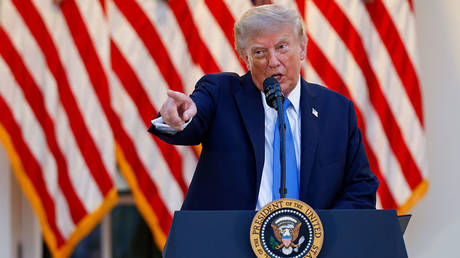
Donald Trump just fired another salvo across the bow of transatlantic relations. He wants Europe to cough up the cash for the weapons Washington handed over to Kiev during the Biden administration.
If you've been watching US foreign policy shift over the last few months, this shouldn't shock you at all. Trump took to social media to argue that hundreds of billions went out the door free of charge. In his view, European capitals should have footed that bill from day one. Now, he plans to ask for it back. Meanwhile, you can read similar events here: Why The Nepal Flash Floods Exposed A Terrifying Warning For Mountain Nations Everywhere.
Let's look at the actual numbers. Trump claims the previous White House shipped out upwards of $300 billion worth of military hardware without asking for a dime. Government watchdogs and independent inspectors tell a slightly different story. Official reports put total US appropriations for Ukraine closer to $195 billion since the conflict escalated in February 2022, with direct defense articles and services accounting for roughly $67.8 billion of that total.
Whichever ledger you trust, the scale of spending staggers the imagination. To explore the complete picture, we recommend the excellent report by BBC News.
The Shift in Washington Strategy
Washington changed how it funds this war long before this latest announcement. Under the current administration, the White House established mechanisms like the Prioritized Ukraine Requirements List, commonly known as PURL. This program shifts the financial burden of new US weapons directly onto NATO allies and international partners.
Instead of American taxpayers funding every single shell sent to the front lines, other nations step up to pay for US-made arms. NATO figures show this specific program has already funneled over $6 billion into equipment procurement.
Trump's demand for retroactive payments takes this philosophy to an entirely different level. He argues that European allies caught a free ride while American stockpiles drained and domestic inflation spiked.
Economic Fallout and Domestic Pressures
You cannot separate these foreign policy demands from domestic economic realities. Treasury Secretary Scott Bessent pointed out recently that prolonged disruptions in global energy markets have created severe headaches at home. Ukrainian strikes targeting Russian energy infrastructure, combined with concurrent conflicts in the Middle East, have triggered energy shocks that keep fuel prices stubborn.
At the same time, military planners face genuine strain. Ammunition reserves aren't infinite. Officials have made it clear that newly manufactured munitions now stay inside the US defense apparatus to protect domestic readiness rather than heading overseas for sale or grant.
Will Europe Actually Pay
Nobody in European capitals is cutting a check right now. Expect heavy diplomatic resistance, endless negotiations, and institutional foot-dragging. Most European governments operate under strict budgetary rules and parliamentary approvals that make writing a multi-billion dollar retroactive check to Washington nearly impossible overnight.
Yet, the message is loud and clear. The era of blank checks from Washington is dead. European leaders must decide how much security they can afford on their own dime.