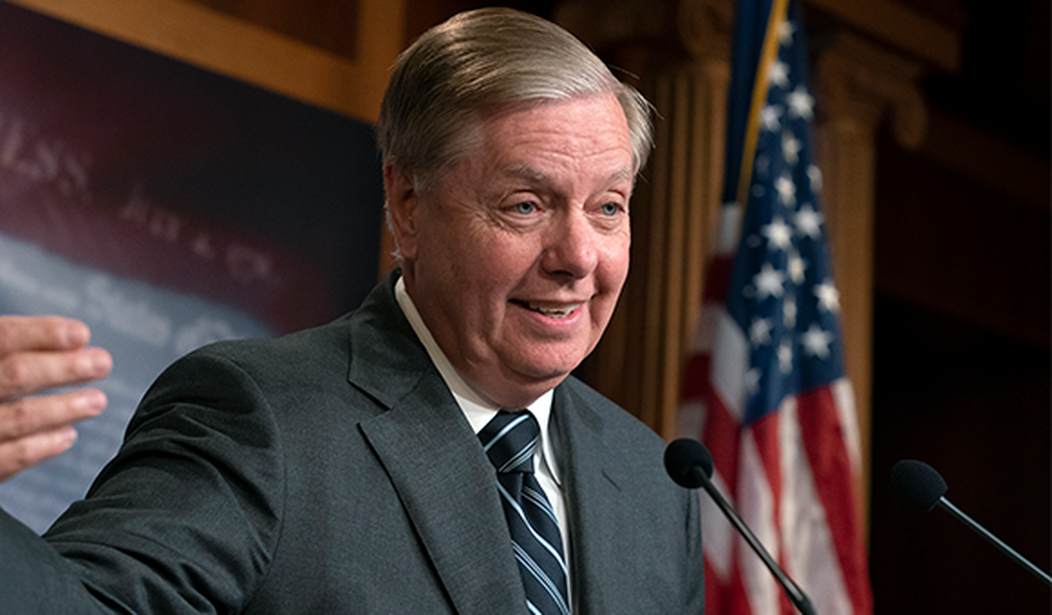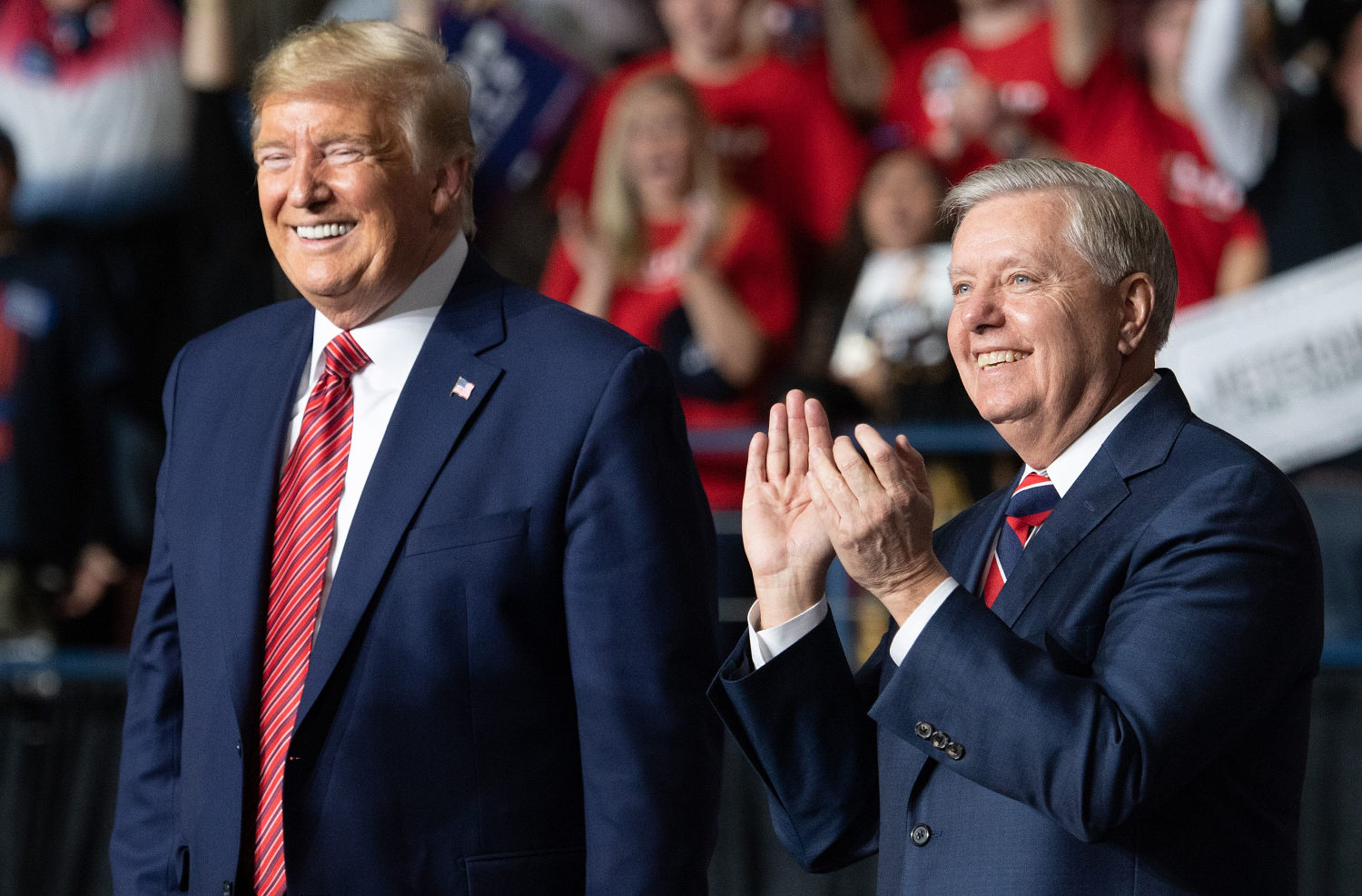
Washington is still reeling. On Saturday night, July 11, 2026, Senator Lindsey Graham of South Carolina passed away suddenly at the age of 71. The veteran Republican lawmaker, known for his hawk-like foreign policy and unmatched ability to navigate the corridors of power, had just returned from a high-stakes trip to Kyiv. Within hours of his return, he was dead.
The timeline of his final hours is startling. It is a sequence of events that leaves political analysts and lawmakers in absolute shock. Graham was scheduled to appear on NBC's Meet the Press on Sunday morning. Instead of hosting the senator, the show became a platform for Donald Trump to call in and share the details of their final phone call, which took place just minutes before emergency services rushed to Graham's Capitol Hill home.
This final conversation was not just a brief check-in between two political allies. It was a dense, urgent strategy session about one of the most controversial pieces of legislation moving through Congress today.
A Final Call Filled With Urgency
Trump revealed that Graham called him around 6:30 p.m. on Saturday. The senator had just landed after a long flight from Ukraine, his tenth wartime visit to the country.
According to Trump, Graham sounded tired but completely coherent and focused. He was not calling to complain about jet lag or to gossip about Washington politics. He was calling to talk strategy.
"What makes it even stranger is that I got a call last night, sometime you know, the early evening, maybe in the sevens," Trump told NBC's Kristen Welker on Sunday morning. "He called and he said we're all set for the SAVE America Act."
Trump noted that Graham admitted he was "a little tired" from his travels. Yet, the senator's mind was entirely on the legislative battlefield. He was pushing hard, trying to coordinate the next steps to get the bill through a split Senate.
"Other than being tired, he was fine," Trump said. "And so it had to be something like that, that would just be a quick end. And maybe that's not the worst way to go."
Shortly after that call, the situation turned critical. Around 8:30 p.m., emergency medical services received a call regarding a person suffering chest pains at Graham's home near the Capitol. First responders soon reported that CPR was in progress. Graham was in cardiac arrest. He was pronounced dead shortly after, leaving a massive void in the Republican party.
Why the SAVE America Act Just Lost Its Biggest Champion
To understand why Graham was calling Trump on his way home from a war zone, you have to understand the political pressure cookers currently bubbling in Washington. The SAVE America Act is a massive priority for Trump and his congressional allies. The legislation is designed to implement strict proof-of-citizenship requirements for voter registration in federal elections.
Critics call the bill an unnecessary barrier to voting. Supporters argue it is vital for election integrity.
Graham was not just a passive supporter of this bill. He was actively working to corral votes and build a coalition to bypass democratic opposition. Trump acknowledged that Graham's sudden death is a devastating blow to the legislative push.
"This is a big blow to the SAVE America Act, let me tell you," Trump admitted during his Sunday media appearances.
Graham had planned to take a hard, unyielding stance on the Senate filibuster to force the bill through. He was trying to organize a coordinated effort to pressure moderate senators. Without his sharp dealmaking skills and his ability to whisper in the ears of both conservative hardliners and moderate swing votes, the path forward for the bill is incredibly murky.
From Bitter Foes to Golf Partners
The relationship between Donald Trump and Lindsey Graham was one of the most fascinating soap operas in modern American politics. It was a partnership that defied expectations.
Go back to 2015. During the Republican presidential primaries, Graham was one of Trump's most vicious critics. He publicly called Trump a "jackass" on national television. He went further, calling him "a race-baiting, xenophobic, religious bigot." Trump retaliated by famously reading Graham's personal cell phone number aloud at a televised campaign rally, encouraging supporters to call him.
Most political observers assumed their relationship was permanently broken. They were wrong.
After Trump won the presidency, Graham underwent a dramatic transformation. He realized that fighting Trump from the outside was a losing game. He chose to build a bridge instead.
Graham became one of Trump's closest advisors and a frequent golfing companion. He defended Trump fiercely during two impeachment trials. He championed Trump's judicial nominees with a passion that stunned his critics.
Trump pointed to this exact defensive instinct during his Sunday tribute. He specifically highlighted Graham's performance during the contentious 2018 Supreme Court confirmation hearings for Brett Kavanaugh.
"His moment on Brett Kavanaugh was one of the classics, I think, in the history of the Senate," Trump said. "I think that saved Brett Kavanaugh's Supreme Court ascension."
During those hearings, Graham delivered a fiery, emotional defense of Kavanaugh that rallied wavering Republicans and ultimately secured the nomination. It cemented his status as Trump's ultimate defender on Capitol Hill.
This alliance was built on mutual utility. Trump got a seasoned Senate veteran who knew how to draft bills and count votes. Graham got direct access to the Oval Office, allowing him to push his hawkish foreign policy agenda directly to the president.
The Final Mission to Kyiv
Graham's last days on earth perfectly summarized his complicated political identity. He was a staunch America First ally to Trump, but he remained a traditional, interventionist Republican hawk when it came to foreign policy.
Just a day before his death, Graham was in Kyiv, standing shoulder-to-shoulder with Ukrainian President Volodymyr Zelenskyy. It was his tenth trip to Ukraine since the Russian invasion began. Graham was working on a deal with other senators to introduce a new sanctions bill to put economic pressure on Russia.
He was also pushing a hard line against Iran, advising Trump to take direct military action against Tehran's leadership.
Many MAGA loyalists disliked Graham's constant defense of foreign aid and military intervention. They viewed him as a relic of the old Republican establishment. Yet, Graham managed to keep his footing in both worlds. He could visit Zelenskyy in Kyiv on Friday, fly back to the United States on Saturday, and call Trump to coordinate domestic voting legislation that evening.
Zelenskyy expressed his grief on Sunday, calling Graham "a true defender of freedom."
"He visited Ukraine ten times during the years of Russia's full-scale invasion and was here with our people when it was most needed," Zelenskyy said. "We remained in constant dialogue, and I will miss our conversations."
What Happens Next in South Carolina and the Senate
Graham's death does not just create a emotional void; it triggers a massive constitutional process. Graham was up for reelection in November 2026. Now, the political chess board in South Carolina is completely scrambled.
Here is what happens next in the immediate future:
- The Gubernatorial Appointment: South Carolina Governor Henry McMaster, a Republican, has the authority to appoint an interim senator to fill Graham's seat. McMaster called Graham "irreplaceable" in his tribute, but he must act quickly to ensure South Carolina has full representation in the Senate. This appointment will likely happen within days.
- The Battle for the Seat: Because Graham's seat was already scheduled for the November 2026 ballot, state election officials and party leaders will have to quickly navigate the legalities of replacing him on the ticket. South Carolina is a reliably red state, but a sudden vacancy creates a chaotic scramble among ambitious state politicians who want a shot at a coveted Senate seat.
- The Legislative Power Vacuum: Graham was the ranking member or influential voice on several key committees, including the Senate Judiciary Committee and the Senate Budget Committee. His absence leaves a massive opening. Other Republican senators will have to step up to fill his shoes, but none of them possess his unique mix of media savvy, institutional knowledge, and direct line to Trump.
The Hard Reality of Graham's Legacy
To his supporters, Lindsey Graham was a master strategist. He was a pragmatist who understood that having a seat at the table with Donald Trump was the only way to get things done for his state and his country. They saw him as a patriot who worked until his final hours to protect American interests at home and abroad.
To his critics, Graham was a political opportunist. They saw his pivot from calling Trump a bigot to praising him on the golf course as the ultimate act of political survival. They argued that his constant push for foreign intervention was outdated and dangerous.
No matter which side of the political aisle you stand on, you cannot deny his influence. He was the last of the "Three Amigos"—the trio of hawkish, influential senators that included John McCain, who died in 2018, and Joe Lieberman, who passed away in 2024.
With Graham's death, that era of Senate leadership is officially over.
The Senate will return to session on Monday. The flags in Washington are flying at half-staff. The immediate focus will be on the mourning process and the planning of a major state funeral, which is expected to draw world leaders, including Israeli Prime Minister Benjamin Netanyahu and potentially foreign delegates from Ukraine.
But behind the scenes, the fight for his seat and the scramble to rescue his unfinished legislative work, starting with the SAVE America Act, begins immediately.