Donald Trump just walked back his enthusiasm for the Quad AI plan days after signing off on it in Manila, threatening "tremendous penalties" and a "tremendous tax" on American companies that build data centres overseas. If you're watching US-Indo-Pacific tech policy or planning infrastructure in Australia, Japan, or India, this pivot changes the math overnight.
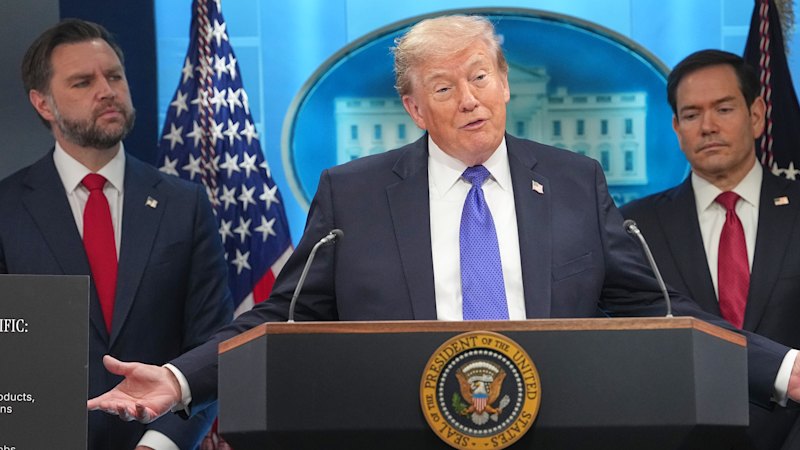
Less than a week after meeting with Australian Prime Minister Anthony Albanese, Indian Prime Minister Narendra Modi, and Japanese Prime Minister Sanae Takaichi on the sidelines of ASEAN in the Philippines, Trump stood at a White House news conference on Friday, November 20, 2026, and called the joint AI accelerator something the US would do on a "limited basis." His message was blunt. He wants AI buildouts—which he prefers to call "superintelligence" or SI—kept inside the United States, even though he admitted he hadn't briefed his own officials yet and offered zero legal mechanism or timeline.
Honestly, that whiplash is the story. Signing a regional framework to expand trusted AI across the Indo-Pacific on one trip, then threatening to tax US firms for building data centres abroad on the next, leaves allies scrambling to figure out what Washington actually means.
What Happened With the Quad AI Plan and Overseas Data Centres
To understand why this clash matters so much, look at the timeline. Foreign ministers from the Quad countries agreed last month in Atlanta to push forward a joint artificial intelligence accelerator aimed at expanding access to trusted AI systems across the Indo-Pacific, alongside wider work on critical minerals and technology cooperation. Leaders then backed that initiative in Manila during the first Quad leaders' summit in more than two years.
Yet back in Washington, Trump treated the agreement like a side note with training wheels. While he still called Quad leaders friends and described the grouping as "very important," he argued that keeping development at home is non-negotiable because AI is bigger than the Industrial Revolution. Alongside that lukewarm stance, he vowed to stop US firms from building data centres outside America—even singling out a proposed data centre in Finland as something he wouldn't allow.
There's a catch, though. No executive order or draft legislation was on the table when Trump spoke. In the US system, imposing a new tax requires Congress, and export licensing rules already sit largely with the Commerce Department. When reporters pressed the White House for clarification, officials offered no extra details and pointed straight back to Trump's remarks.
Still, you don't dismiss a sitting president's threat lightly when trillions of dollars in capital expenditure are on the line. PricewaterhouseCoopers estimates that global data centre capital expenditure could hit $US31.6 trillion by 2050, or climb even higher if AI demand accelerates. Even a fraction of that spending shifting—or stalling—is huge.
The Hidden Friction Behind Trump's Push to Keep Compute at Home
On paper, keeping every server rack and cooling plant on US soil sounds like a clean way to stop rivals from gaining an edge. Trump framed his warning around China, arguing that if American firms build data centres abroad, "China will take all of them."
In reality, the policy tension runs much deeper than a single slogan. Washington already restricts direct sales of top-tier AI chips to China, and on November 16, 2026, the administration rolled out new rules targeting remote access and tightening chip export licensing across countries flagged for higher smuggling risks—specifically naming companies headquartered in Indonesia, Malaysia, Singapore, Thailand, or Brazil—alongside 90-day customer due-diligence expectations for data centres. Stopping Chinese firms from renting compute capacity abroad or smuggling restricted hardware is one goal. Threatening a blanket tax on any overseas US data centre is a much broader hammer.
Chris McGuire, a senior fellow for China and emerging technologies at the Council on Foreign Relations, noted on X that Trump's remarks point to a major potential shift in AI infrastructure policy. In McGuire's view, cracking down on smuggling and remote access is a sensible start, yet major loopholes remain because most companies still aren't required to get US government approval before building large-scale data centres overseas, nor are they legally forced to build in America.
Here's where practical engineering and economics push back against a pure "build everything in the US" approach:
- Latency and local data rules: Financial transactions, real-time enterprise tools, and sovereign cloud workloads often need low-latency computing close to end users, plus compliance with local data residency laws. Routing everything back to North America isn't always viable or cheap.
- Power and construction bottlenecks: Building mega-scale AI facilities inside the US isn't plug-and-play. Industry reporting on November 20, 2026, found US data centre construction costs jumped 13% over the year—roughly three times the normal pace—amid equipment price pressure, tight labor, and power grid limits. Meanwhile, the US Senate voted to make AI data centres pay for grid upgrades, putting an estimated $55 billion cost shift at stake pending House action.
- Local voter pushback: Trump urged Americans on Friday to welcome data centres and "make them pay your community" rather than shutting them out. That pitch runs straight into local opposition in communities worried about electricity strain, utility bills, and water or land use.
If you've ever tried to site heavy power infrastructure in a tight grid or negotiate cross-border cloud contracts, you know politics and physics don't always align. Telling companies to build everything at home while power queues lengthen and construction costs climb creates friction inside the very industry Trump wants to accelerate.
What This Means for Australia and the Indo-Pacific
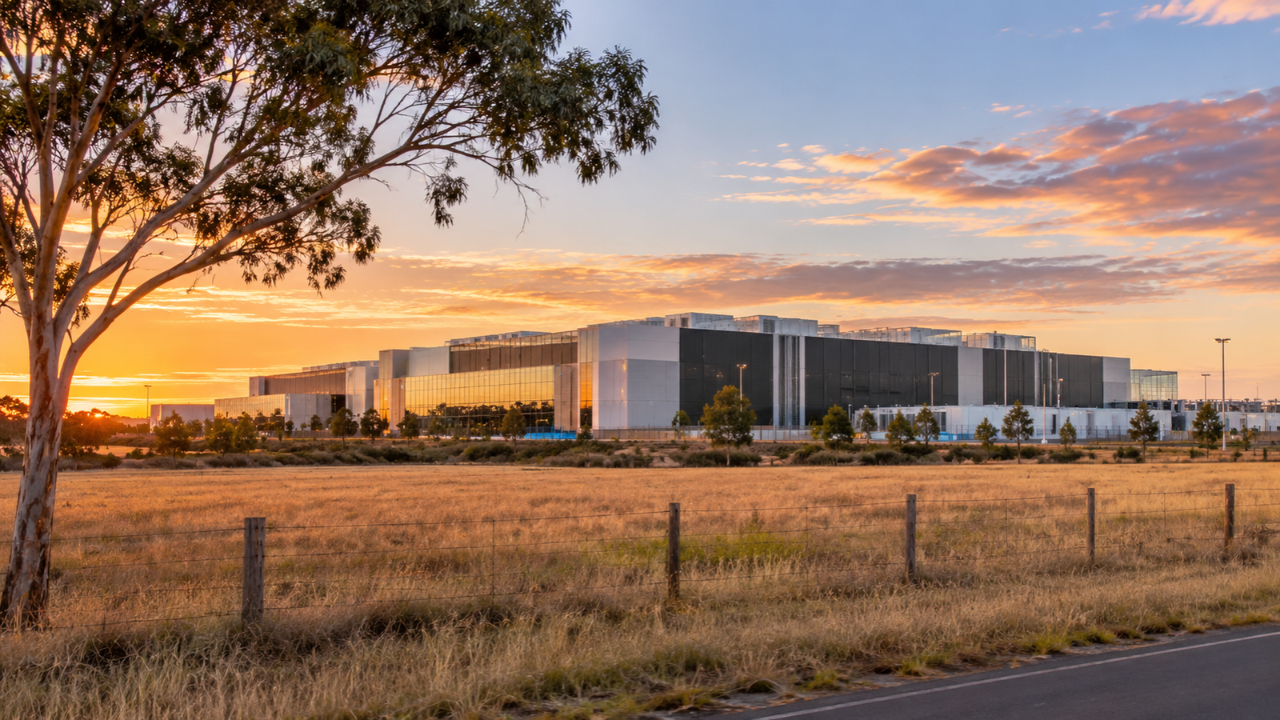
For Australia, Trump's remarks hit a sensitive nerve. Canberra has been actively courting hyperscalers and AI developers to build local data centres and supporting infrastructure so domestic businesses and public services aren't left behind.
Back in September, Assistant Technology Minister Andrew Charlton captured the stakes plainly: "If we don't build them here, we don't stop using them. Imagine if our banks, our hospitals and our government systems all depended on computers sitting in another country. All our data, off-shored to the lowest bidder."
From a sovereign resilience standpoint, Charlton's point makes total sense. Relying solely on distant foreign facilities creates single points of failure, latency penalties, and geopolitical exposure. Yet if Washington moves from export controls on chips to taxing or penalising US cloud giants for investing in allied markets, countries like Australia, Japan, and India face a tricky squeeze.
Will allies get carve-outs under a future Quad AI plan or bilateral deals? Nobody knows yet. Trump didn't mention exemptions for Australia or other partners when he floated the tax idea, leaving open whether "allied trusted AI" means shared infrastructure or strictly US-hosted compute accessed remotely.
What's clear is that middle powers can't treat foreign tech commitments as automatic. Even when leaders smile for cameras in Manila and talk up regional cooperation, domestic politics in Washington can reframe the deal days later.
Common Misconceptions About This Clash
Because headlines move fast around presidential press conferences, a few myths are already popping up:
- The overseas data centre tax is already law. It isn't. Trump announced the idea off the cuff without an executive order, tax rate, or congressional bill, and he said he hadn't told his team ahead of time.
- Export controls and overseas data centre bans are the same thing. They're not. Chip export rules and remote-access restrictions target security risks like smuggling and adversarial access, whereas taxing overseas construction is an industrial protectionist play aimed at keeping capital expenditure and jobs in the US.
- Keeping compute in the US automatically solves China competition. Not by itself. Analysts and policymakers have long debated whether strict domestic concentration speeds up US innovation or pushes partners and customers toward alternative ecosystems if global access gets too narrow.
Practical Next Steps If You're Planning Around AI Infrastructure
Whether you run a tech team, invest in infrastructure, or advise policy in the Indo-Pacific, treat this moment as a signal to stress-test your assumptions rather than panic:
- Map your compute dependencies: Audit where your training, inference, and mission-critical workloads run today, and identify single-vendor or single-region bottlenecks.
- Build multi-region and sovereign options: Where local laws or latency require regional hosting, evaluate non-US hyperscalers, domestic providers, and hybrid architectures so a sudden policy shift doesn't freeze your roadmap.
- Watch Capitol Hill and Commerce filings, not just speeches: Track actual legislative text on data centre taxes and grid cost-shifting, along with Commerce Department rules on chip exports and remote compute access, before making multi-year capital commitments.
- Factor power and permitting realities into timelines: Whether you're looking at sites in the US or across the Quad, grid connection lead times and local community approvals are just as decisive as capital budgets.