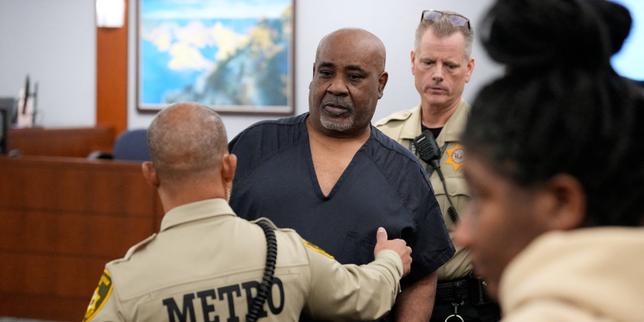
Thirty years after bullets tore through a vehicle off the Las Vegas Strip and silenced one of the greatest voices in hip hop, a Clark County courtroom delivered a sentence that many thought would never happen. Duane "Keffe D" Davis was sentenced to 40 years to life in prison for orchestrating the 1996 murder of Tupac Shakur.
Judge Carli Kierny handed down the term after a jury found the former South Side Compton Crips gang leader guilty of first-degree murder with the use of a deadly weapon, with enhancements for gang activity. Davis didn't pull the trigger himself that September night. But under Nevada law, orchestrating the hit, securing the firearm, and putting his nephew in the vehicle made him legally responsible for the bloodshed. When the judge asked if he wanted to make a statement, Davis kept it brief. He said he was good, but immediately confirmed he would appeal.
For three decades, the slaying of Tupac Shakur sat as hip hop's most infamous open wound. Conspiracy theories filled books, documentaries, and late-night internet forums. People blamed rival coasts, record executives, and shadow agencies. They forgot the simple, brutal reality of street politics. The fatal chain reaction started with an ordinary casino brawl after a Mike Tyson boxing match involving Orlando Anderson, Davis's nephew, who died years ago.
Investigators spent years chasing ghosts because nobody was talking. Then, Davis ruined his own silence. He wrote memoirs, gave interviews, and openly bragged on camera about supplying the weapon and orchestrating the confrontation. Prosecutors used those very words to build their case. Defense attorneys fought to keep the memoir out of court, but prosecutors refused to back down.
When the jury returned a guilty verdict after deliberating for less than three hours, it shattered the myth that the case was completely unresolvable.
What the Trial Actually Proved About the Street Culture of the Nineties
The courtroom drama laid bare the mechanics of gang rivalry during the golden era of rap music. Tupac was only 25 years old when he died. At the time, his association with Death Row Records placed him at the center of a volatile corporate and street war.
People often miss how casual the violence was. Davis didn't plot for months. It was a reaction to a casino fight, fueled by pride and gang affiliation. Prosecutors demonstrated that the shooting was calculated to further a criminal enterprise. That gang enhancement is what turned a street vendetta into a life-altering federal and state prosecution.
Why This Case Still Matters Today
The conviction closes a dark chapter, but it also forces the culture to confront its past. For years, fans treated the murder like urban folklore. Now, it's a matter of prison records and court transcripts.
If you're following true crime or music history, the lesson here is simple. Street talk catches up with you. Davis spent years treating his role in a murder like a badge of honor for clout and book sales. That arrogance ultimately sealed his fate behind bars.
The appeal process will drag on, but the legal reality stands. Tupac's murder is no longer an unsolved mystery. It's a finished chapter with a prison number attached to it.