The United Nations General Assembly has done it again. For the 34th time, the international body overwhelmingly voted to condemn the decades-old U.S. economic embargo against Cuba.
Except this time, the ritual played out against a drastically different backdrop of high-stakes diplomatic arm-twisting, shouting matches on the assembly floor, and a noticeable erosion of global solidarity. Washington didn't just passively watch the vote happen. The Trump administration launched an aggressive lobbying campaign to fracture the consensus, persuading roughly 20 nations to either switch their votes or abstain entirely.
If you look past the final tally of 130-17 with 25 abstentions—a steep drop from last year’s 165-7—you'll see a shifting geopolitical reality. The traditional rubber-stamp condemnation of American sanctions is encountering serious friction.
The Shouting Match That Stunned the General Assembly
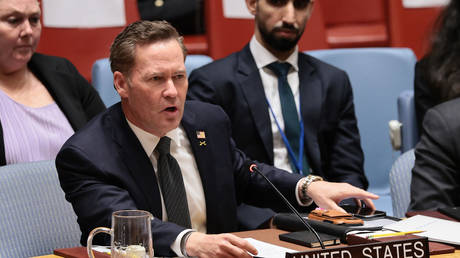
Diplomatic decorum at Turtle Bay took a massive hit during the run-up to the vote. Tensions boiled over when Cuba's Foreign Minister, Bruno Rodríguez Parrilla, and U.S. Ambassador Mike Waltz engaged in a furious shouting match right on the assembly floor.
Waltz took the podium to lambak the Cuban government, pointing to human rights abuses, political prisoners, and the financial control exerted by military-run conglomerates like GAESA. As the U.S. envoy urged member states to vote against the resolution, Rodríguez interrupted on a point of order. Tempers flared immediately.
Waltz fired back, telling the Cuban diplomat to back away and famously snapping, "You understand who you're dealing with? This is America. Back up."
It wasn't your standard sleepy diplomatic sparring. It was raw, aggressive, and emblematic of a newly hostile era in U.S.-Cuba relations.
What Washington's Hardball Tactics Achieved
The Trump administration’s strategy wasn't just about rhetoric. Washington spent weeks pressuring capitals around the world, threatening retaliatory economic measures or loss of favor if they supported the anti-embargo resolution.
The pressure campaign worked on paper, or at least changed the scoreboard. Western nations like Germany, Italy, and Latvia shifted their positions for the first time in decades, opting to abstain rather than vote against the U.S. position.
The U.S. mission argued that the traditional UN resolution is merely a PR shield for a failing regime. Ambassador Waltz laid out figures showing that U.S. exports to Cuba—including agricultural goods—actually reached hundreds of millions of dollars in 2026, arguing that the humanitarian crisis on the island stems from internal mismanagement and corruption rather than external blockade walls.
The Real Cost on the Ground
While diplomats scream at each other in New York, ordinary Cubans face an unprecedented humanitarian squeeze.
The loss of Venezuela's traditional oil supply, combined with a near-total U.S. energy blockade implemented earlier this year, has paralyzed the island. Rolling nationwide blackouts have crippled basic infrastructure. Water pumping stations fail, internet and phone services cut out randomly, and hospitals struggle to maintain normal operations. The World Health Organization and UN human rights experts have warned that fuel shortages have forced the postponement of over 100,000 surgical procedures and disrupted vital vaccination schedules.
Havana calls the sanctions economic warfare equivalent to genocide. Washington insists the government is hoarding resources and hiding billions behind military monopolies.
Where Things Stand Now
A non-binding UN resolution doesn't change domestic U.S. law. Lifting the embargo requires action from the U.S. Congress and a complete reversal of executive policy—neither of which is happening anytime soon under a White House that has openly floated the possibility of military regime change.
The 34th vote proves that while the world still largely opposes the blockade, American pressure has successfully punched holes in the once-monolithic opposition. The diplomatic battlefield has shifted, and the squeeze on Cuba is tightening from every conceivable angle.