The debate over American citizenship isn't staying inside the courtroom. Following major legal setbacks regarding executive orders on birthright citizenship, federal officials and congressional representatives are shifting their focus squarely onto foreign birth tourism, with an intense spotlight on China.
If you've been wondering why politicians keep talking about expectant mothers flying across the Pacific, you need to look past the political posturing. This isn't just about newborn babies. It's a high-stakes proxy war over the Fourteenth Amendment, immigration loopholes, and rising geopolitical tensions between Washington and Beijing. If you enjoyed this piece, you might want to check out: this related article.
Lawmakers are treating birth tourism as an existential threat to national security. But the reality on the ground is far more nuanced, messy, and driven by political convenience than official reports suggest.
The Mechanics of the Crackdown
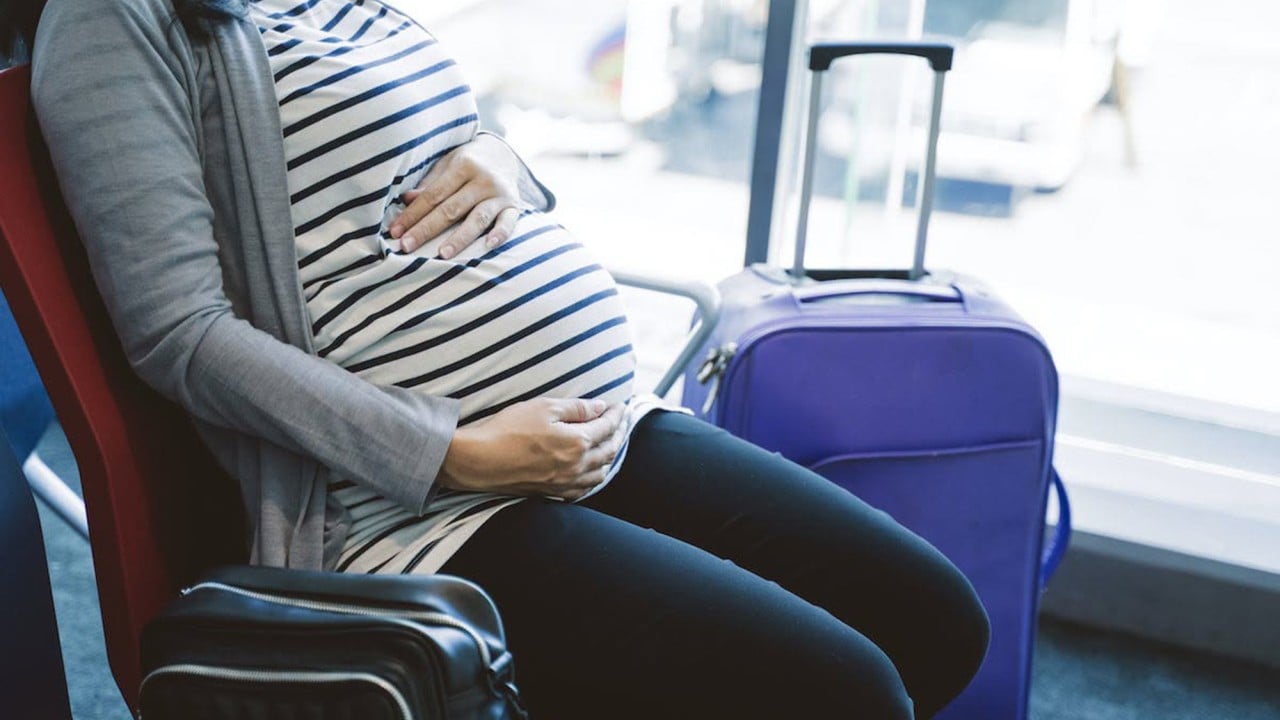
Let's talk about what birth tourism actually is. Foreign nationals—frequently from nations like China and Russia—arrange travel to the United States to give birth so their children automatically secure American citizenship. While touching down on U.S. soil while pregnant isn't technically illegal under current laws, lying to consular officers about your travel intentions to secure a tourist visa is fraud. For another angle on this event, refer to the recent coverage from BBC News.
Federal agencies have spent years prosecuting underground networks that coordinate these trips. In places like Southern California, investigators busted luxury maternity hotel operations where organizers helped clients hide their pregnancies from visa screeners.
Lawmakers are now pushing for aggressive legislative hurdles. Representatives Chip Roy and Tom Tiffany, alongside dozens of other congressional Republicans, have demanded comprehensive data from the Department of Homeland Security and the Department of State. They want to know exactly how many children born to Chinese nationals have reached voting age, whether their parents maintain ties to the Chinese Communist Party, and how visa-waiver loopholes in territories like the Northern Mariana Islands are being exploited.
Why China Became the Center of the Storm
Washington doesn't pick its targets randomly. Tensions between the U.S. and China bleed into every single policy discussion right now, and immigration is no exception.
Republican lawmakers point to unverified estimates suggesting that hundreds of thousands of individuals might hold U.S. citizenship acquired through these methods. Figures thrown around in policy memos often cite between 750,000 and 1.5 million people, though federal agencies admit they don't track parent nationalities on birth certificates.
This information gap creates a vacuum that politicians fill with worst-case scenarios. Witnesses at recent congressional hearings argued that children born through these programs could eventually turn 21, sponsor green cards for their parents, and secure long-term footholds inside the country.
Critics of these crackdowns argue that the numbers are heavily exaggerated to fit a broader anti-immigration narrative. The Migration Policy Institute notes that while birth tourism exists, it represents a tiny fraction of overall births in the U.S. It's basically a drop in the ocean compared to broader demographic shifts, but it packs an emotional and political punch that resonates with voters.
The Constitutional Roadblock
You can't talk about this fight without addressing the Supreme Court. The highest court in the land recently reaffirmed that children born on U.S. soil to temporary or unlawful residents remain protected under the Citizenship Clause of the Fourteenth Amendment.
That ruling dealt a heavy blow to attempts at rewriting birthright rules via executive action. Because executive orders hit a brick wall in the judiciary, lawmakers are scrambling to see if statutory changes can succeed where decrees failed.
Constitutional scholars are deeply divided. Some argue that Congress holds the authority to define the boundaries of jurisdiction and citizenship. Others counter that any statute attempting to strip citizenship from babies born on domestic soil will immediately get struck down by the courts for violating core constitutional guarantees.
You're watching a slow-motion collision between historic constitutional interpretations and modern political ambitions.
What Happens Next
If you're tracking how immigration policy evolves, keep an eye on committee hearings and visa application changes. Federal authorities are already looking at tightening tourist visa approvals for anyone showing obvious signs of pregnancy. Proposals floating around Washington also target downstream benefits, attempting to prevent non-citizen parents from drawing welfare or residency sponsorship through their U.S.-born children.
The rhetoric will only heat up as midterm elections approach. Politicians will keep using birth tourism as a shorthand for border security failures, while civil rights advocates fight to preserve constitutional traditions that have stood for over a century.
Stop waiting for a clean legislative fix. This battle is going to drag through the courts and the halls of Congress for years.
Rep. Harriet Hageman exposes birth tourism business
This video provides a direct look at how congressional representatives frame the issue of foreign nationals utilizing birthright citizenship during legislative hearings.
http://googleusercontent.com/youtube_content/1