Hundreds of thousands of Venezuelans woke up on November 19, 2026, to another whiplash twist in a legal fight that refuses to settle. The U.S. 9th Circuit Court of Appeals granted the Trump administration's request to extend a temporary freeze on a lower-court order that would have restored Temporary Protected Status (TPS).
Here is the bottom line if you're tracking this case or living inside it. TPS for Venezuelans isn't back yet. Work permits remain invalid, deportation exposure stays active, and the pause now runs until seven days after the appeals court hands down a full ruling.
Most coverage treats this like a routine procedural update. Honestly, that misses how brutal this ping-pong litigation actually feels on the ground. One week brings hope of getting a job back or walking out of detention. The next week slams the door shut again.
What the appeals court freeze actually changed today
The 9th Circuit's administrative stay had been set to expire on November 20, 2026. Had that clock run out without action, a district court ruling blocking the termination of Venezuelan TPS would have snapped back into effect.
Instead, the appeals court kept protections frozen until seven days after its full merits ruling. That happened just hours after the administration went back to the U.S. Supreme Court asking for emergency intervention.
In court filings, the government argued that letting the stay lapse would force the Department of Homeland Security to immediately release roughly 1,800 Venezuelan detainees, halt more than 300 removal orders, and resurrect TPS across hundreds of thousands of people after roughly nineteen months of disruption. From a government operations standpoint, the administration wants a clean, uninterrupted runway while the appeals court applies recent high-court precedent.
From a human standpoint, seven days post-ruling means nobody gets instant certainty today. Families can't rebuild a budget on a seven-day countdown.
How Venezuelan TPS went from expansion to courtroom tug-of-war
To understand why this feels so chaotic, look at how fast the rules reversed. Temporary Protected Status was first granted to Venezuelans in March 2021 under President Joe Biden and expanded in September 2023, covering roughly 600,000 people over time.
Then the Trump administration moved to end Venezuelan TPS in 2025. A federal judge in California ruled that termination unlawful. What followed wasn't a straight line to a final verdict. It became a series of emergency stays, appellate reversals, and Supreme Court shadow-docket moves.
Earlier in 2026, the Supreme Court issued a major ruling in a separate dispute involving Haitian and Syrian TPS holders, limiting judicial review of TPS designation and termination decisions under the statute. In October 2026, the justices sent the Venezuelan case back to the 9th Circuit to be weighed against that ruling.
Why legal experts clash over the core question
The fight isn't really about whether conditions in Venezuela are rough. It's about judicial review—whether federal courts have authority to second-guess a DHS secretary's decision to end TPS.
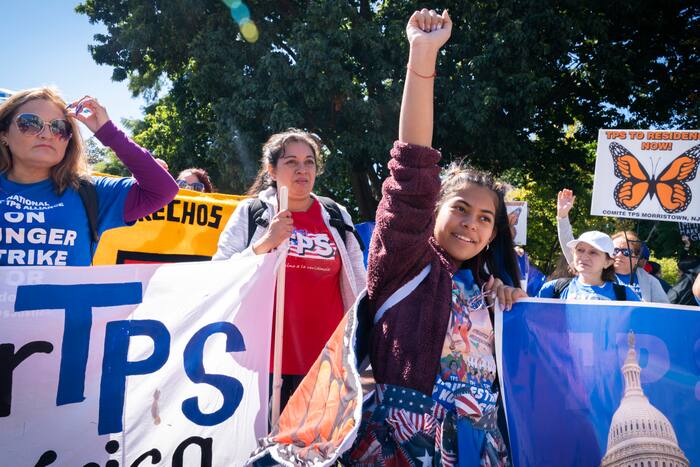
Government lawyers argue the statute bars courts from reviewing designation or termination calls, pointing to Supreme Court precedent. Civil rights attorneys pushing back, including counsel for the National TPS Alliance and the ACLU of Northern California, say lower courts are moving seriously and accuse the administration of trying to shortcut normal appellate review while real-world harm piles up.
Both sides have a clear legal theory. Neither side's theory makes life easier for someone whose Employment Authorization Document expired and whose rent is still due on the first.
What people get wrong about TPS and "automatic" restoration
I see two big misconceptions every time a headline says a court "restored" or "blocked" TPS.
First, a court order pausing a termination doesn't automatically print a fresh work card in your mailbox the next morning. TPS administration requires agency processing, status verification, and litigation stays that can flip overnight. Even when lower courts rule favorably, appellate stays frequently freeze the practical effect while appeals run.
Second, nobody knows the exact headcount of former Venezuelan TPS holders still inside the United States today. Around 600,000 Venezuelans received TPS across its rollouts. Since protections were ended, thousands have faced removal proceedings, detention, or deportation, while many others left voluntarily. Treating that entire group as a static, uniform crowd blurs very different current realities.
Real-world stakes for workers, families, and employers
When work authorization becomes invalid, the damage spreads fast. Workers lose legal footing to stay on payrolls. Employers face compliance headaches and sudden staffing gaps. Mixed-status households deal with lost income while trying to keep track of shifting court dates or immigration notices.
In practical terms, prolonged legal limbo pushes people toward tough choices. Some try to pivot to another visa category if they qualify. Others pull back from public life out of fear of detention or removal. Some leave on their own.
None of that is abstract policy talk. It's groceries, school pickups, clinic visits, and lease renewals.
Practical next steps if you're affected right now
If you or someone in your family previously held Venezuelan TPS, don't rely on social media rumors or secondhand summaries after a court order drops. Litigation moves fast, and details matter.
- Speak with a qualified immigration attorney or accredited legal aid group about your specific case history, any pending removal proceedings, or alternative relief options. Individual facts control outcomes far more than headlines do.
- Track primary court and advocacy updates, such as filings covered by SCOTUSblog and statements from the National TPS Alliance, so you know when an actual merits ruling drops and what the seven-day window triggers.
- Keep copies of all prior USCIS notices, receipts, and IDs organized in one place, and never work without valid authorization just because a court hearing happened.
- If you're an employer, consult immigration counsel before making abrupt personnel changes based on partial news reports, ensuring your I-9 compliance reflects verified legal status.