When U.S. forces arrested Nicolás Maduro in January, a jolt of raw energy surged through Venezuela. It felt like the definitive end of an authoritarian era that had dragged the country into a multi-decade abyss. For a brief moment, a transition to real democracy seemed inevitable. Activists started organizing. Exiles planned their return. The opposition, led by figures like María Corina Machado, prepared for an election that would finally rewrite the nation's future.
Then nature intervened with absolute brutality.
On June 24, 2026, twin earthquakes measuring 7.1 and 7.5 magnitudes ripped through north-central Venezuela. The epicenters near Morón sent shockwaves straight into Caracas and La Guaira. Entire housing projects collapsed. Landslides buried roads. According to official counts, at least 4,500 people died, though anyone on the ground knows the real number is likely much higher.
Disaster changes priorities. Right now, families are digging through concrete blocks with their bare hands looking for missing children. It is a human nightmare. But beneath the humanitarian catastrophe, a quiet political tragedy is unfolding. The push for Venezuelan democracy has been completely derailed, and the new leadership in Caracas is using the disaster to make sure it stays that way.
The Emergency Power Play in Caracas
Acting President Delcy Rodríguez, who took the reins after Maduro's removal, quickly declared a national state of emergency. On paper, this is exactly what a leader should do during a crisis. In practice, it has become a convenient shield against political accountability.
Rodríguez has managed to keep an array of pro-Maduro hardliners entrenched in her cabinet. Instead of laying out a clear timeline for the presidential elections that the country desperately needs, her administration has clamped down on dissent. Last week, a small group of about a hundred protesters gathered in Caracas. They marched toward the secret police headquarters, shouting "now or never," demanding both free elections and the release of hundreds of political prisoners.
The government response was telling. They didn't engage, and they didn't offer a path forward. They simply deployed shotgun-toting security forces to watch the crowd until it dissipated.
When critics point out that an emergency shouldn't erase civic rights, Rodríguez hits back with the old authoritarian playbook. She recently accused opposition figures of capitalizing on earthquake chaos to "conspire" against the state. This is a classic diversion tactic. It turns any demand for democratic reform into an act of treason.
Worse, the regime is actively blocking the political opposition from organizing. When María Corina Machado tried to return to Venezuela from the United States recently, the government temporarily shut down the country's airspace to keep her plane from landing. If the administration were truly focused only on disaster relief, it wouldn't waste precious time and state logistics tracking the movements of opposition politicians.
Washington Swaps Democracy for Oil Stability
You might expect the United States to pressure the temporary government into holding votes. After all, Washington spent years trying to oust Maduro in the name of democracy. But the reality under the Trump administration is different, and it comes down to crude oil.
The white-hot focus for U.S. officials right now isn't the ballot box. It is the oil fields. Venezuela sits on the largest proven oil reserves on earth. Decades of corruption, combined with recent military upheaval, left the state-run oil infrastructure in complete tatters. The earthquakes made things even more complicated by disrupting power lines and local supply routes.
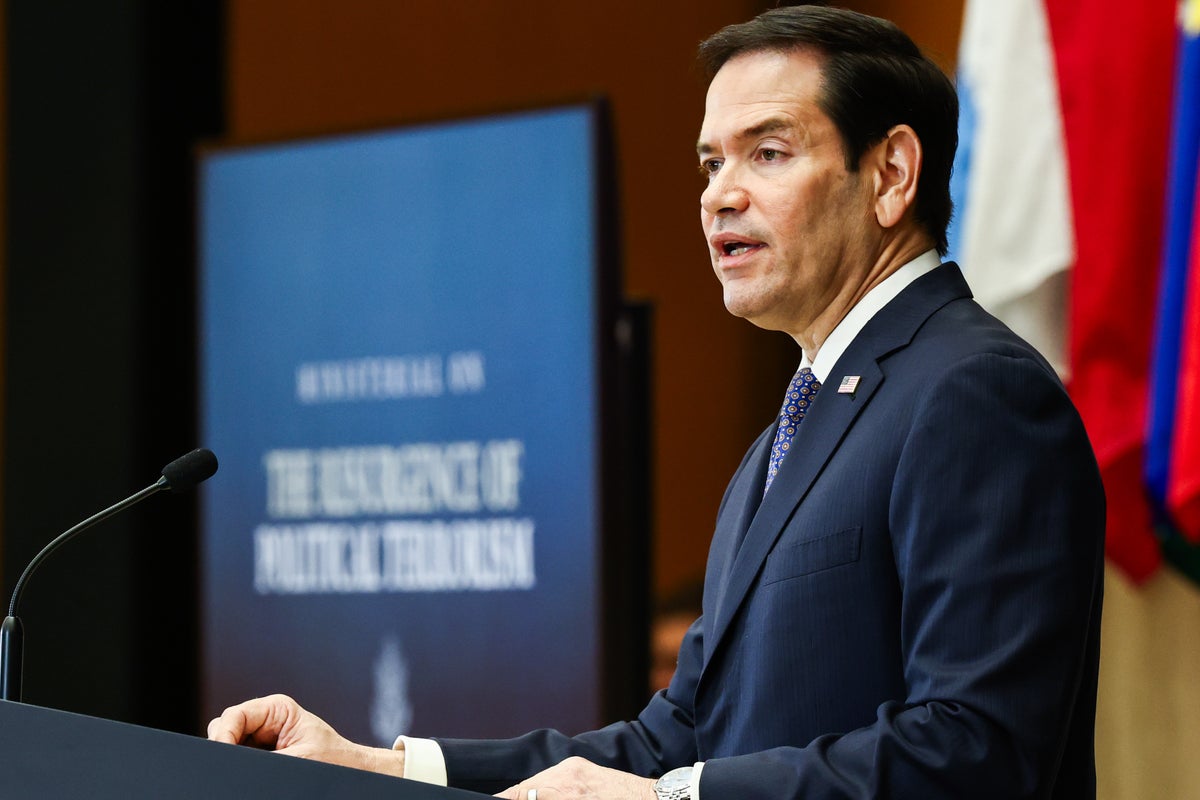
The current U.S. strategy looks a lot like economic pragmatism disguised as humanitarian aid. Secretary of State Marco Rubio promised a swift and expensive response, committing 150 million dollars to faith-based groups and UN agencies. The Pentagon is deploying military logistics, and specialized search teams from Virginia and California are on the ground.
This help is vital for saving lives. No one denies that. But it also gives the U.S. a massive footprint inside the country, and their core objective is securing economic stability. The current thinking in Washington seems to be that a messy, unpredictable democratic election right now would create too much chaos. They want a predictable partner in Caracas who can get the oil pumping again.
Because Delcy Rodríguez is willing to cooperate with American economic teams, Washington is giving her a pass on her authoritarian tendencies. They are letting her kick the democratic can down the road. For Venezuelan activists who risked their lives to oppose Maduro, this feels like an absolute betrayal. They feel that the international community is moving on, treating their freedom as a secondary concern.
A Broken State Incapable of Saving Itself
To understand why this political delay is so devastating, you have to look at the sheer level of decay inside Venezuela's institutions. This isn't just a story of a natural disaster hitting a normal country. This is a disaster hitting a society that was already completely hollowed out.
Before the first tremor hit on June 24, Venezuela was already trapped in a permanent humanitarian crisis. Hospitals routinely operated without basic medicines, surgical gloves, or running water. Rolling blackouts were a daily reality. Millions of people lacked consistent access to food. More than eight million citizens had already fled the country over the last decade, draining the nation of medical professionals, engineers, and emergency experts.
When the 7.5 magnitude quake struck, the state apparatus simply folded.
In the immediate aftermath, there was no coordinated state response. In hard-hit towns along the northern coast, like Catia La Mar, the military didn't arrive with heavy lifting equipment to clear fallen apartments. Instead, soldiers were spotted merely directing traffic or standing around while citizens dug through concrete blocks with their bare hands. First responders have been underfunded and understaffed for a generation. They literally lacked the tools to do their jobs.
This administrative failure has pushed public anger to a boiling point. Social media feeds inside the country are filled with raw, unfiltered fury. In one video that went viral across Latin America, a grieving mother named Damely Yaneth Díaz confronted Nicolás Maduro Guerra, the politician son of the ousted dictator, during his visit to a damaged housing project.
"I didn't lose a kitchen! I lost a daughter!" she screamed at him while cameras rolled. "The lot of you should be arrested. This was recklessness and you must pay!".
The crowd around her cheered. People are smart. They know that while the earthquake was an act of God, the catastrophic building collapses and the nonexistent rescue efforts are the direct result of decades of government theft and total incompetence.
The False Choice Between Bread and Ballots
The governing clique in Caracas wants the world to believe that you cannot rebuild bridges and run an election at the same time. They present this as a logistical impossibility. It is a false choice.
History shows that crises can actually be a catalyst for democratic renewal if the political will exists. Holding transparent elections would give a new government the legitimate mandate it needs to handle a six-billion-dollar reconstruction project. Right now, international donors are hesitant to funnel massive rebuilding funds directly through an un-elected, transitional government filled with old regime holdovers who have a track record of weaponizing aid.
By delaying the transition, Rodríguez isn't protecting the recovery effort. She is harming it.
The longer the state of emergency drags on without a firm voting date, the more likely it is that public anger will turn into widespread civil unrest. If the population believes that the government is using a national tragedy to steal another election cycle, the protests will get bigger, louder, and more violent. That kind of instability will bring reconstruction to a dead halt, no matter how many search teams the U.S. sends over.
What Needs to Happen Now
The international community cannot afford to let the Venezuelan crisis slide into a permanent military dictatorship under the guise of disaster management. True stability requires a government that the people actually trust.
If you are tracking this crisis, watch for these specific indicators to see where the country is heading:
- The Election Timetable: Watch whether regional bodies like the Organization of American States (OAS) can successfully pressure Rodríguez to announce a definitive, unalterable date for presidential elections before the end of the year.
- Aid Distribution Monitoring: Watch how international aid is handled. Independent non-governmental organizations and UN teams must control the distribution of food and medical supplies. If the temporary government starts using aid packages to buy political loyalty or punish opposition neighborhoods, the transition is dead.
- Airspace and Political Freedom: Look at whether opposition leaders like María Corina Machado are allowed to travel freely within the country to meet with local communities. If the regime continues to use security forces to block political movement, it means the state of emergency has transitioned into a permanent dictatorship.
Venezuela is currently trapped under two types of rubble: the physical debris of collapsed cities and the political wreckage of an authoritarian regime that refuses to let go. Clearing the concrete is a matter of machinery and money. Clearing the political roadblock will take a lot more courage.