Wall Street spent months convinced that Kevin Warsh would turn the Federal Reserve into an open bar for cheap credit. Investors expected rate cuts, easy money, and a central bank willing to bend the knee to political pressure.
They were dead wrong. You might also find this connected story useful: Why Lululemon Tripped Over a Japanese Drum in China and What It Teaches Global Brands.
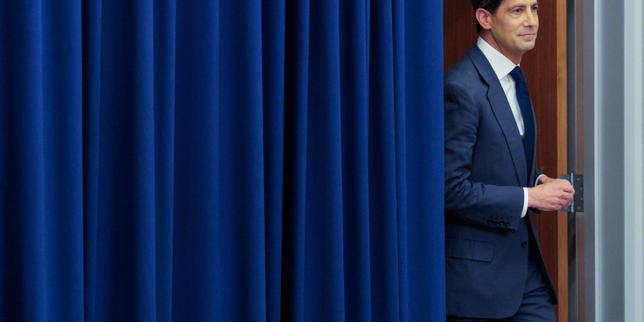
Warsh just wrapped up his debut press conference as Fed Chairman after the June 2026 policy meeting. He didn't sound like a dove. He sounded like a man ready to break things to drag inflation down to two percent. The shockwave hit the markets instantly, wiping away early stock gains and driving the two-year Treasury yield up to 4.21%.
DoubleLine Capital CEO Jeffrey Gundlach watched the performance and delivered a blunt reality check to anyone still hoping for a summer rescue. Gundlach made it clear that the easy-money fantasy is officially dead. The new sheriff in town isn't handing out cheap candy. He is building a fortress around price stability. As reported in recent coverage by Bloomberg, the effects are notable.
The Mirage of the Easy Money Chairman
The market ran with a specific narrative when Warsh took over the central bank in May. His background looked different from his predecessor, Jerome Powell. Warsh came from the dealmaking world at Morgan Stanley, serving as a young Fed governor during the 2008 crisis. Lately, he talked about artificial intelligence as a massive disinflationary force, giving tech bulls hope that he would justify immediate rate cuts based on productivity gains. Combine that with political pressure from Washington for lower interest rates, and traders assumed a dovish regime change was locked in.
Gundlach noted that this assumption completely ignored how central bankers behave once they actually sit in the big chair. During his CNBC Closing Bell appearance, Gundlach pointed out that Warsh sounds nothing like the accommodative figure investors expected back in the first quarter. The commitment to rate cuts that everyone priced in months ago has vanished.
The Fed kept rates unchanged at this meeting, which wasn't a surprise. What caught everyone off guard was the sheer aggression in the language. The official policy statement added a blunt new sentence stating that the committee will deliver price stability. Warsh repeated that exact phrase like a mantra throughout his press conference.
Inflation currently sits around 4.20%. The Fed has missed its target for five straight years. Warsh didn't make excuses for that failure. He lamented it. He called the Fed's commitment to fixing it strong, unanimous, and unambiguous. That doesn't sound like a chairman worried about keeping the stock market happy.
Tearing Up the Fed Playbook
The most unsettling part of the press conference for Wall Street wasn't just the hawkish tone. It was the fact that Warsh is actively dismantling how the Fed communicates with the public.
For more than a decade, the Federal Reserve operated on forward guidance. Officials essentially held the market's hand, telling investors exactly what they planned to do months in advance to prevent sudden tantrums. Warsh killed that approach on day one.
He declared that under his leadership, the Fed is dropping forward guidance entirely. He noted that inflation is a choice made by central bankers, meaning monetary policy drives prices rather than random economic events. Because of that, he refuses to give markets a roadmap for future rate decisions. Traders will have to fly blind, reacting to data without a safety net.
To make matters more unpredictable, Warsh launched five specialized task forces to audit and overhaul the central bank's entire operational framework.
One group is looking directly at how the Fed communicates. Another task force is set to reexamine inflation statistics. Gundlach flags this as a highly strategic move. By setting up these advisory groups, Warsh buys himself time. It means we probably won't see any major rate hikes or cuts until autumn when these groups report back.
But changing how inflation is measured introduces massive uncertainty. A task force dedicated to modifying inflation metrics could open the door to entirely new ways of reading economic data. If the Fed changes how it counts inflation to make it easier to declare victory, it changes the entire calculus for macro investing.
The Death of the Dot Plot
Wall Street loves the dot plot. Every few months, investors dissect that chart of anonymous interest rate projections to guess the exact trajectory of monetary policy.
Warsh thinks the dot plot is garbage. He has previously called it a relic, and at this meeting, he refused to submit his own personal rate projection. He wants the market to stop obsessing over every decimal point of short-term data based on what they think the Fed will do next.
This creates a massive problem for algorithmic trading and short-term speculators. When you remove forward guidance and kill the predictability of the dot plot, you inject pure volatility back into the bond market. The days of a highly predictable, coddled market are over.
Some retail investors on forums like Reddit spent the afternoon arguing that Warsh is just a political figure who will eventually bow to pressure to cut rates to compete with lower yields overseas. But that view misses the structural reality of the Federal Open Market Committee. The Fed chair is only one vote. Right now, a significant portion of the committee leans hawkish, and today's decision to hold rates and harden the inflation language was entirely unanimous. Warsh isn't going to isolate himself from the rest of the committee just to please Wall Street.
Why Gundlach Is Buying Long Bonds Anyway
You might think a hawkish Fed chair who refuses to cut rates would scare away bond investors. The opposite is happening.
Gundlach used this exact moments to double down on long-term U.S. Treasuries. It sounds counterintuitive, but the logic is sound if you understand how bond math works over long horizons.
When a Fed chairman promises easy money and quick rate cuts while inflation is still running at 4.20%, long-term bond holders panic. They worry that the Fed will let inflation run hot, which destroys the purchasing power of a bond that matures in ten or thirty years. That fear forces yields higher to compensate for the risk.
By coming out swinging against inflation, Warsh did the long bond a massive favor. He proved that he will protect the value of the dollar, even if it hurts economic growth in the short term. Gundlach stated clearly that the rationale for holding long-term Treasuries is significantly stronger now that this new sheriff is in town. A hawkish Fed reduces the long-term risk of runaway inflation, making fixed income a much safer place to park capital.
Short-term bonds tells a different story. The two-year yield spiked because it tracks immediate Fed policy, and traders had to quickly price out any lingering hope of a rate cut this summer. But for long-term investors, a central bank dead-set on price stability provides a floor of confidence.
What to Do With Your Cash Right Now
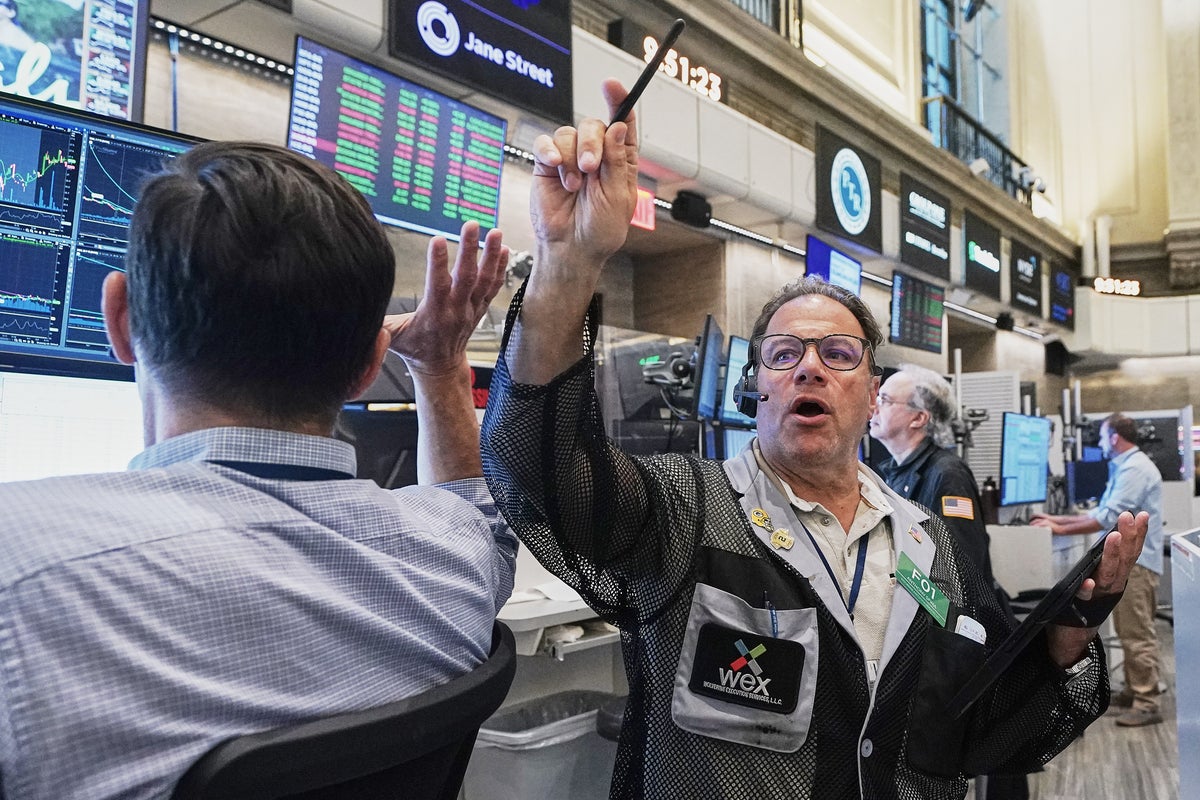
The financial markets are looking at a messy transition period. The Dow dropped over 500 points following the presser, and the tech-heavy Nasdaq fell more than one percent. The old strategy of buying expensive tech stocks on the assumption that low interest rates will bail out high valuations looks incredibly dangerous right now.
Forget about looking for hints from Fed officials over the next few weeks. The communication blackout is real, and forward guidance is dead.
You need to adjust your asset allocation immediately. First, clean up any exposure to highly leveraged companies that rely on refinancing short-term debt; those interest costs aren't coming down anytime soon. Second, look at long-term Treasuries or high-quality fixed income to capture these elevated yields while the Fed holds the line against inflation. Finally, keep cash in high-yield vehicles that actually beat the current 4.20% inflation rate. Don't let your capital sit idle in a standard bank account while the Fed recalibrates its entire strategy. The rules of the game just changed, and waiting for an easy-money rescue is a losing bet.

,webp/018/628/726/2560x1440.9.webp)