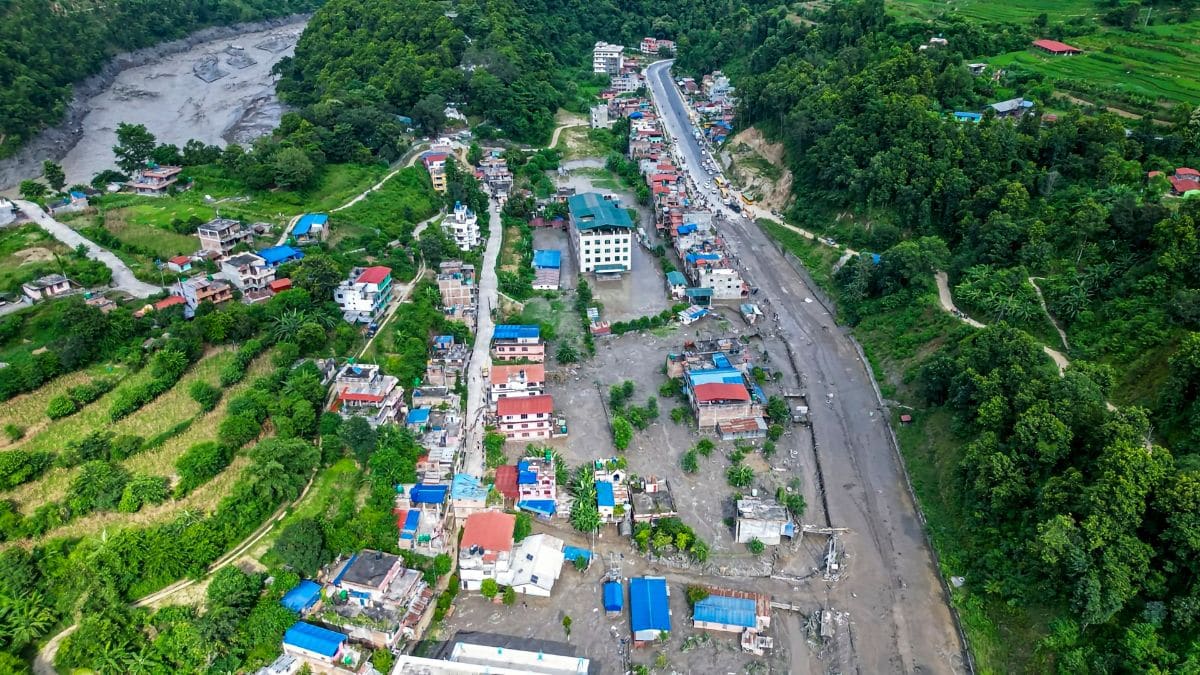
A sudden wall of mud, rock, and raging water tore through Nepal's Rasuwa district, turning a sacred spiritual journey into a desperate survival crisis. Hundreds of travelers heading for the high-altitude Kailash Mansarovar Yatra found themselves cut off as communications collapsed and critical border infrastructure vanished under the torrent.
If you are trying to track down loved ones or understand the scale of the destruction along the Nepal-Tibet border, the situation on the ground remains deeply fluid and high-stakes. Here is what is actually happening behind the initial headlines.
The Anatomy of the Rasuwagadhi Disaster
The disaster struck early in the morning along the Bhotekoshi River corridor. Preliminary reports from Nepal's Flood Forecasting Division point to a massive landslide upstream in Tibet that temporarily blocked the river flow. When that natural dam breached, a catastrophic wall of water surged downstream into Nepal's Rasuwa district, obliterating roads, local market areas, and border immigration posts.
Tour operators confirmed that nearly 400 travelers—including foreign nationals and Nepali guides—were scheduled to cross the Rasuwagadhi border checkpoint on their way to Tibet. Among them, a significant contingent consisted of Indian citizens undertaking the sacred pilgrimage. Because the flash flood completely wiped out access roads and mobile towers, establishing contact became nearly impossible during the crucial first twelve hours.
Security forces, including the Nepal Army and the Armed Police Force, mobilized fourteen helicopters for search and rescue operations. Yet, rescue teams faced massive hurdles because the epicenters of the worst-hit zones were entirely isolated by collapsed bridges and continuous mudslides.
The Human Toll and State-Level Panic
The numbers shifting across official channels reveal a grim reality. Beyond the local residents affected in downstream districts like Nuwakot, international tourists and pilgrims bore the brunt of the sudden surge.
- Over one hundred Indian nationals, including dozens specifically tied to the Kailash Mansarovar Yatra, were initially marked as untraceable.
- Pilgrims hailing from various states—including a heavily monitored group from Tamil Nadu—found their transport buses cut off near border immigration centers.
- International groups, such as travelers associated with the Isha Foundation, reported members stranded or out of contact near the Gyirong border crossing.
State governments across India, particularly in Uttar Pradesh, Bihar, Tamil Nadu, and Kerala, scrambled to set up emergency helplines. Authorities in Bihar and Uttar Pradesh also issued high alerts for districts downstream along the Gandak and Trishuli river systems, fearing secondary flooding as water levels surged across the international border.
Navigating the Information Void
When major Himalayan disasters strike, misinformation spreads just as fast as the floodwaters. Families relying on social media heard conflicting rumors about buses plunging into gorges or entire towns being wiped off the map.
If you are tracking someone in the region, don't rely on unverified chat groups. Local tour coordinators and state disaster management cells advise channeling all inquiries through official diplomatic desks. The Indian Embassy in Kathmandu, alongside the Nepal Tourism Board, has been cross-referencing agency manifests with active rescue lists to separate stranded survivors from those genuinely missing.
Practical Steps For Affected Families
Panic won't speed up rescue chopper rotations. If you have family members currently traveling through Nepal's central districts or heading toward Tibet, take these immediate actions:
- Contact State Helplines: Reach out directly to your state's dedicated disaster response cell or the Ministry of External Affairs control room with exact passport details, agency names, and last known itineraries.
- Document Tour Agency Manifests: Keep a copy of the specific travel agency or tour operator's booking reference. Local authorities are relying heavily on agency logs to verify who crossed specific checkpoints before the river surged.
- Monitor Downstream Advisories: If your relatives are stationed in lower-altitude areas like Pokhara or Kathmandu, ensure they stay away from swollen riverbanks as regional weather alerts remain active.
Check official updates from the Nepal Tourism Board or the Indian Embassy in Kathmandu for verified manifest clearances before drawing conclusions from fragmented reports.