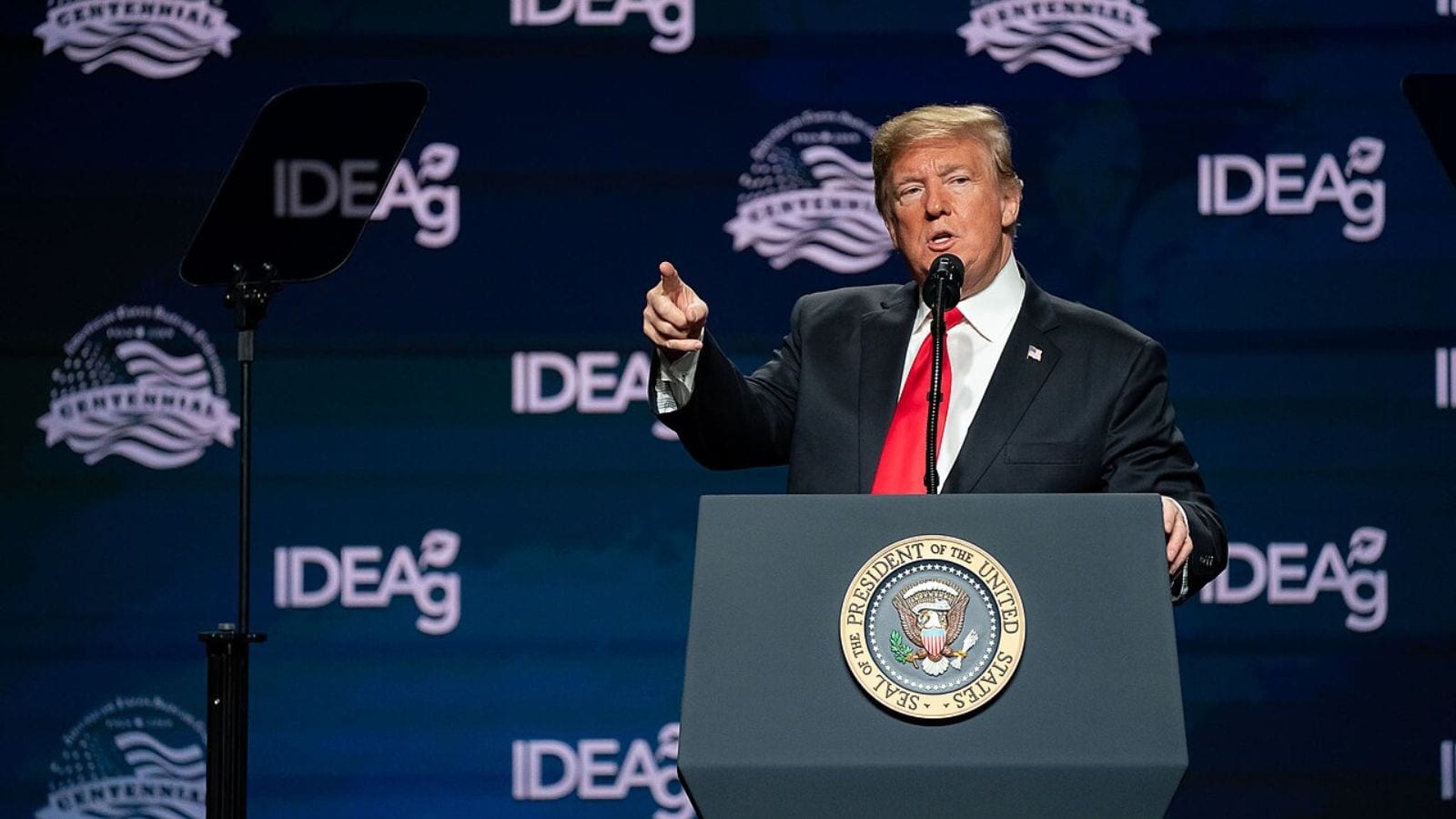
You’ve likely seen the headlines. President Trump is bringing crypto leaders to the White House to talk regulation. It sounds like a standard policy meeting. It’s actually a collision between massive personal financial stakes, federal overreach, and the future of how Americans handle money.
If you’re trying to figure out what this means for your portfolio or your startup, ignore the noise. The real story isn't just about "digital assets." It's about a fundamental shift in how the SEC and the White House are choosing to view the blockchain.
What is really happening at the table
The meeting isn't just a handshake event. It’s the backdrop for a massive pivot in government oversight. Just yesterday, the SEC dropped "Regulation Crypto Assets." This isn't just another boring PDF of rules. It’s a targeted attempt to create a legal "safe harbor" for tokens.
The goal? To stop the "offshore flight." For years, the U.S. has basically pushed innovative companies to move to places like Singapore or Dubai because the regulatory environment here was a minefield. The new SEC proposal looks to change that by offering exemptions for offerings up to $5 million and, in some cases, $75 million.
Why does this matter? If you're a founder or an investor, you've been operating in a gray area where one wrong move could trigger a massive lawsuit. This shift suggests the government is finally realizing that if they don't provide a path to compliance, the industry will simply grow without them.
The prediction market tension
The air in Washington is thick with specific interests. While the White House is hosting tech leaders, keep an eye on the friction surrounding prediction markets. Platforms like Kalshi and others are trying to argue they belong under the Commodity Futures Trading Commission (CFTC) rather than state-level gambling boards.
It’s a high-stakes turf war. If these platforms are classified as financial derivatives, they’re protected by federal law. If they are categorized as betting or "games of chance," state regulators can shut them down city by city. Trump’s administration has been vocal about wanting the federal government—specifically the CFTC—to keep exclusive authority here. It’s a move that keeps the market unified and, quite frankly, easier for big players to manage.
Why this is different in 2026
If you look at the landscape from a few years ago, the hostility toward crypto was palpable. Today, it’s about integration. You have SEC Chair Paul Atkins pushing for frameworks that look a lot more like traditional securities law but tailored for decentralized tech.
However, don't mistake this for a free-for-all. The government isn't saying "anything goes." They’re saying "show us the money." The new rules require audited financial statements and principles-based disclosures. They want transparency, not just hype.
I’ve spent enough time watching these regulatory shifts to know that "clarity" is a double-edged sword. Yes, it makes it easier to raise capital. But it also means that the days of the "wild west" are officially numbered. Projects that relied on obscurity to bypass investor protection laws will find themselves in the crosshairs.
What you need to watch next
Stop waiting for a "moment" where everything is legal. That doesn't exist. Instead, look at these three things:
- The Safe Harbor Provisions: Pay attention to how the SEC defines the point where a project "ceases essential managerial efforts." This is the threshold that turns a crypto token into a non-security. If you're holding tokens that are still highly dependent on a single team, that's a risk profile that just got much clearer.
- State vs. Federal Battles: Watch how states react to the SEC's attempt to preempt their authority over these new asset classes. If you're building a business, you want the federal umbrella to hold. If the courts decide states still have a say, you're looking at fifty different rulebooks.
- The Audit Standard: With the new rules calling for audited financial statements at certain levels, look for a surge in demand for specialized accounting firms. If you're involved in a project that can't produce a clean audit, that’s your first sign to exit.
The current administration isn't suddenly a fan of crypto because of some philosophical breakthrough. They’re interested because the industry is too big to ignore and too valuable to leave to foreign competitors. Use this period of "clarity" to vet your holdings and your business plans. The era of guessing is ending. The era of compliance is here. Don't be the one left holding the bag when the rules finally solidify.