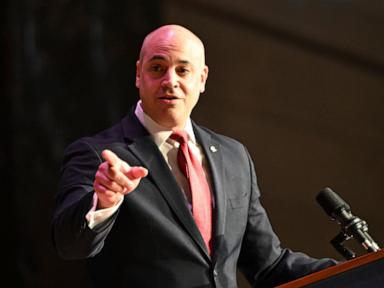
Alaska politics is weird. If you’ve spent any time following the state’s recent elections, you already know that. But the 2026 U.S. Senate primary takes "weird" to a whole new level.
You’ve got Dan S. Sullivan, the incumbent Republican. Then you’ve got Daniel J. Sullivan Jr., a retired schoolteacher from Petersburg. Both are running for the same seat. Both are on the ballot. If you’re confused, that’s exactly what the incumbent senator claims was the plan all along.
The Confusion Factor
Incumbent Senator Dan S. Sullivan has been vocal about his frustration. He’s called the presence of his namesake a "dirty trick," openly accusing Democrats and the campaign of his main rival, former Democratic Representative Mary Peltola, of orchestrating a scheme to siphon votes.
He’s not just grumbling behind closed doors. He’s taken the fight to the media and the courts, trying to get his namesake kicked off the ballot entirely. So far, those efforts have failed. The Alaska Supreme Court ruled that Daniel J. Sullivan Jr. has every right to be there.
Here’s the thing: while the incumbent senator calls it a "sham" candidacy, the challenger says he’s just a fed-up citizen. He claims he’s running because he’s tired of what he views as government inefficiency. He switched careers from the Forest Service to teaching, and now he’s making this run. Whether you believe his motivations are pure or cynical, the reality is that the ballot is stuck with both of them.
The Ballot Hack
To prevent total voter meltdown, election officials had to make a rare call. On the 2026 primary ballot, Dan S. Sullivan is explicitly labeled as the "Incumbent" and a "Registered Republican." Daniel J. Sullivan Jr. is listed with no party affiliation, even though he filed as a Republican.
It’s an unusual move. Election officials haven’t typically labeled incumbents this way for years. They did it because they had to do something to keep the voters from guessing which Dan was which.
But does this labeling actually work? In a state like Alaska, where independent and nonpartisan voters make up roughly 63% of the electorate, the "R" next to a name isn't always the only thing that matters. People know their candidates. Or at least, they think they do.
Why the Peltola Factor Matters
Let’s be honest: the reason this "two Sullivans" drama is getting so much national attention isn't just because of the name overlap. It’s because the actual race between Senator Sullivan and Mary Peltola is tight.
Peltola is a unique political force in Alaska. She’s twice won the state’s lone U.S. House seat—an impressive feat in a state that hasn’t sent a Democrat to the Senate since 2008. She’s pro-oil, pro-gas, and she talks about pocketbook issues that resonate with Alaskans regardless of party.
If you’re a national Democrat, you’re looking at Peltola as your best shot at flipping a Senate seat. If you’re a national Republican, you’re looking at this race as a potential disaster if the vote gets split.
Is Ranked-Choice a Safety Valve
Some analysts point out that Alaska’s "Top Four" primary system, combined with ranked-choice voting (RCV) for the general election, makes these "sham" candidate games less effective. In most states, if a candidate splits your base, you’re toast. In Alaska’s system, you can rank your choices. If you show up to vote for "Dan Sullivan" but realize there are two, and you rank them both—or rank one and then a different candidate—the math of the general election shifts.
The primary narrows the field to four. Those four then go to the general election. By the time November rolls around, the confusion over the names will likely be a secondary issue compared to the policy differences between the two main frontrunners.
What You Should Do
If you’re an Alaskan voter, don’t rely on hearsay or social media posts about who is "real" and who is a "trick." The best way to cut through the noise is simple:
- Check the Sample Ballot: Go to the Alaska Division of Elections website and look at a sample ballot for your specific district. You’ll see the designations for yourself.
- Research the Candidates: Look at the actual campaign websites. Read their platforms. Don't let the name confuse your vote.
- Understand the System: If you’re planning to vote in the general election, refresh yourself on how ranked-choice voting works. It gives you more power than a simple "check one" system ever did.
The drama over names is a distraction. The real work is looking at who aligns with your view of Alaska’s future. Don't let a matching nameplate take your eye off the ball.