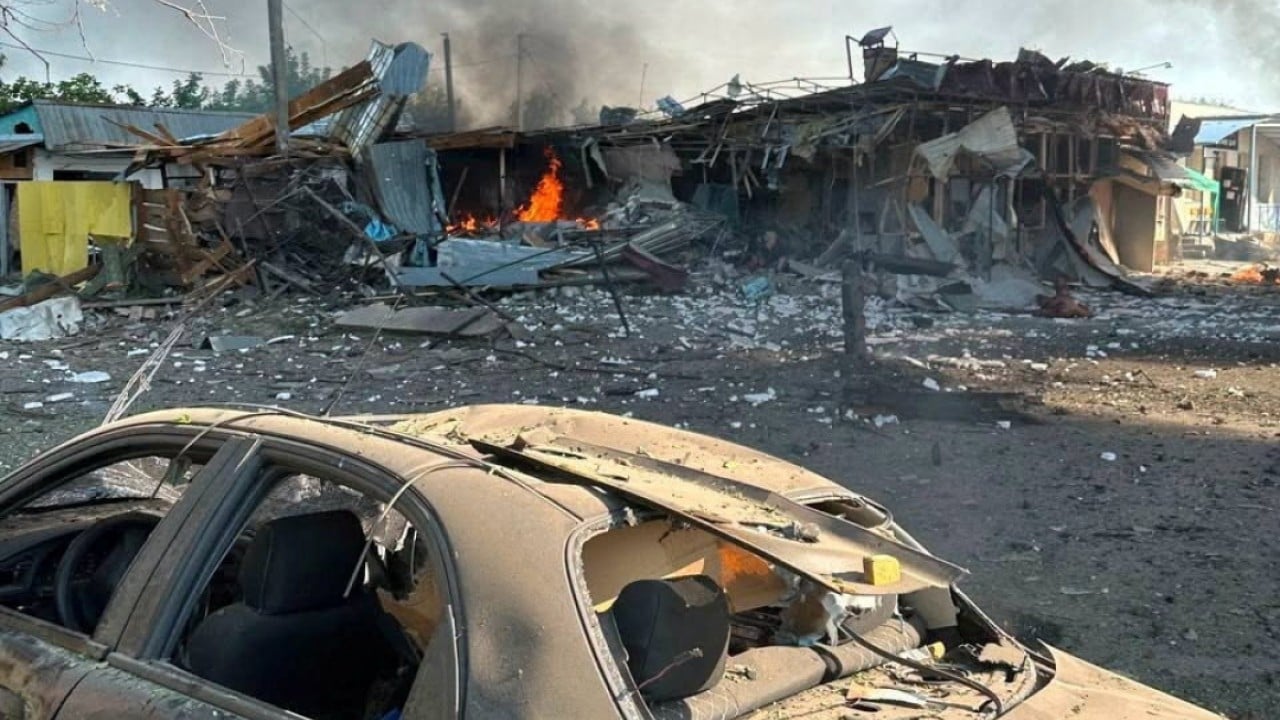
The headlines from Baidoa this week sound like a broken record. You see them every few months: the Somali army claims a decisive victory, officials boast about "fully securing" the region, and yet, the violence persists. On Monday, August 17, 2026, the largest city in Somalia's South West State became a battlefield once again. Federal forces clashed with fighters loyal to the ousted regional president, Abdiaziz Laftagareen.
If you’ve been watching the situation in Somalia, you know this isn’t just about one city. It’s a symptom of a much deeper, messier reality that the official press releases rarely acknowledge.
The Core of the Conflict
The fighting didn’t happen in a vacuum. It follows months of intense friction between the federal government in Mogadishu and regional leaders who feel sidelined by President Hassan Sheikh Mohamud’s aggressive push for constitutional reform.
The government wants to transition from the traditional clan-based indirect voting system to universal suffrage—a system where individuals, not elders, cast ballots. While that sounds like progress on paper, it’s being treated as an existential threat by regional power brokers who built their influence on the existing clan-based model.
When you strip away the political jargon, you’re left with a brutal tug-of-war. The federal government is trying to centralize power. Regional leaders are fighting to keep their autonomy. And in the middle? You have the civilians of Baidoa, who are once again caught in a crossfire between federal troops and local militias.
Why the Insurgency Angle Matters
The government’s statement on Monday was particularly aggressive. They labeled the attackers as "Khawarij," a term they almost exclusively use for Al-Shabaab. By linking Laftagareen’s loyalists to the Islamist insurgent group, the administration is trying to frame the narrative: it’s not just a political dispute; it’s a fight against terrorists.
But here is where you need to be skeptical. While opportunistic alliances between local militias and Al-Shabaab are common in the chaos, characterizing a regional political uprising as purely an Al-Shabaab offensive simplifies a complex power struggle.
It’s a strategic choice. Labeling an opponent as an insurgent provides legal and moral cover for a heavy-handed military response. It also justifies the deployment of the new, Saudi-trained soldiers the president recently praised as proof that Somalia no longer needs foreign security help.
The Reality on the Ground
If the national army is so capable, why did Baidoa see such intense, hours-long fighting involving explosives? Why did telecommunications services get cut off, leaving residents in the dark while both sides claimed victory?
I’ve seen this pattern before. When government spokespeople claim they’ve "repelled" an attack while a former regional leader’s camp claims they still hold territory, it means the security situation is precarious at best. The fact that Doctors Without Borders reported multiple casualties confirms the human cost of this tactical back-and-forth.
For the people living in Baidoa, this isn't about constitutional reform or the merits of universal suffrage. It’s about survival in a city that hosts thousands of displaced people already reeling from malnutrition and drought.
The Problem with "Foreign-Free" Security
President Mohamud’s recent claim that Somalia can handle its own security is a bold political statement. It’s meant to project sovereignty and strength. However, the reality of the 2026 security climate suggests otherwise.
- Fragmented Loyalty: Large parts of the country are still governed by regional leaders who are deeply suspicious of the central government.
- Al-Shabaab's Resilience: Despite being a common enemy, the group remains the wealthiest and most dangerous entity in the region. They thrive when the federal government and regional states are busy fighting each other.
- Logistics and Training: While the new army units are well-trained, they are being tested against a mix of veteran insurgents and local militias who know every inch of the terrain.
Moving Forward
If you're looking for where this goes next, keep an eye on the "transition period." The federal government is currently operating in a legal gray area because the presidential mandate technically ended in mid-May without a clear succession plan or agreement on the new election model.
Until the government and regional states can move beyond these violent standoffs, the path to universal suffrage will likely remain paved with more conflict. For those tracking the region, don't just take the "official" version of the battle count at face value. The real story isn't the number of bodies the army says they counted; it's the fact that the fighting keeps happening, proving that the political bridge between Mogadishu and the regions is still burned.
If you want to understand what's next, watch the legislative proceedings in the states. If the federal government forces through its changes without buy-in from regional power brokers, expect more Mondays like this one in Baidoa. The cycle of political deadlock is the primary fuel for the security crisis. Until that breaks, military victories will remain temporary at best.