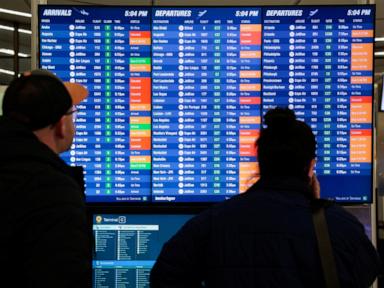
Planes stopped moving. Millions of passengers sat stranded on tarmacs or stared hopelessly at departure boards flashing red.
When the Federal Aviation Administration slapped a rare nationwide ground stop on American airspace, it wasn't because of a cyberattack, a rogue drone, or severe weather. The entire aviation infrastructure buckled under a far more mundane, terrifying reality.
Old routers broke.
Transportation Secretary Sean Duffy stepped up to the microphones alongside Homeland Security officials to address the chaos. He pointed the finger squarely at ancient infrastructure, explaining that the private communications network connecting air traffic control centers got completely overwhelmed. According to officials, a routine update introduced security patches that choked the legacy system's switches and routers.
Data traffic spiked, the network rebooted, and a massive crash cascaded nationwide.
The Danger of 1980s Tech in Modern Skies
Most travelers assume that commercial aviation runs on state-of-the-art quantum computing and space-age software. They picture sci-fi control rooms where high-tech redundancy protects every flight.
The truth is much uglier.
Underneath the shiny terminals and modern aircraft sit communication networks relying on copper lines dating back to the 1980s. Duffy didn't mince words during the White House briefing, admitting that while the FAA has rolled out modern gear in recent years, the critical backbone routing the data remains a patchwork of aging technology.
"We use 1980s little copper lines," Duffy told reporters. "It's an old system that went down and went down everywhere. It got overloaded."
When a security patch met those fragile legacy routers, the hardware simply couldn't process the packet load. The system choked, forcing a nationwide timeout to prevent catastrophic tracking failures. Officials confirmed immediately that there was zero indication of any nefarious act or cyberterrorism. It was a digital traffic jam on a dirt road built four decades ago.
The Immediate Fallout for Travelers
FlightAware metrics showed thousands of delayed flights and over four thousand outright cancellations as airports from Boston to Los Angeles ground to a halt. Even after the FAA lifted the ground stop once systems stabilized, the ripple effects wrecked travel schedules for days.
Airlines face an uphill battle untangling displaced crews, stranded aircraft, and angry passengers. Duffy warned that carriers would push to move flights late into the night, but physical limits on crew duty hours and gate availability mean the recovery is agonizingly slow.
If you are flying this weekend, don't expect a smooth ride. The backlog means aircraft are out of position across the entire domestic network. A plane scheduled to leave Chicago might currently be sitting in Dallas because its morning crew timed out.
Fixing the Skies Will Cost Billions
This shutdown brings a long-simmering political battle back to the forefront. Lawmakers approved $12.5 billion for air traffic control modernization last year, but officials are already signaling that it's a drop in the bucket compared to what is actually required.
Duffy didn't hesitate to ask for a massive injection of capital, pointing straight to Congress for an emergency $50 billion funding package to rip out the remaining legacy architecture.
"This is an emergency," Duffy stated.
The debate now shifts to how quickly funding can clear Capitol Hill and whether private contractors like L3Harris—who operate parts of the underlying communication network—face stricter oversight. Patching software bugs on hardware designed during the Reagan administration is a fool's errand. Until Congress funds a total structural overhaul, American airspace remains vulnerable to another digital bottleneck.
Check your flight status directly through your airline's app before heading to the airport today. Give yourself triple the usual arrival time, and pack your patience because the system is running on borrowed time.