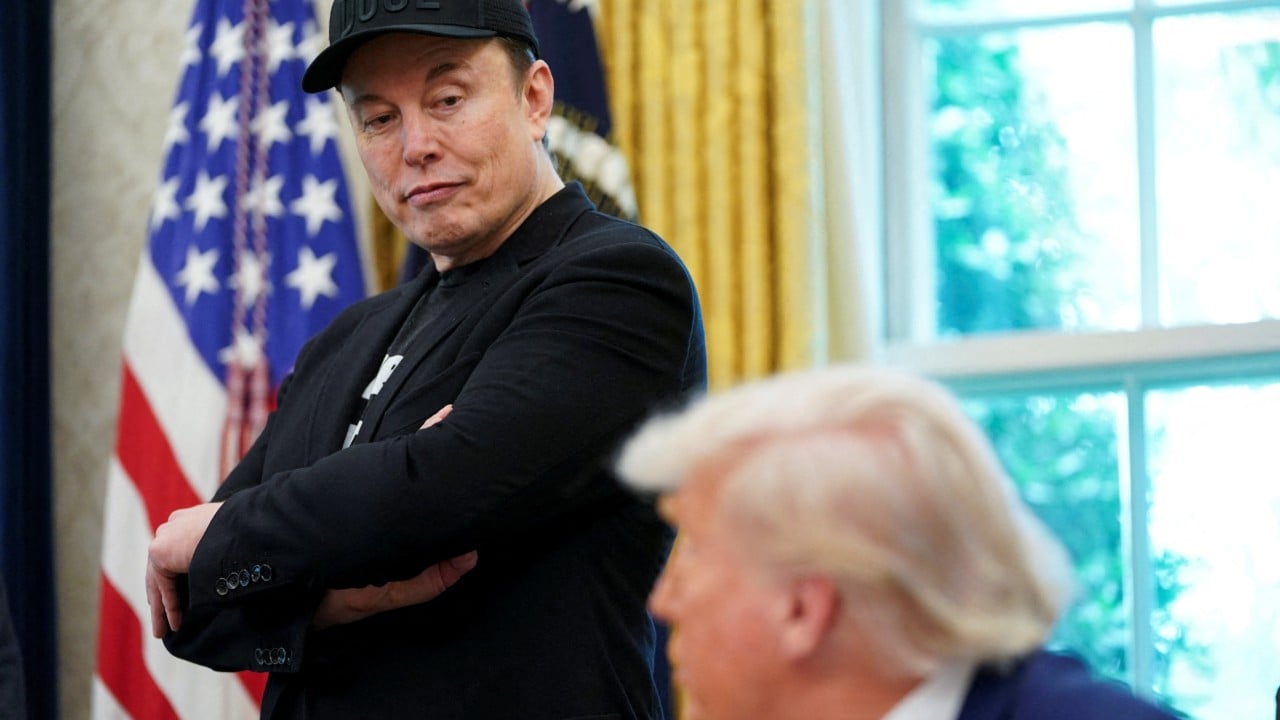
Donald Trump just dropped a massive bomb on Truth Social, and it sent shockwaves right through Silicon Valley.
The post claims Apple signed a deal to design and build chips right here in America using Intel. If you follow tech, your first reaction was probably disbelief. Apple famously ditched Intel back in 2020 to build its own Apple Silicon, relying entirely on Taiwan Semiconductor Manufacturing Company, or TSMC. Going back to Intel feels like moving back in with your ex.
But this isn't a rumor anymore. The Wall Street Journal flagged a preliminary agreement back in May, and now we have the political confirmation. Intel stock jumped nearly ten percent in early trading, hitting record highs. Apple is up too, though more modestly.
If you look closely at what is happening under the hood of the global chip supply chain, this move makes perfect strategic sense. Apple isn't abandoning TSMC completely, but the tech giant is desperate to diversify. The artificial intelligence boom is eating up all the advanced factory capacity in Taiwan. Nvidia and AMD are buying up every slice of the manufacturing pie they can get their hands on. Apple actually suffered supply constraints on the iPhone 17 because TSMC couldn't crank out enough A19 processors.
This partnership changes the playing field for American manufacturing, but it isn't exactly what the headlines make it out to be.
The Real Reason Apple Is Giving Intel a Second Chance
Let's look at the cold, hard numbers. For the last six years, TSMC held a monopoly on the most advanced manufacturing nodes. Apple was their golden child, getting first dibs on every new shrink in transistor size.
Things changed. The explosion of generative AI hardware means TSMC has too many billionaire clients knocking on its door. Jensen Huang at Nvidia is writing blank checks for AI server silicon. Apple found itself waiting in line for its own phone processors. Tim Cook openly admitted that supply constraints hurt iPhone 17 availability. For a company that prides itself on logistical perfection, that is an unacceptable vulnerability.
Then there is the political pressure. The current administration has been leaning hard on domestic tech giants to build locally. Commerce Secretary Howard Lutnick spent a year in closed-door meetings with Apple executives, nudging them toward Intel.
Don't expect your next iPhone 18 Pro Max to run on an Intel-made brain. That won't happen. Insiders and supply chain analysts like Ming-Chi Kuo indicate that Apple is testing its designs on Intel's new 18A-P process node. Testing will run through the rest of this year. Actual factory output won't start until mid-2027.
Intel will likely handle lower-end, high-volume silicon. Think about the entry-level iPad, the base-model MacBook Air, or the standard, non-Pro versions of the iPhone. TSMC will still make the ultra-premium, high-margin chips. Apple gets a safety valve. If something happens in Taiwan, or if AI servers take over all of TSMC's capacity, Apple can still ship millions of mid-tier devices.
The Government Incubation of Intel
You can't talk about this deal without talking about the unprecedented financial engineering happening in Washington.
Last August, the US government took a ten percent equity stake in Intel. It was a stunning, controversial move. It basically turned Uncle Sam into a venture capitalist. The government injected nearly nine billion dollars into Intel common stock, using a mix of funds from the CHIPS Act and specialized defense programs.
Critics called it state-run capitalism. Some think tanks warned it created massive conflicts of interest. Fast forward nine months, and that investment looks wild on paper.
Trump pointed out in his post that Intel was valued around one hundred billion dollars when the government bought in. Today, the market cap is hovering around six hundred billion dollars. The government's stake is suddenly worth over sixty billion. Intel chief Lip-Bu Tan has been working overtime to prove the company's contract manufacturing branch can stand on its own two feet, and the strategy is starting to bear fruit.
Intel secured agreements to build foundational chips for Nvidia. Elon Musk signed up to collaborate on tech for his massive TerraFab project. Adding Apple to that roster gives Intel the ultimate stamp of validation. If Apple trusts your factories with its intellectual property, every other tech firm on earth will take your calls.
Breaking Down the Tech of the 18A-P Process
Silicon engineers are highly skeptical people. They don't care about Truth Social posts or political victories. They care about yields, power delivery, and thermal efficiency.
Intel struggled for years to transition past the ten-nanometer barrier, which caused the delays that made Apple leave in the first place. This new era relies heavily on the 18A-P node. It introduces two fundamental shifts in how chips are built.
First, it implements a architecture called PowerVia. Traditional chips deliver power from the top, weaving through a chaotic web of signal wires. PowerVia moves the power delivery lines to the back of the silicon wafer. It separates the power network from the data network. This reduces voltage drops and lets engineers pack transistors tighter together without overheating.
Second, it uses RibbonFET transistors. These are gate-all-around structures that replace the older FinFET designs. They provide faster transistor switching speeds while drawing less current.
Intel announced that 18A entered initial production phases this week. Apple is currently using those early runs to verify that its Arm-based designs translate cleanly to Intel's machinery. It is a long, grueling process. A single flaw in the design masks can ruin millions of dollars of silicon. That is why we won't see retail devices with these chips for at least another twelve to eighteen months.
What This Means for Your Next Upgrade
If you are a consumer, don't worry about your devices getting slower or hotter. Apple is still designing the architecture. Intel is just acting as the printer. They take Apple's blueprints and press them into silicon wafers.
The biggest impact for you will be availability. The tech industry has been plagued by sporadic shortages and artificial inventory limits because of global bottlenecks. By spinning up production lines in Oregon, Arizona, and Ohio, Apple insulates its catalog from geopolitical instability and factory overcrowding.
The secondary impact is cost. Building chips in America is more expensive than building them in Taiwan. Tim Cook recently noted that the AI boom makes price increases almost unavoidable across the tech industry. Relying on domestic fabs might keep supply steady, but it could also mean you will pay a premium for entry-level hardware down the road.
Your Strategic Next Steps
If you manage a business that relies heavily on enterprise hardware, or if you manage investments in the tech sector, you need to adjust your playbook based on this announcement.
Keep a close eye on Intel's upcoming yield announcements. The stock is soaring on hype right now, but the actual revenue won't hit the ledger until those 18A-P wafers start rolling out in volume. If Intel hits a snag in factory deployment over the next six months, the stock will correct violently.
Diversify your own supply dependencies if you manufacture physical products. Follow Apple's lead here. Relying on a single geographic hub for your critical components is a massive risk. Look for secondary manufacturing partners in different regions, even if the initial setup costs hurt your short-term margins.
Audit your hardware lifecycle planning. With domestic factories spinning up by 2027, expect a major shift in device availability and potentially new pricing tiers for American-made electronics. Plan your corporate upgrade cycles around these timelines to avoid getting caught in the transition phase.