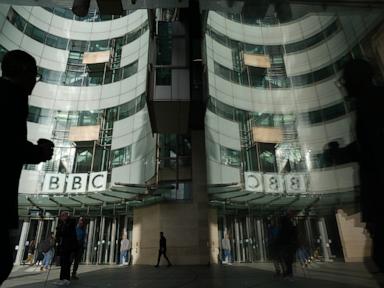
The legal war between President Donald Trump and the BBC just hit a new, aggressive phase. You’ve likely heard about the massive $10 billion defamation lawsuit. It’s been churning in a Florida federal court for months. But now, the broadcaster is playing a card that has the President’s team crying foul: they’re trying to force Ivanka Trump, Jared Kushner, and Donald Trump Jr. into the deposition room.
It’s not just about a documentary anymore. It’s about what happened behind the scenes on January 6, 2021. Meanwhile, you can read similar developments here: Why The New Gaza Peace Push Led By Jared Kushner Is Stalling Out.
The core of the dispute
If you’re wondering why this is happening, let’s strip away the legal jargon. The lawsuit stems from a 2024 BBC documentary that examined the events leading up to the attack on the U.S. Capitol. The documentary spliced together two separate segments of a speech Trump gave at the Ellipse.
The result? It created the impression that he was inciting the crowd to violence in real-time. To explore the complete picture, check out the excellent analysis by Al Jazeera.
The BBC apologized. They acknowledged it was an error in judgment and pulled the program from circulation. But they refused to pay the astronomical $10 billion in damages Trump is demanding. They argue that a bad edit doesn’t equal a multi-billion dollar defamation claim. Now, they’re digging into the President’s own actions to prove their case.
Why the family is in the crosshairs
The BBC isn't just looking for records. They want testimony from the people who were arguably closest to the President when the speech was being finalized.
According to court filings, the broadcaster’s lawyers argue that Ivanka Trump and Donald Trump Jr. were in the Oval Office while the speech was being drafted. They suggest these family members have firsthand knowledge of the President’s actual intent. Was he trying to incite violence, or was he trying to de-escalate? That distinction is the entire battlefield.
If the BBC can show that those in the room didn’t view the speech as an incitement to violence, it helps their defense. They want to show it’s "materially false" to claim the documentary’s edit changed the fundamental meaning of his words in a way that caused actual, measurable harm.
The Secret Service obstacle
Here’s where it gets messy. The BBC has tried to serve subpoenas multiple times—at Miami homes, at the Trump Organization offices in New York, and through the President’s own legal team. Every single time, they’ve been blocked.
The culprit? Secret Service protection. Security protocols prevent the broadcaster from reaching the family members directly. When the BBC asked the President’s lawyers to accept the subpoenas on behalf of his children and son-in-law, they were met with a hard "no."
The Trump team’s response has been scathing. They’ve accused the BBC of "harassing" the family and using the deposition process as a weapon. They claim the broadcaster is trying to distract from its own liability for the "intentional" doctoring of the footage.
A game of legal chicken
We are currently in a standoff. The BBC has asked the federal judge in Florida to authorize alternative ways to serve these subpoenas—such as by email or certified mail. They argue that if they can’t get testimony from these key witnesses, they’re being denied the right to build their defense.
Meanwhile, the trial is penciled in for February 2027.
What to watch next
This isn't just a corporate battle. It’s a high-stakes collision between defamation law, political influence, and media ethics.
If the court allows the subpoenas, it forces the President’s inner circle into a position they clearly want to avoid. If the court denies them, the BBC loses a vital tool to support their argument. And don’t forget the financial disclosure aspect. The judge previously ordered Trump to turn over sensitive records about his business empire, a move his team has fought tooth and nail to pause.
The judge in Florida now holds the keys. Whether the BBC gets their depositions will signal just how much access the court is willing to grant in this sprawling, multibillion-dollar case. For now, it’s a waiting game. Expect more filings, more rejections, and more legal posturing before the February date rolls around.
The court will decide if the search for the truth outweighs the family’s desire for privacy. Given the sheer size of the damages and the intensity of the accusations, expect neither side to back down.