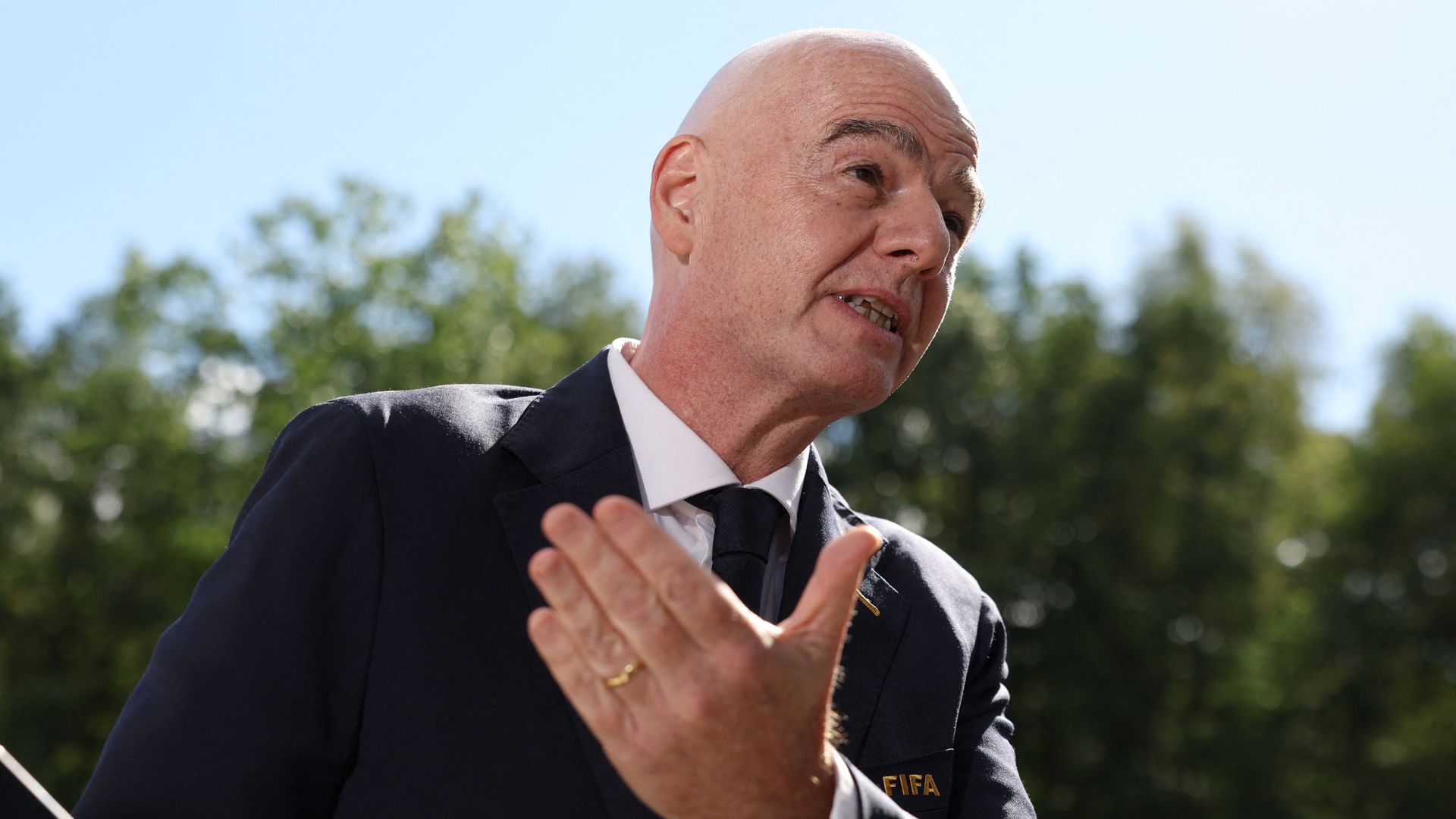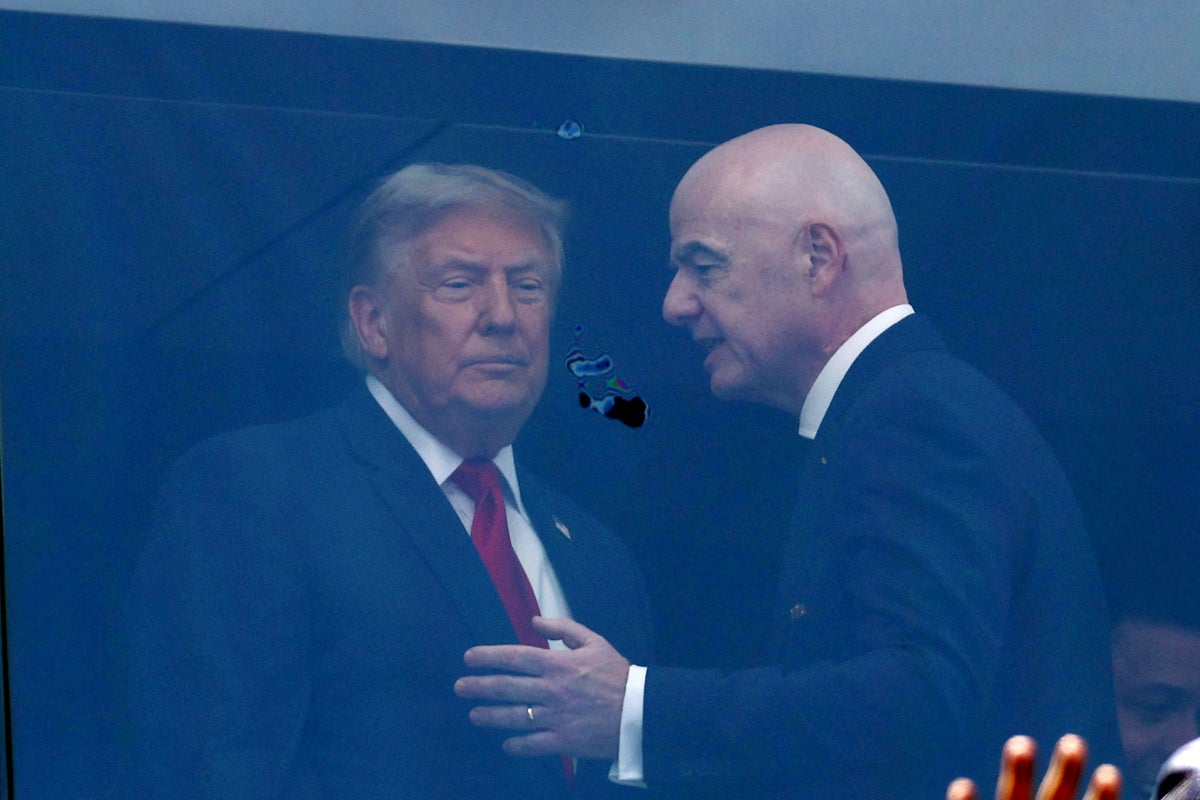
The final whistle at MetLife Stadium didn't just signal the end of the 2026 World Cup. It capped off one of the most bizarre intersections of global politics and elite sport we've ever witnessed. When Spain scraped past a ten-man Argentina squad to lift the iconic trophy, the post-match talk wasn't solely focused on Rodri's masterclass or Lionel Messi's heartbreak. Instead, the spotlight swung directly toward the VIP suite, where Donald Trump, Melania Trump, and FIFA President Gianni Infantino watched the drama unfold behind heavy sheets of reinforced protective glass.
Soccer traditionalists hate it, but the sport belongs to the politicians now. The spectacle began long before kickoff when Marine One touched down near the New Jersey stadium, delivering the American president straight to a luxury box that felt more like a fortified bunker than a standard suite. Flanked by Infantino, Mexican President Claudia Sheinbaum, and Canadian Prime Minister Mark Carney, Trump made sure his presence overshadowed the biggest game on earth.
Fans wanted pure sports drama. They got a carefully choreographed political rally instead.
The Trophy Touch and the Echo of the Stadium Boos
Television cameras caught Trump handling the solid gold FIFA World Cup trophy before the teams even finished warming up. He patted the iconic prize, declaring it a good luck charm while chatting animatedly with a beaming Infantino. For the soccer purists watching worldwide, seeing a head of state treat the most sacred trophy in sports like a personal prop felt completely out of touch.
When the time came to actually hand the silverware to the Spanish champions, the mood in the stadium shifted instantly.
As Trump walked out onto the presentation podium alongside Infantino, a cascading wave of boos erupted from the stands. The raw noise echoed through the arena, briefly drowning out the official stadium announcer. Melania Trump and Infantino tried to maintain their smiles, but the tension was obvious. Trump, never one to back down from a crowd's reaction, stood his ground and joined in lifting the trophy with Spanish captain Rodri, ensuring he was front and center for the global broadcast pictures.
It wasn't an isolated incident. Just weeks prior, Trump drew intense fire at Madison Square Garden during an NBA Finals appearance, where fans literally burned sage outside the building to clear the negative energy. The MetLife Stadium crowd gave him a similar chilly reception, proving that while corporate VIPs might roll out the red carpet, everyday soccer fans aren't so easily won over.
The Backroom Deals and the Balogun Suspension Scandal
To understand why the crowd reacted so fiercely, you have to look at what happened behind the scenes leading up to this final match. This wasn't just a president enjoying a soccer game. This was the culmination of months of unprecedented political interference in the sport's governing body.
The relationship between the American president and Infantino reached a boiling point during the knockout stages of the tournament. When US Men's National Team star Folarin Balogun received a red card that carried a mandatory ban for the crucial round-of-16 clash against Belgium, the White House intervened directly. Trump openly admitted to calling Infantino to demand a review of the suspension.
What followed shocked the international soccer community:
- FIFA’s disciplinary committee issued an unprecedented ruling, suspending Balogun’s ban for twelve months.
- The decision allowed the American star to play, triggering furious protests from the Belgian Football Federation.
- Human rights organizations like FairSquare filed formal complaints with the International Olympic Committee, accusing Infantino of violating strict political neutrality rules.
Infantino dodged any official sanctions because FIFA holds all the cards when it comes to commercial revenue. The European football union, UEFA, issued angry statements accusing FIFA of destroying the sport's integrity, but the complaints led nowhere. By the time Trump sat down in his glass-walled suite for the final, the message was unmistakable. FIFA rules are flexible if you have the right connections.
The New FIFA World Peace Prize
If the Balogun intervention didn't make the cozy alliance clear enough, Infantino's actions earlier in the year removed all doubt. After Trump was passed over for the Nobel Peace Prize, the Swiss soccer executive created an entirely new award called the FIFA World Peace honor and presented it directly to the American president.
Critics labeled the move pure sycophancy. Soccer historians pointed out that FIFA has a long, dark history of cozying up to powerful leaders, stretching back to Benito Mussolini in 1934 and the Argentine military junta in 1978. Infantino's modern approach is simply a continuation of that old playbook, adapted for the multi-billion-dollar media landscape of the 2020s.
Demanding an Immediate Encore for American Soccer
Most host nations use the World Cup final to celebrate a successful tournament and say goodbye to the international community. Trump used it to pitch a sales deal.
During a pre-game interview with Fox Sports, the president revealed that he was already pressuring Infantino to give the United States another tournament tournament immediately. He joked about his strategy to bypass the traditional bidding process entirely.
"I had a great idea for Gianni," Trump said during the broadcast. "You have to do two countries. Announce us again next time, and then announce another country after that. It'll take out some of the anger and the shock. Based on the numbers, we will be requesting it again immediately."
The logic relies heavily on the massive financial success of the 2026 expansion. With 48 teams competing across three nations, ticket sales, stadium revenues, and broadcasting contracts shattered every previous record. Trump pointed to these surging metrics as proof that the US is officially a soccer nation now, whether the traditional European and South American powerhouses like it or not.
How the Action on the Pitch Was Overshadowed
The tragic part of this political circus is how it minimized a historic sporting match. Spain and Argentina fought through a brutal, tactical war of attrition. Argentina played the majority of the match with ten men after a harsh first-half dismissal, forcing Lionel Messi to drop deep and defend for his life in what is widely assumed to be his final World Cup match.
Spain’s technical precision eventually wore down the exhausted Argentine defense. When the final whistle blew, the Spanish players collapsed onto the grass in pure exhaustion and joy. Yet, within minutes, the television broadcast cut away from the weeping players to show the security detail clearing the path for the glass suite VIPs to descend to the pitch. The narrative had shifted from athletic greatness back to political theater.
What Happens Next for International Soccer
The line between global sport and geopolitical posturing has vanished completely. If you think the drama ends because the tournament is over, you aren't paying attention to the way the sport is moving.
If you want to understand where the sport goes from here, keep your eyes on these specific developments:
- Watch the upcoming FIFA presidential election cycle. Infantino has already secured personal endorsement letters from over 200 of the 211 member nations, proving his grip on power is ironclad despite the recent political scandals.
- Monitor the legal fallout from the Belgian Federation. While Belgium dropped its initial complaints after being knocked out by Spain, the legal precedent set by the Balogun suspension suspension will undoubtedly affect how future red card appeals are handled by the Court of Arbitration for Sport.
- Track the commercial expansion of the Club World Cup format. The tournament infrastructure built for 2026 is already being repurposed to lock in permanent, year-round matches across major American stadiums, ensuring the financial machine keeps spinning.
The era of soccer operating as an independent, neutral sporting ecosystem is officially dead. The 2026 final proved that the world's game is now a premium asset used by politicians to project power, influence policy, and capture global attention on their own terms.