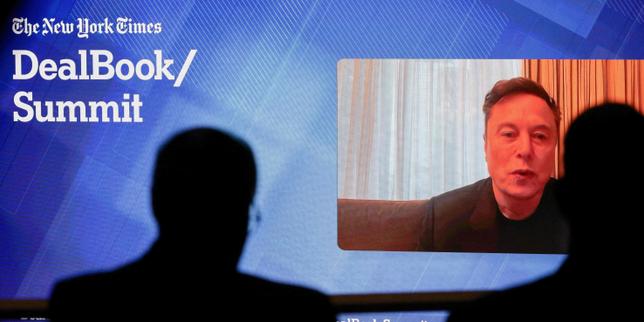
Nearly half a billion dollars bought Elon Musk a sobering reality check. Speaking virtually at The New York Times DealBook Summit on Wednesday, November 18, 2026, the Tesla and SpaceX CEO admitted he feels "pretty foolish" about pouring roughly $446 million to $500 million into the 2026 US midterm elections only to watch Democrats sweep both chambers of Congress and flip major statewide offices in Texas, according to reporting from The Guardian, Al Jazeera, and NPR Illinois.
"I feel pretty foolish about having spent so much money and not seeing much for it," Musk said during his DealBook appearance. He added that while Republican candidates might have fared even worse without his money, the outcome proved campaign cash alone cannot decide an election. "Probably, if I could rewind the clock, I would have spent less money," he said.
If you've watched big-money politics over the last decade, this moment feels like a watershed. Mega-donors often treat campaigns like venture capital rounds. You write a giant check, back friendly candidates, buy media reach, and expect favorable policy returns. Honestly, that playbook blew up in November 2026.
What Went Wrong With Elon Musk's 2026 Midterm Bet
Musk didn't just dabble in the 2026 cycle. According to reporting by The Guardian and NPR Illinois, he contributed at least $446 million toward Republican-aligned Super PACs, candidates, and outside groups—surpassing his roughly $290 million spending mark from the 2024 cycle and setting a record for non-candidate political spending in a single cycle.
Yet the return on that investment was brutal. Democrats won control of both chambers of Congress, flipping nine US Senate seats—including every one of the five Senate contests where Musk's America PAC spent the most backing Republicans, according to Ballotpedia and The Guardian.
Here's the catch: throwing hundreds of millions of dollars at a race doesn't create voter enthusiasm out of thin air. Voters weigh cost-of-living pressures, public services, and local trust against relentless ad saturation. When a mega-donor's money becomes a central campaign issue itself, it can backfire fast.
Take Texas. It wasn't a random side bet for Musk. Texas is home to Tesla, SpaceX, and a planned chipmaking venture between the two companies, making friendly state leadership vital to his business footprint. Instead, Democrats swept every statewide office on the ballot, Democrat Gina Hinojosa defeated Republican incumbent Governor Greg Abbott, and Democrat James Talarico defeated Republican Ken Paxton in the closely watched US Senate race—the exact contest where Musk had concentrated major focus and cash, as reported by Al Jazeera and NPR Illinois.
Texas Turned Into a Flashpoint Over Billionaire Influence
In Texas, Musk's spending didn't stay behind closed doors. Opponents pointed directly to his financial muscle and framed the election around outsider billionaire influence and state resources.
During the campaign, James Talarico accused Musk of trying to buy Texas and influence state policy, turning mega-donor money into a rallying cry for voters who felt squeezed by rising costs and wanted a change in leadership. When the votes were counted, Talarico won the US Senate race with 5,447,080 votes (55.09%) to Ken Paxton's 4,250,704 votes (42.99%) and Libertarian Ted Brown's 190,325 votes (1.92%), per preliminary Associated Press results.
That margin tells you something important. Money can buy airtime, mailers, and digital impressions. It can't force persuadable voters or turnout blocs to ignore backlash against perceived overreach.
Why Record Campaign Cash Hit a Wall in 2026
Musk's regret isn't happening in a vacuum. The 2026 midterm cycle shattered financial records across the board. According to ad-tracking firm AdImpact cited by Campaigns & Elections, political advertisers spent more than $12 billion across the cycle—making it the first midterm cycle to top a presidential election year, with October alone hitting a record $4.1 billion. Federal Election Commission data summarized by USAFacts also shows congressional candidates themselves had spent around $3.2 billion based on late-October filings.
When everyone is spending at record levels, marginal ad dollars buy less persuasion. Voters tune out repetitive attack spots, especially when candidates run on tangible kitchen-table themes like affordability, public schools, and accountability.
The Regulatory and Oversight Fallout for Musk's Companies
For Musk, the political loss carries direct business risks that go far beyond a hit to his net worth. Over the past two years, his companies benefited from close ties to the Trump administration, federal contracts, and light-touch regulatory approaches to artificial intelligence and emerging tech, according to The Guardian and NPR Illinois.
Now the political environment looks very different. With Democrats taking control of Congress in the 2026 midterms, lawmakers have already signaled plans for congressional oversight and subpoenas examining Musk's tenure leading the Department of Government Efficiency (DOGE) in 2025, federal funding tied to his enterprises, and his foreign dealings, as reported by NPR Illinois and The Guardian.
Even so, Musk isn't pausing his commercial bets. At the DealBook Summit, he said Anthropic was "extremely likely" to keep renting computing capacity from SpaceX and projected a high probability of seeking an additional 10 gigawatts of computing capacity, as reported by Al Jazeera.
That contrast says a lot about where things stand. Commercial AI and compute demand can still scale fast. Political dominance bought with Super PAC checks is far shakier.
Practical Lessons for Tracking Money in Politics
If you follow campaign finance, business strategy, or election outcomes, don't fall for two common mistakes: assuming the biggest spender always wins, or assuming political losses erase every commercial advantage overnight.
- Track outside PACs separately from candidate fundraising. FEC filings and ad-tracking reports measure different buckets of money. Candidate totals show direct campaign operations, while Super PACs and outside groups drive massive ad waves that don't always move swing voters.
- Watch policy levers, not just headline donations. A donor's real risk or reward depends on committee oversight, agency rules, state permitting, and procurement—not just how much cash hits the airwaves in October.
- Compare spending against voter turnout and coalition shifts. When turnout surges or demographic coalitions move in key states like Texas, high-dollar ad blitzes often get drowned out by ground-level voter motivation.
Big checks still shape modern campaigns and set eye-popping price tags for future cycles like 2028. After November 2026, though, even the richest donor in the world knows that buying the loudest megaphone isn't the same thing as winning the vote.