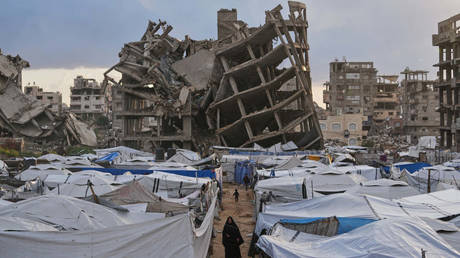
Israeli tanks rolled west of the Yellow Line into central Gaza on Wednesday, November 18, 2026, marking the first ground thrust into Hamas-held territory since the October 2025 ceasefire. It happened right as US Central Command chief Admiral Brad Cooper met senior Israeli defense and intelligence brass in Tel Aviv.
If you're looking at this strictly as a tactical tunnel raid, you're missing the bigger picture. The Israel Defense Forces and Shin Bet said they moved near Nuseirat and Bureij to dismantle a tunnel posing an immediate threat to troops. Fair enough on the stated operational goal. Yet crossing the Yellow Line onto Salah al-Din Road—Gaza's main north-south artery—tests a truce that's been hanging by a thread for over a year.
Why Israeli Tanks in Gaza Matter Right Now
Crossing the Yellow Line isn't just moving armor a few hundred meters. That line marks the boundary between roughly two-thirds of Gaza still under Israeli military control and areas outside it. Pushing past it—even for a targeted operation—shatters a psychological and operational boundary that held through months of low-grade friction.
Local residents reported tanks along Salah al-Din Road and families fleeing shelters around Nuseirat and Bureij, while local medical officials reported at least three Palestinians killed in separate airstrikes that day. According to reports from The Jerusalem Post and Reuters via The Daily Star, IDF sources insisted there are no plans for a wider or longer re-invasion. Still, sources didn't deny that turning up the heat might push Hamas toward concessions on disarmament.
From a strictly military standpoint, commanders face an annoying bind. Tunnels don't freeze in place during a ceasefire. If intelligence flags an active threat west of the line, waiting can cost soldiers' lives. On the flip side, every tank track across a truce line gives Hamas ammunition to call the entire arrangement a sham—and makes any remaining mediators look helpless.
The CENTCOM Timing Problem in Tel Aviv
Timing in Middle East security is rarely accidental, though coincidence happens more often than pundits admit. Admiral Brad Cooper sat down in Tel Aviv with IDF Chief of Staff Lt. Gen. Eyal Zamir, Mossad director Roman Gofman, operations chief Itzik Cohen, and planning chief Maj. Gen. Hidai Zilberman ahead of a regional tour that includes Saudi Arabia.
Reporting from Al-Monitor and Anadolu Agency shows the Tel Aviv agenda centered heavily on Iran—following the conflict that erupted on February 28, subsequent exchanges of strikes, and stalled talks over navigation in the Strait of Hormuz, right after US Fifth Fleet commander Curt Renshaw held naval talks with Israeli counterparts. Caretaker Prime Minister Benjamin Netanyahu and Defense Minister Israel Katz have reportedly kept forces on alert for possible renewed operations against Iran, while Zamir has urged careful timing and tight coordination with Washington.
Here's the catch that's easy to overlook. When a ground thrust happens in Gaza on the exact same day Washington's top regional commander is talking big-picture deterrence and Iran readiness in Tel Aviv, Washington gets pulled into Gaza's optics whether it wants to or not. Even if US officials weren't briefed ahead of time on every tactical move—and reporting indicates it wasn't clear whether Washington got advance notice—adversaries and allies alike read the two events side by side.
A Truce That Never Truly Stopped Bleeding
Let's be honest about what the October 2025 ceasefire actually delivered. It stopped full-scale, round-the-clock war. It didn't stop the killing or rebuild normal life.
Gaza's health authorities report more than 1,600 Palestinians killed in Israeli attacks since the ceasefire took effect, adding to a war toll exceeding 74,000 Palestinians since Hamas's October 7, 2023 attack killed around 1,200 people in Israel. Meanwhile, US President Donald Trump's Board of Peace, set up to oversee the truce, warned the UN Security Council that ongoing Israeli strikes, Hamas military activity, and implementation delays could blow up the agreement altogether.
When a ceasefire has over a thousand post-deal fatalities, calling it "peace" is a stretch. It's more like a lower-intensity phase of the same grind, punctuated by sudden spikes whenever tunnel intelligence, political pressure, or domestic shifts collide. Notice, too, that this thrust happened right as political turbulence in Jerusalem continued—with an Eisenkot-led bloc replacing a Netanyahu ally as Knesset speaker. Domestic politics in Israel and tactical calculations in Gaza constantly bleed into each other.
What Most Commentators Miss About Tunnel Raids and Ceasefires
People tend to split into two camps when armor crosses a ceasefire line. One camp says, "See? The ceasefire is dead, and a massive new invasion is starting tomorrow." The other says, "Relax, it's just a localized engineering and threat-removal op."
Usually, both are too neat.
In modern urban and semi-urban conflicts, localized operations can serve three jobs at once without turning into a full-scale occupation:
- Tactical denial: Clearing a tunnel or firing position that threatens nearby troops or logistics routes.
- Coercive signaling: Showing Hamas—and regional backers—that crossing the line or dragging feet on disarmament carries immediate costs.
- Political reassurance: Signaling to hardliners and nervous units at home that the military isn't letting threats fester under diplomatic cover.
The danger isn't that every tank movement becomes a permanent re-invasion. The real risk is miscalculation. A stray round, a panicked evacuation wave, a retaliatory rocket or ambush—suddenly a "contained" operation spirals into something nobody planned for, right when US and Israeli planners are already juggling Gulf tensions and Strait of Hormuz friction.
How to Read Conflicting Reports Without Getting Played
When breaking news hits out of Gaza and the wider region, coverage splits fast depending on who's talking and what lens a news outlet uses. Some outlets frame every move as a major escalation; others treat it as routine security enforcement.
If you want to keep your bearings when the next headline drops, focus on four practical checks:
- Separate the boundary from the footprint: Check whether forces stayed inside previously held zones or actually crossed a line like the Yellow Line, and whether armor lingered or pulled back.
- Watch the diplomatic calendar: Look at who is visiting Jerusalem, Amman, Cairo, Riyadh, or Washington that same week. Military moves rarely happen in a vacuum when senior commanders or envoys are in town.
- Cross-check casualty and operational claims: Treat single-source figures with caution early on. Compare IDF statements, local medical reports, and independent wire reporting from outlets like Reuters or AP to see where facts overlap.
- Track disarmament and governance milestones: Ceasefires don't hold on ink alone. Watch concrete markers—tunnel dismantling, border/corridor arrangements, and oversight bodies like the Board of Peace—rather than rhetoric from either side.
Keep watching whether Israeli armor pulls back behind the Yellow Line quickly or settles into a new buffer, and listen closely to what Admiral Cooper says as his meetings move from Tel Aviv to Riyadh. Those next few days will tell you whether Wednesday was a contained spasm—or the start of a much rougher winter.