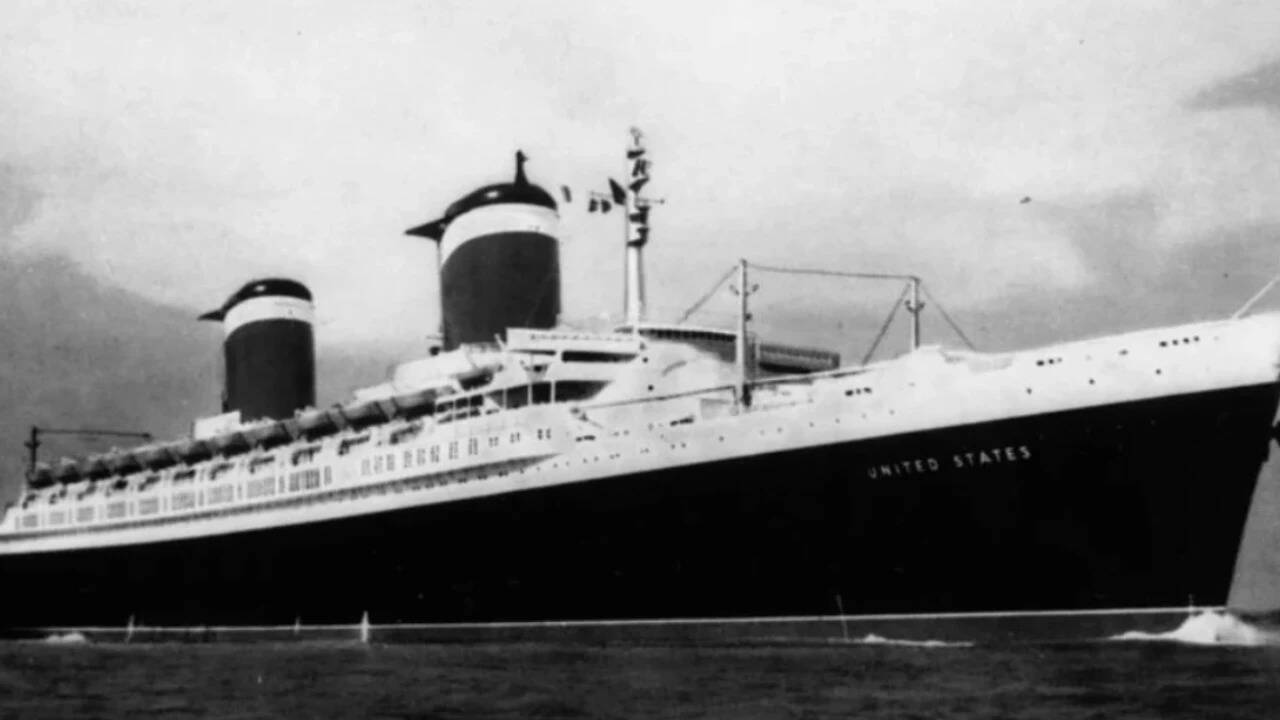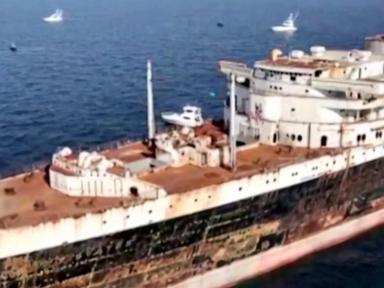
For decades, the grandest ocean liner ever built in America sat rotting away at a pier in South Philadelphia, a rusting ghost of a bygone era. People argued endlessly about saving her. Millions of dollars were thrown around in half-baked restoration proposals that went nowhere. But ships don't live forever on sentiment alone. When Okaloosa County stepped in with a $1 million purchase price in 2024 and an ambitious plan to scuttle her, they didn't destroy a floating monument. They gave the SS United States a second life as the world's largest artificial reef off the Florida coast.
If you've followed maritime history, you know the ship's pedigree is unmatched. Launched in 1952 after being constructed by over 3,000 shipyard workers in Virginia, she shattered the trans-Atlantic speed record on her maiden voyage. Averaging nearly 41 miles per hour, she stole the Blue Riband from Britain's RMS Queen Mary and held onto that crown permanently because commercial aviation soon made luxury ocean liners obsolete. Presidents, Hollywood icons, and even the Mona Lisa graced her decks. Yet, nostalgia doesn't pay daily dockage fees that climbed to $1,700 a day. Scrappers were waiting in the wings. Sinking her wasn't a tragedy. It was the only survival strategy left that mattered.
Preparing a Legend for the Deep Sea
You can't just tow an iconic ocean liner out to sea and pull the plug. The environmental preparation required for the SS United States was a massive, meticulous undertaking. Before anyone even thought about scuttling her, the vessel spent significant time at the Port of Mobile in Alabama undergoing extensive remediation.
Crews scoured the massive hull to strip away every potential hazard. Non-metal items, miles of electrical wiring, hazardous chemicals, fuel, plastic, and glass were ruthlessly purged. This wasn't just about environmental compliance with agencies like the EPA; it was about engineering a stable underwater habitat. Engineers cut strategic holes throughout the massive structure to guarantee she would settle upright on the sandy seabed rather than listing to one side or breaking apart uncontrollably.
At the same time, cultural preservationists saved what they could. Iconic elements, including the ship's massive 65-foot funnels and masts, were carefully removed to serve as centerpieces for a planned land-based museum in Destin-Fort Walton Beach. You get to keep the history alive on land while building an ecological powerhouse below the waves.
Transforming the Gulf Ecosystem
Why turn a record-breaking liner into a fish condo? The logic comes down to basic marine biology and geography. Large sections of the northern Gulf seafloor consist of flat, featureless sand that offers little shelter for marine life. Drop a massive steel structure onto that sand, and everything changes almost overnight.
When submerged, massive steel wrecks act as hard substrates where algae, barnacles, and sponges can anchor themselves. That initial layer forms the foundation of a thriving food web. Smaller baitfish move in, followed quickly by apex reef predators.
Local fisheries and marine experts anticipate an influx of red snapper, grouper, amberjack, mackerel, and tuna. Because of the sheer vertical profile of the liner, it creates distinct water column layers. Smaller reef dwellers occupy the upper superstructure, while pelagic hunters prowl the deeper open water surrounding the hull. It's a proven blueprint. Back in 2006, the decommissioned aircraft carrier USS Oriskany was sunk off Pensacola for the exact same purpose, creating a legendary dive site that transformed local marine biodiversity. The SS United States takes that concept and supersizes it, claiming the title of the largest artificial reef on Earth.
A New Era for Divers and Coastal Tourism
Beyond the environmental boost, local officials aren't shy about the economic upside. Okaloosa County funded the roughly $13 million project using tourist tax revenue, expecting a massive return on investment from diving tourism. Scuba operators along the Florida Panhandle are already prepping for an influx of visitors from around the globe.
Diving a wreck of this scale requires respect and proper planning. With the seafloor resting at significant depths and the upper decks rising much higher, the site caters to a wide spectrum of experience levels. Advanced recreational divers can explore the upper structures, while technical divers with specialized training and decompression gear can push down toward the deeper hull components.
Local dive shops compare the anticipated excitement to visiting a premier underwater theme park. Instead of sitting abandoned in a Pennsylvania slipway facing the terrifying prospect of a razor-blade factory, the grand dame of the American merchant marine now rests in crystal-clear waters, humming with marine life and welcoming visitors who will admire her legacy for generations.
Don't mourn the end of her days afloat. Celebrate the fact that her final chapter supports a living ecosystem instead of a scrapyard furnace.