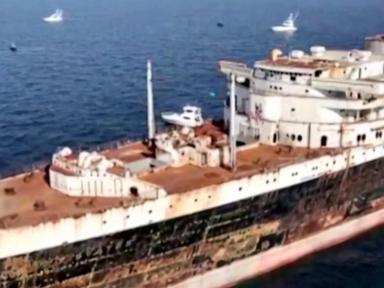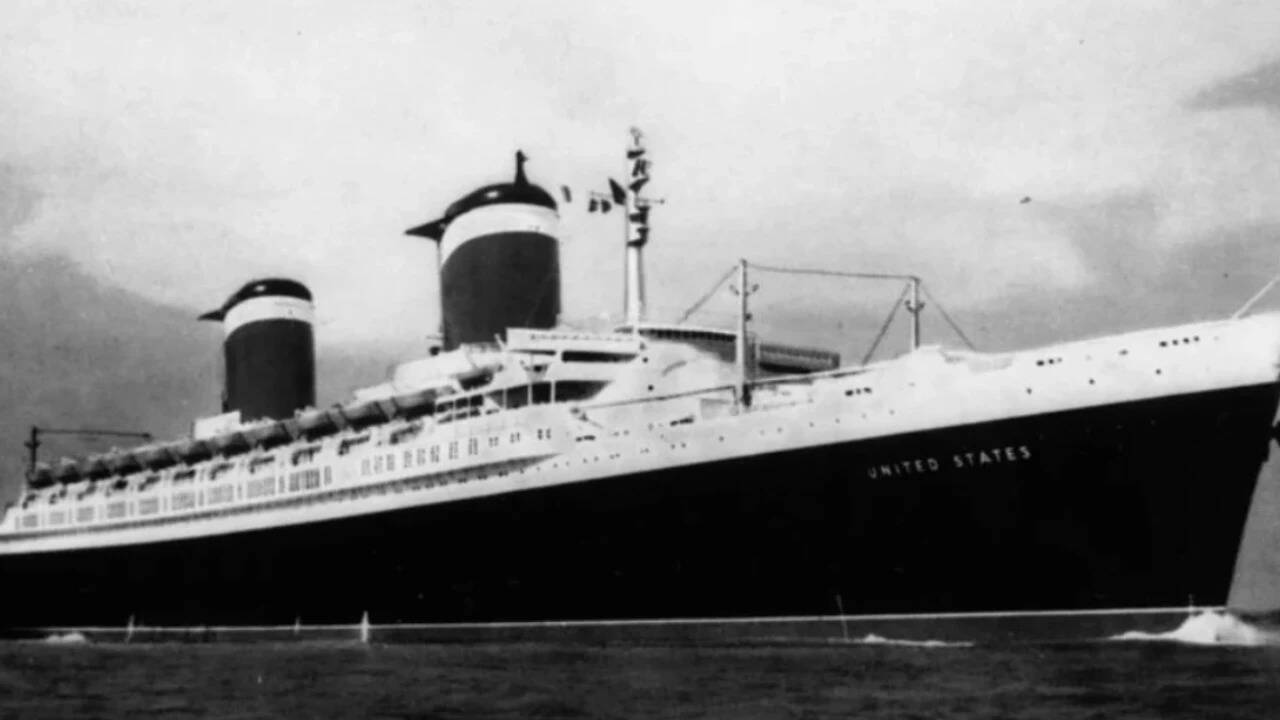
For decades, the majestic SS United States sat rusting along a Philadelphia pier, a fading ghost of mid-century maritime ambition. Once the fastest passenger liner to ever cross the Atlantic, the ship was reduced to a bitter preservation battle and mounting dockage fees that private non-profits simply couldn't afford. Rather than watching the historic vessel get chopped up for scrap metal, Florida’s Okaloosa County stepped in with a bold, controversial alternative. They bought the ship for one million dollars to sink it off the Gulf Coast and turn it into the world's largest artificial reef.
If you've followed maritime history, this outcome feels bittersweet. A ship that once carried presidents, Hollywood royalty, and European immigrants now rests on the ocean floor. But look past the nostalgia, and you'll find that sending the "Big U" to the bottom of the ocean is actually the most practical way to preserve its legacy while transforming it into a thriving marine habitat.
The Engineering Marvel That Outlived Its Era
Launched in 1952, the SS United States wasn't just a luxury liner; she was a Cold War secret weapon disguised in civilian paint. Designed by naval architect William Francis Gibbs, the ship was heavily subsidized by the US government so it could quickly be converted into a troop transport capable of carrying 14,400 soldiers without refueling.
On her maiden voyage, she shattered the transatlantic speed record, averaging an astounding 35.59 knots eastbound. She crossed the ocean in just 3 days, 10 hours, and 40 minutes—a record for a passenger ship that remains unbroken to this day.
Her interiors were famously engineered to be virtually fireproof, utilizing vast amounts of aluminum instead of wood. Presidents like Harry Truman, Dwight Eisenhower, and John F. Kennedy walked her decks, alongside cultural icons like Marilyn Monroe and Salvador Dalí. But the rise of commercial aviation in the 1960s killed the transatlantic passenger market. By 1969, the ship was retired, beginning a half-century loop of neglected ownership, failed revitalization schemes, and empty promises.
Why Restoration Failed Realistically
People love to ask why nobody saved her. The short answer is money. Restoring a nearly 1,000-foot derelict ocean liner to modern safety and passenger standards would have cost hundreds of millions of dollars. Her internal machinery was shot, asbestos remediation alone was a nightmare, and finding a permanent commercial home willing to foot the continuous maintenance bills proved impossible.
When port authorities in Philadelphia hiked daily dockage fees to unsustainable levels, the SS United States Conservancy ran out of road. The choice came down to two stark realities: sell the ship to a scrapyard to be melted down into razor blades, or sink it intentionally to build an underwater ecosystem.
Transforming a Titan into an Underwater Metropolis
Before any sinking could happen, the ship underwent an intensive, year-long environmental remediation process in Mobile, Alabama. Crews stripped away every piece of non-metal material, wiring, and remaining trace fuels under the strict supervision of the Environmental Protection Agency and the Florida Department of Environmental Protection.
Strategic holes were cut throughout the structure to ensure the massive hull would submerge evenly and settle upright on the seafloor. On November 11, 2026, the historic liner was deployed approximately 22 nautical miles southwest of Destin-Fort Walton Beach in the Gulf of Mexico. Resting in roughly 180 feet of water with its upper decks rising to about 55 feet below the surface, the wreck bridges the gap between recreational and technical diving.
The ecological payoff is immediate. The barren sandy bottom of the Gulf gets a massive vertical profile. Steel structures quickly attract algae, sponges, and corals, which in turn draw small reef fish like snapper and grouper, followed by apex pelagic predators like amberjack, tuna, and mackerel. Neighboring successful artificial reefs, like the aircraft carrier USS Oriskany sunk nearby in 2006, prove that these sunken giants rapidly morph into vibrant marine hotspots.
What This Means for Divers and Historians
Critics argue that sinking a historic artifact destroys its heritage. Yet, maritime preservationists note that the ship remains entirely intact underwater, offering a bucket-list destination for certified wreck divers across the globe. For those who don't dive, Okaloosa County is developing a land-based museum and visitor experience to house salvaged artifacts and honor the ship's storied past.
The SS United States spent over fifty years decaying in plain sight, serving as a rusted monument to administrative paralysis. Now, it anchors a new ecosystem and drives regional tourism, trading a quiet death in a scrapyard for a roaring second life beneath the waves.