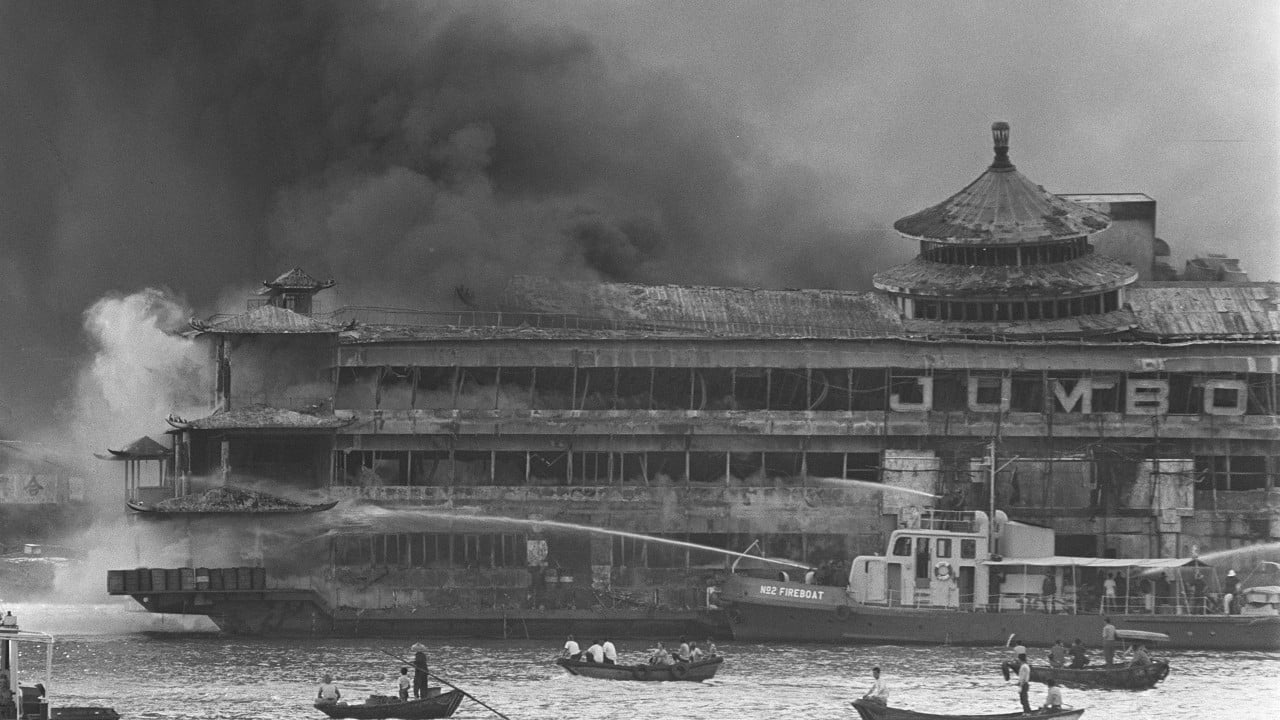
Long before it became a neon-lit beacon of Aberdeen Harbor or capsized in the South China Sea, the Jumbo Floating Restaurant faced an absolute catastrophe that nearly erased it before it ever welcomed a single diner. Most people remember the landmark for its palatial Chinese-style architecture, its cinematic appearances, or its bizarre final days. They forget the dark autumn day in 1971 when the vessel turned into an inferno.
On October 30, 1971, a routine day of construction and outfitting inside the massive floating structure went completely wrong. A stray welding spark ignited highly combustible materials stored across the decks. What followed was a terrifying four-alarm blaze that trapped hundreds of workers and decorators on board. By the time the flames were extinguished, 34 people were dead and dozens more injured. It remains one of the most devastating industrial fire disasters in the city's modern history.
The Warning Signs Ignored Before the Flames
Safety regulations in 1970s Hong Kong operated under a much looser framework than they do today, but the warnings regarding the Jumbo were explicit. Months before the disaster, the Marine Department flagged the extreme hazard of keeping flammable chemicals and unapproved decoration materials on the vessel.
Management didn't listen.
Investigators later discovered a chaotic scene of overlapping corporate negligence. Interior decorators stored massive quantities of flammable agents on the second deck. Fire-resistant coatings were bypassed to save money or time. Workers had access to basic fire extinguishers, but nobody had run a single fire drill. When the welding spark caught, the ship's interior behaved like a tinderbox. The complex web of subcontractors, shipyard directors, and designers all pointed fingers at each other once the smoke cleared, but the human cost was already paid.
How the Disaster Shook Hong Kong
The tragedy accounted for roughly one-third of all fire-related deaths in Hong Kong during the grim year of 1971. Emergency services stretched past their breaking point. Reports from the aftermath detailed ambulance shortages and panicked rescue efforts in Aberdeen Harbor.
Public outrage forced public inquiries that exposed systemic failures in how floating structures were governed. Officials debated whether floating restaurants should be treated as ships or buildings, a legal gray area that allowed safety oversights to slip through the cracks. The disaster proved that rapid economic expansion often trampled basic human safety protections.
Resurrection and the Final Irony
You might wonder how a business recovers from losing 34 lives before it even opens its doors.
Enter billionaire Stanley Ho. Recognizing the immense potential of an extravagant aquatic palace, Ho and his investors poured millions into rebuilding the concept from scratch. The renewed Jumbo Floating Restaurant finally opened in 1976, going on to host international celebrities, royalty, and millions of tourists over four decades.
Yet, the shadow of 1971 never truly left. When the restaurant closed its doors permanently in 2020 due to economic pressures and the global pandemic, and subsequently sank in the South China Sea in 2022 while being towed away, historians and old-timers whispered about its cursed beginnings.
The physical structure is gone, resting deep in the ocean. The lesson about corporate greed, ignored safety warnings, and workplace negligence remains just as relevant today. Stop treating historical landmarks as mere fairy tales. Real lives built them, and real lives were lost in the making.