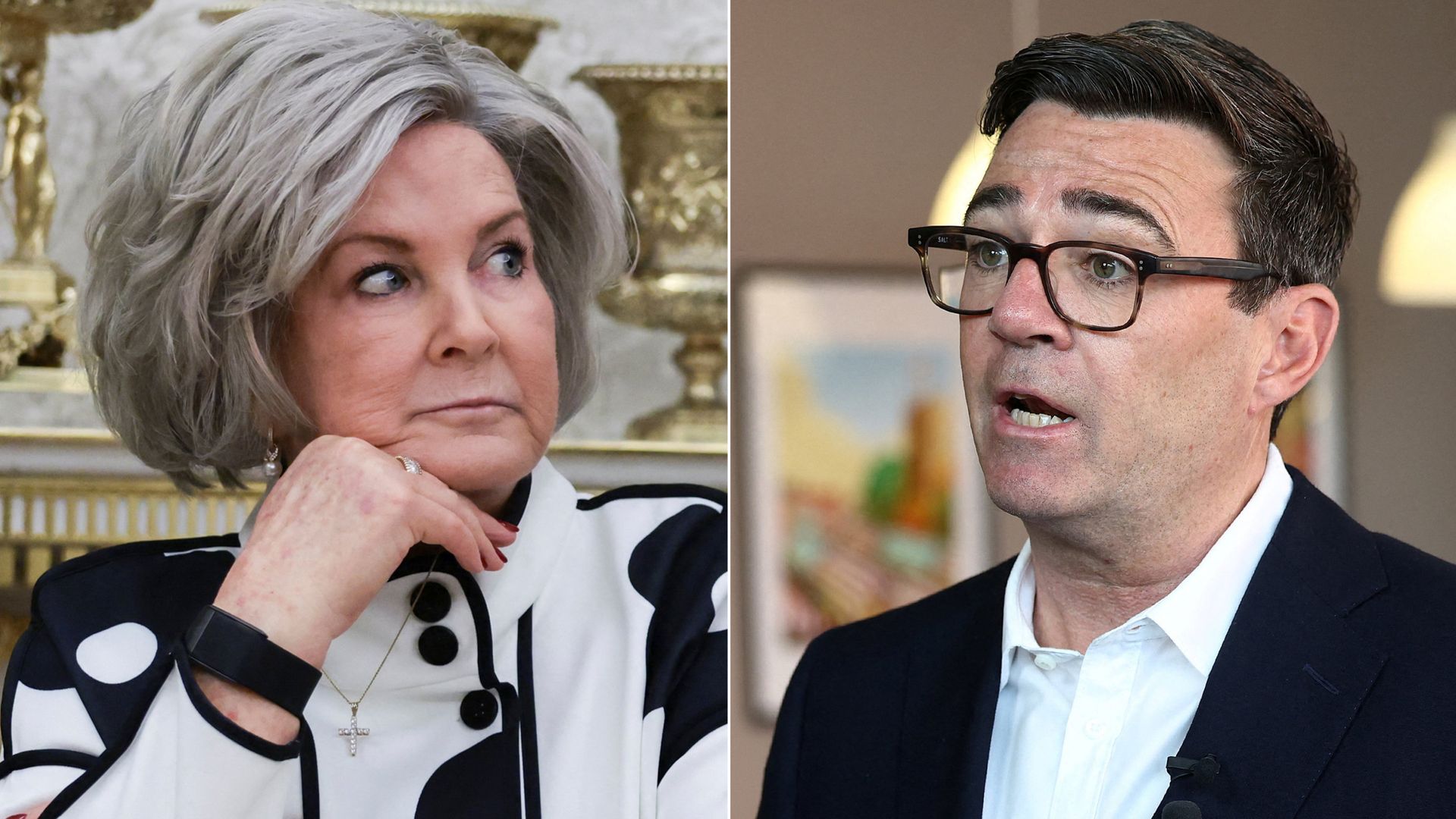
World leaders have state security teams, dedicated screening protocols, and millions of pounds worth of digital defenses at their disposal. Yet, getting duped by a random fraudster texting on an ordinary smartphone happens with alarming regularity. British Prime Minister Andy Burnham recently found himself caught in exactly this kind of embarrassing digital trap after exchanging messages with someone pretending to be White House Chief of Staff Susie Wiles.
While Downing Street officials insisted that the messages were brief, insignificant, and quickly flagged once suspicions arose, the incident exposes glaring vulnerabilities in how modern political figures communicate. Let's look at why high-ranking officials keep falling for these scams, the history of high-level political catfishing, and why your personal data might be just as exposed as a prime minister's inbox.
How the Andy Burnham Imposter Incident Unfolded
The security slip-up came to light after reports detailed how Burnham—who assumed office in July—communicated with an unknown individual posing as one of Donald Trump's closest and most influential aides. According to accounts from officials briefed on the matter, the prime minister engaged in a brief back-and-forth before his internal alarm bells started ringing.
Once Burnham grew suspicious of the sender's identity, the communication was cut off and reported to the appropriate authorities. Downing Street offered a standard no-comment stance, stating they do not discuss national security matters. Meanwhile, the British embassy in Washington took the breach seriously enough to flag it directly with the White House.
The White House quickly clarified that the incident was unrelated to any active compromise or hack of Susie Wiles' official devices. Instead, the episode mirrors a broader pattern of social engineering that has plagued Washington and international capitals for months. Last year, the FBI launched an investigation after an unknown actor used contact details associated with Wiles to target prominent U.S. senators, governors, and corporate executives with text messages and phone calls.
A Long History of Political Pranks and Hoaxes
If this feels familiar, it's because British politicians have a surprisingly rich history of falling for digital impersonation and phone pranks.
Consider what happened to Lord David Cameron. When he served as the UK's foreign secretary, he fell victim to a sophisticated hoax call from someone pretending to be former Ukrainian President Petro Poroshenko. Cameron didn't just take the video call; he also exchanged follow-up text messages with the impostor before realizing he had been tricked. The Foreign Office eventually had to publicize the blunder proactively to get ahead of any manipulative edits the pranksters might release.
Other senior figures, including former Home Secretary Priti Patel and former Defence Secretary Ben Wallace, have faced similar high-profile security lapses. Famous pranksters like Vladimir Kuznetsov and Alexey Stolyar—widely known as Vovan and Lexus—have made a career out of duping western ministers into frank, unguarded conversations by posing as foreign dignitaries.
Why Smart Leaders Fall for Basic Text Scams
It is easy to mock a prime minister for answering a text from an unknown number claiming to be a top foreign official. But human psychology and political ambition create a dangerous blind spot.
- The Urgency of Diplomacy: New leaders want to establish international channels immediately. When someone claiming to represent the White House reaches out, the instinct to respond quickly often overrides standard skepticism.
- The Fear of Missing Out: In politics, being out of the loop is fatal. If a key adviser to the U.S. president wants to chat off-the-record, politicians worry that ignoring them will cause diplomatic friction.
- Information Silos: Leaders rely heavily on junior staffers and aides to vet contacts. If a number slips past initial screening or appears on a trusted contact list that has been compromised via social engineering, the barrier drops.
Fraudsters don't need elite hacking tools to pull this off. They rely on basic spear-phishing, spoofed numbers, and artificial intelligence-generated voice or text patterns to mimic the tone of authority figures.
What This Means for Digital Security Moving Forward
The Burnham text exchange is more than a momentary political embarrassment. It is a symptom of an era where digital authenticity is dead. When deepfakes, AI-generated text styles, and spoofed caller IDs make anyone look like anyone else, traditional trust-based communication is broken.
If a G7 leader can be tricked by a fake white house aide over simple text messages, it highlights a stark reality for organizations and individuals alike. Security isn't just about firewalls and encrypted apps; it's about verifying identity through out-of-band channels every single time.
Verify every high-stakes request through secondary, trusted channels before sharing information or engaging in substantive talks. Treat incoming digital messages with baseline skepticism, regardless of the display name attached to them.