"Of all creatures that breathe and move upon the earth, nothing is bred that is weaker than man."
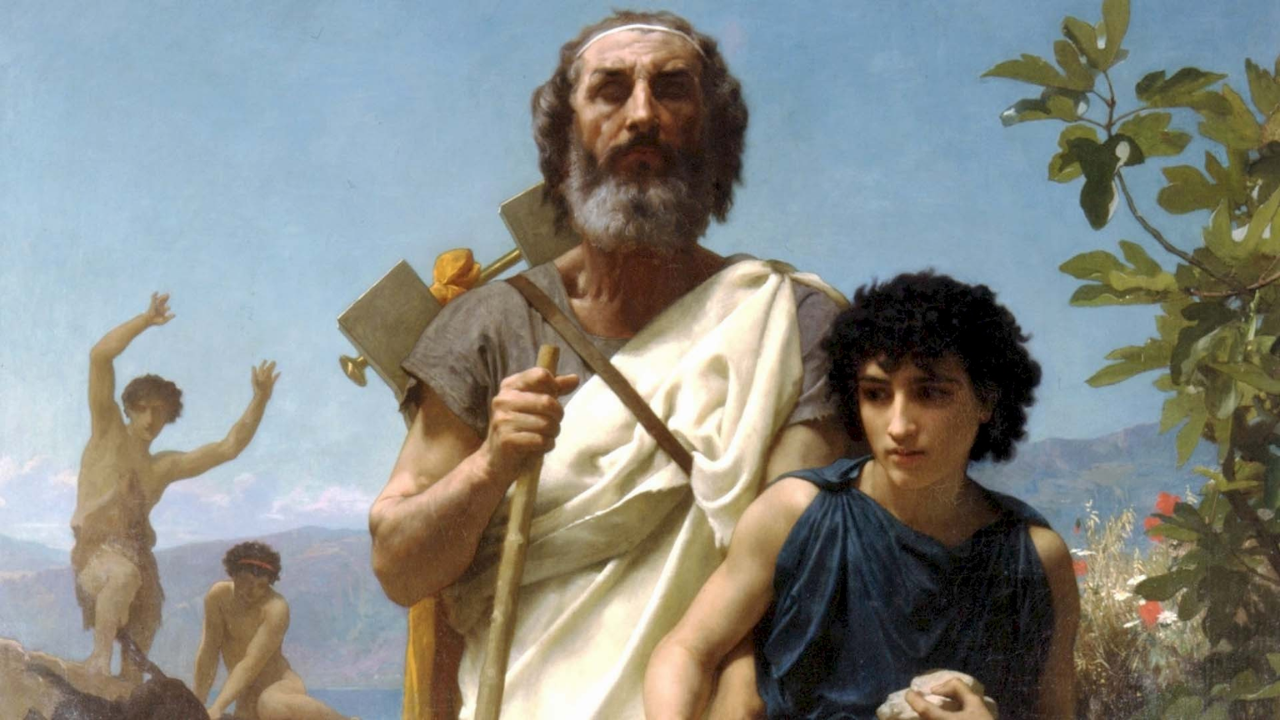
Homer wrote those words in Book 18 of The Odyssey. He wasn't trying to write a depressing poetry line. He was delivering a stark warning about human hubris. Disguised as a beggar in his own palace, Odysseus says this to a doomed suitor named Amphinomus. The message is simple: when people enjoy wealth, health, and absolute power, they assume it will last forever. They forget how fragile they actually are.
That exact blind spot has brought down modern corporations, ancient dynasties, and global superpowers for thousands of years.
The Illusion of Permanent Control
We love to think we’ve conquered nature. We build skyscrapers that pierce the clouds, design stock markets powered by algorithms, and put rovers on Mars. Yet, history repeats a brutal cycle. Every time a civilization reaches its peak, its leaders convince themselves they've cracked the code of immortality.
Look at the Roman Empire. At its height, Rome controlled millions of square kilometers, boasted unmatched military engineering, and commanded vast trade networks. Citizens and emperors alike genuinely believed the city was eternal—an Urbs Aeterna. They ignored mounting economic corruption, political rot, and overextended borders because yesterday's success blinded them to tomorrow's collapse.
When the shock hit, they had no margin for error.
Homer called ancient Greeks ephemeroi—creatures of a day. Unlike the gods, who faced no consequences, human beings live on borrowed time and shifting ground. Forget to respect reality, and reality will eventually remind you who is in charge.
Why Modern Systems Keep Walking Into the Trap
We see this exact pattern in modern business and geopolitics. Corporate giants fall overnight because executives mistake a temporary market boom for permanent genius.
Think about Blockbuster or Kodak. Both companies dominated their respective industries for decades. Both possessed massive financial resources and top-tier talent. But they suffered from the ultimate human weakness: institutional arrogance. They assumed their good fortune could not change. When digital streaming and digital photography arrived, they treated them as minor annoyances rather than existential threats. They were weak precisely because they were too comfortable to adapt.
Power creates a feedback loop of delusion. When you spend years winning, you stop planning for failure. You stop listening to warning signs. You build your house on the assumption that the wind will never blow hard enough to knock it down.
Embracing Vulnerability as a Strategy
Acknowledging our inherent weakness isn't about wallowing in pessimism. It’s about operational survival.
Real strength comes from humility. If you run a business, manage a team, or study history, the antidote to Homer's trap is aggressive paranoia. You must act as though everything you've built could vanish tomorrow.
- Stress-test your assumptions: What works in a booming economy will fail in a crisis. Plan for worst-case scenarios before they happen.
- Reject institutional echo chambers: If everyone in the room agrees with you, your system is fragile. Invite dissenting opinions to point out your blind spots.
- Stay adaptable: Survival doesn't belong to the strongest or the smartest. It belongs to the entities that accept how quickly the rules can change and pivot accordingly.
Homer’s ancient beggar was right. We are fragile creatures, tossed around by economic shifts, political storms, and our own overconfidence. The moment we forget that truth is the exact moment the fall begins.
Stop assuming your current position is permanent. Build resilience while things are still good.