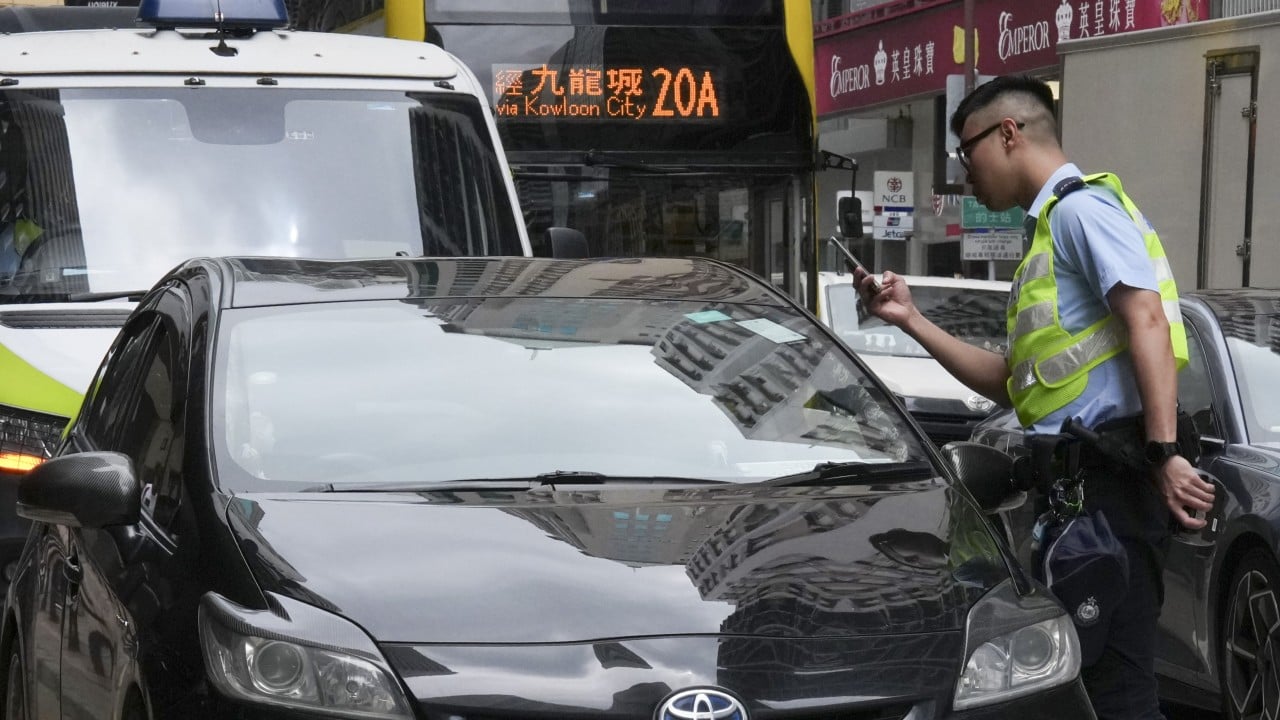
Driving in Hong Kong is already a masterclass in patience. You dodge erratic minibuses, pay eye-watering tunnel tolls, and hunt for a legal parking spot that basically costs the price of a small vacation. But if you think soaring penalties are cleaning up the city's streets, look closer. Traffic police have issued over 220,000 tickets, pushing total illegal parking fines past HK$70 million a year.
That number sounds massive. Yet, the gridlock and curb-clogging violations keep happening on repeat. Lawmaker Mark Chong recently stepped into the debate, urging authorities to stop relying on standard enforcement and start using AI-powered sensors to track repeat offenders. For a different look, consider: this related article.
Why aren't traditional fines working? And what needs to change to clear the city's chronically blocked lanes?
The Fine Is Just a Cost of Doing Business
For delivery drivers, commercial operators, and even wealthy motorists in congested districts like Causeway Bay or Central, a parking ticket isn't a deterrent. It is simply treated as an operational expense. Further reporting on this trend has been provided by BBC News.
Think about it. If you need to unload goods for a high-end boutique or drop off a client right outside an office tower, searching for a legal multi-story car park five blocks away wastes time and money. Paying a fixed fine is faster. Drivers factor the penalty into their daily hustle. When the cost of getting caught is lower than the convenience of breaking the rule, people will keep breaking the rule.
This is where the HK$70 million figure becomes misleading. It shows authorities are busy writing tickets, but it doesn't measure behavioral change. Stacking up millions in revenue proves enforcement is active, not that streets are clear.
Where Traditional Policing Falls Short
Traffic wardens and beat police officers can only be in one place at a time. They rely on visual checks, whistle blows, and paper fixed-penalty notices.
Smart drivers know the patrol schedules. They play a cat-and-mouse game with law enforcement, slipping back to move their vehicles just as an officer approaches, or parking in blind spots where wardens rarely walk. Traditional policing cannot scale to match the sheer volume of vehicles jammed into Hong Kong's tight urban corridors.
Manpower shortages across disciplined services make full coverage impossible. Relying purely on human patrols means thousands of violations go completely unnoticed every single day, while drivers who get caught view it as bad luck rather than a systemic risk.
Technology as the Real Disincentive
Mark Chong’s push for AI-powered sensors and automated tracking targets the exact flaw in the current system.
Imagine automated electronic monitoring deployed across high-density commercial strips. Instead of waiting for a human warden to wander past, smart cameras could instantly log repeat offenders, track dwell times on yellow lines, and issue progressive penalties that scale up drastically for habitual violators.
When fines scale exponentially—turning from a minor parking fee into a major financial hit for repeat rule-breakers—the calculus changes instantly. Technology removes the human element of luck. You can't talk your way out of an automated sensor, and you can't outwait a machine that monitors a street 24 hours a day.
What Needs to Happen Next
Cracking down on rogue parking requires more than just buying high-tech gadgets. The government needs to rethink how commercial loading and unloading zones operate. Often, drivers stop illegally because legal infrastructure is genuinely missing or completely overwhelmed.
If authorities want real compliance, they have to pair automated enforcement with a serious review of commercial loading bays. At the same time, scaling up smart tracking will shift the burden off overstretched police officers and put the pressure back on reckless motorists.
Until the penalties hurt repeat offenders where it counts, that HK$70 million figure will just keep climbing, while the rest of us stay stuck in traffic.