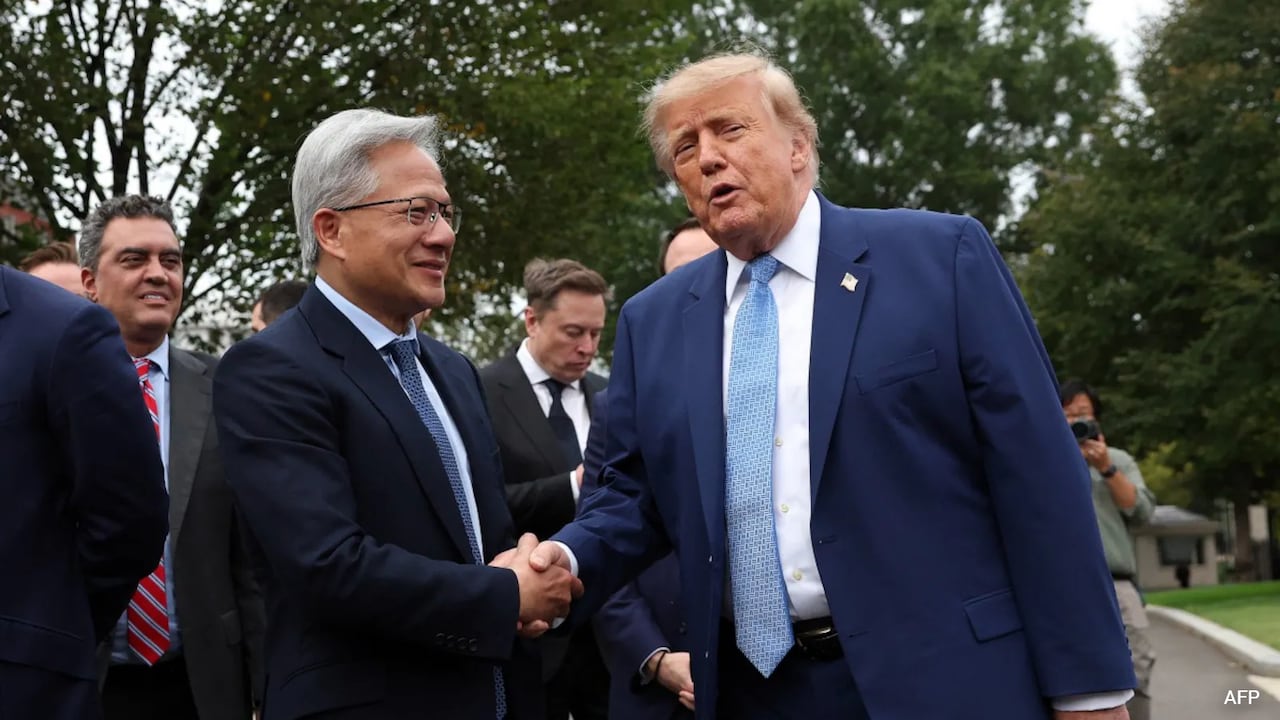
Silicon Valley used to operate under a simple rule that tech innovation happened in a vacuum far away from traditional political warfare. That illusion shattered completely when Nvidia co-founder Jensen Huang stepped down following an explosive espionage controversy. What started as a personal fallout involving an alleged Chinese intelligence asset named Alice Huang quickly morphed into a high-stakes geopolitical crisis. Now, congressional investigators are shining a harsh light on how close the tech executive was to the highest levels of the Trump administration.
If you look past the sensationalized headlines about corporate espionage and extramarital affairs, you will find a much deeper battle over national security, advanced artificial intelligence, and who actually controls the hardware fueling the global tech race.
The White House Relationship Under the Microscope
President Donald Trump didn't hide his affinity for Nvidia's former chief. Just weeks before the scandal broke wide open, Trump awarded Huang the National Medal of Science at a white-glove event in Washington, and earlier in the year, Huang joined the president aboard Air Force One for a high-profile state visit.
That cozy relationship is precisely what has lawmakers on Capitol Hill demanding answers. Reports surfaced indicating that intelligence briefings regarding Huang's personal ties reached the administration months prior to these public commendations. Critics and bipartisan lawmakers want to know what executive branch officials knew, exactly when they knew it, and whether national security warnings were brushed aside to protect political alliances or lucrative tech deals.
When intelligence intersects with multi-billion-dollar corporate lobbying, oversight usually follows close behind. Members of Congress are now questioning whether the administration's soft approach to certain semiconductor export controls was influenced by these close ties.
The Core Conflict Over China Tech Sales
At the center of this political storm is a brutal economic reality: chips are the oil of the twenty-first century. Nvidia's advanced graphics processing units sit at the absolute core of the global artificial intelligence boom. Without them, building large language models or scaling machine learning operations is practically impossible.
For years, Jensen Huang openly argued against heavy-handed export restrictions, insisting that cutting American tech companies off from the massive Chinese market would only drive Beijing to build indigenous alternatives. Commerce Secretary Howard Lutnick and the administration faced intense pressure from tech lobbyists who wanted smoother pathways to sell chips overseas.
However, critics argue that balancing commercial profits against geopolitical survival is a dangerous game. Lawmakers are investigating a controversial arrangement involving export licenses and tariff structures that allowed certain Nvidia products to clear regulatory hurdles. Investigators are actively digging into whether the Commerce Department dropped or delayed critical reviews of chip smuggling networks after receiving pushback and financial contributions from corporate players.
Why Bipartisan Lawmakers Won't Let This Go
It is rare to see Republicans and Democrats agree on much in Washington these days, but the Nvidia fallout has created a rare moment of unified legislative aggression.
House committees focusing on foreign affairs, intelligence, and Chinese strategic competition have demanded direct testimony. Meanwhile, top Democrats on financial oversight committees have launched formal inquiries into what they characterize as a coordinated scheme to approve and tax high-tech exports while ignoring clear intelligence alerts.
The stakes are enormous because Nvidia is not just another publicly traded corporation. Its technology dictates the speed of military development, autonomous infrastructure, and economic power. When the face of that company becomes entangled with foreign intelligence concerns while simultaneously lobbying the White House for relaxed trade rules, the system faces a crisis of trust.
Jensen Huang might be gone from the top job at Nvidia, but the structural questions he left behind are only getting louder. Washington is waking up to the reality that private enterprises now wield nation-state levels of power, and the oversight mechanisms designed decades ago are struggling to keep up. Expect congressional subpoenas, Department of Justice reviews, and fierce legislative battles to dominate the tech policy landscape for months to come.