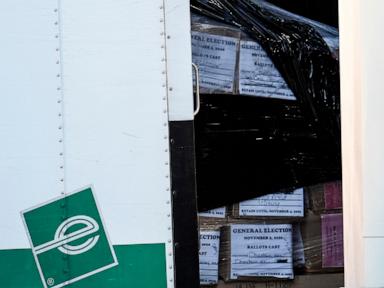
The legal tug-of-war over Georgia's 2020 presidential election results just hit another brick wall, and if you're tired of the endless court battles, you're definitely not alone. A Fulton County Superior Court judge stepped in to halt an earlier order that would have forced county officials to hand over physical 2020 election records to the Georgia State Election Board.
It's a massive pause button.
For months, the conservative-majority State Election Board has pushed aggressively to inspect physical ballots, envelopes, and administrative logs from Atlanta's most populous county. They wanted everything turned over immediately. Fulton County pushed back, arguing the board was overstepping its legal authority and ignoring strict statutory rules governing sealed ballots. The judge agreed enough to freeze the handover while the broader legal fight plays out.
What Actually Happened in Court
To understand why this ruling matters, you have to look at the mechanics of Georgia election law. Physical ballots aren't just sitting in an unlocked filing cabinet waiting for someone to browse through them. Under state statute, once an election is certified and the statutory contest period expires, those ballots are sealed under court order.
Breaking that seal requires specific legal standing and a valid judicial warrant or court order.
When the State Election Board demanded Fulton County turn over its 2020 election records, they essentially bypassed the traditional judicial gatekeepers. Fulton County's legal team filed an emergency motion to stay the enforcement, pointing out a massive flaw in the board's demand. If the county complied and handed over sealed ballots without proper court authorization, local election officials could actually be violating state law themselves.
The judge recognized that catch-22 immediately. By granting the stay, the court prevented an irreversible action—unsealing and transferring sensitive election materials—before the underlying constitutional and statutory questions could even be argued on their merits.
Why the Georgia State Election Board Wanted the Records
You can't separate this legal battle from the political reality in Georgia right now. The State Election Board's composition shifted significantly over the past couple of years, with three conservative members forming a reliable voting bloc that has repeatedly questioned the administration of the 2020 election in Fulton County.
Their stated goal is transparency and accountability. Board members argued they need the physical 2020 election records to investigate lingering complaints about double-scanned ballots, missing chain-of-custody forms, and administrative errors during the chaotic 2020 recount. From their perspective, you can't audit an election properly without looking at the primary source documents.
Honestly, on the surface, "let's double-check the paperwork" sounds totally reasonable to most people. Who argues against checking the math?
The problem isn't the idea of oversight. The problem is how many times this exact ground has already been plowed.
The History Most Headlines Skip
If you only read brief wire reports, you might think nobody has ever looked at Fulton County's 2020 ballots. That's completely false. Georgia counted the 2020 presidential race three separate times before certifying Joe Biden's narrow victory of roughly 11,779 votes.
First came the machine count on election night. Second came a full statewide hand audit—a risk-limiting audit that required election workers to physically touch and tally nearly five million paper ballots across all 159 counties. Third came a formal machine recount requested by Donald Trump's campaign.
Every single count confirmed the same outcome.
Beyond the tallies, the Georgia Secretary of State's office and the Georgia Bureau of Investigation spent years probing specific allegations in Fulton County. In 2023, an independent monitor and state investigators reviewed the double-scanning allegations from the 2020 recount. They found sloppy administrative practices and human error—certainly nothing to brag about—but zero evidence of intentional fraud or enough miscounted votes to alter the result.
Even former President Trump himself acknowledged the finality of those numbers in other legal contexts, yet the administrative battle inside the State Election Board kept rolling forward.
The Legal Limits of the State Election Board
This is where the judge's halt order becomes a textbook lesson in administrative law. State agencies and boards only possess the exact powers granted to them by the legislature. They don't get to invent new enforcement mechanisms just because they feel strongly about an issue.
Fulton County's attorneys hammered on three specific legal vulnerabilities in the board's demand:
- Jurisdiction over sealed materials: Once ballots are deposited with the Clerk of Superior Court under seal, they fall under judicial custody, not executive or administrative board custody.
- Retroactive rule enforcement: Several of the procedural rules the board cited to justify its sweeping document demand didn't even exist in 2020, raising serious legal questions about applying modern administrative standards backward.
- Chain-of-custody risks: Moving hundreds of thousands of physical ballots and original envelopes from secure county vaults to a state board without strict judicial protocols risks damaging or contaminating records that are still subject to separate, ongoing litigation.
When an administrative board tries to force a county clerk to violate a statutory seal, a Superior Court judge is going to hit the brakes almost every time. It's basic separation of powers.
What Most People Get Wrong About Election Audits
There's a massive misconception floating around online that physical paper ballots are endlessly durable and can be pulled out, handled, and re-scanned forever without consequence.
Ask anyone who has actually worked inside a county elections warehouse. Paper ballots from a high-turnout presidential election are fragile, bulky, and strictly tracked by batch numbers, box seals, and tamper-evident tape. Every single time a box is unsealed and transported, you introduce human error. Paper tears. Batches get out of order. Humidity affects scanner feed rollers.
That's why state laws across the country—not just in Georgia—put strict time limits on when ballots can be unsealed and inspected. You do the recounts, you run the audits, you litigate any contests within the statutory window, and then you lock the doors. If an election is never truly closed, the administrative machinery grinds to a halt while preparing for the next cycle.
How This Impacts Future Georgia Elections
Even though this fight is centered on 2020, the real stakes are about who controls election administration moving forward. If the State Election Board eventually wins the right to demand sealed physical records years after an election is certified, it sets a massive precedent for every county in Georgia.
Think about what that means for local election directors. A county board could certify an election, survive a hand audit, survive a recount, and still face open-ended demands from state appointees years later to pack up their vaults and ship records to Atlanta.
On the flip side, supporters of the State Election Board argue that without subpoena and inspection teeth, state oversight becomes a paper tiger. If counties know they can simply run out the clock until ballots are sealed, local officials might face less pressure to fix chronic administrative sloppiness. Both arguments have real weight, which is why the Superior Court wanted full briefing rather than a rushed handover.
What Happens Next in the Courts
A stay isn't a final victory for Fulton County, and it isn't a permanent defeat for the State Election Board. It's a freeze that preserves the status quo while the court examines the underlying legal arguments.
Here is what to watch over the coming weeks:
- Merits briefing: Both sides will file detailed legal briefs arguing whether Georgia's election code actually gives the State Election Board authority to override statutory ballot seals.
- Oral arguments: The judge will hold a formal hearing where attorneys for the county and the board will face direct questioning on statutory interpretation and precedent.
- Appellate maneuvers: Whichever side loses the final Superior Court ruling is almost guaranteed to appeal to the Georgia Court of Appeals or the Georgia Supreme Court, stretching the timeline out even further.
If you want to follow this case without getting lost in partisan spin, skip the cable news commentary and read the actual Superior Court docket filings. Look specifically at how the court interprets Title 21 of the Georgia Code—that single statutory section holds the entire answer to whether those boxes ever leave Fulton County's vault.