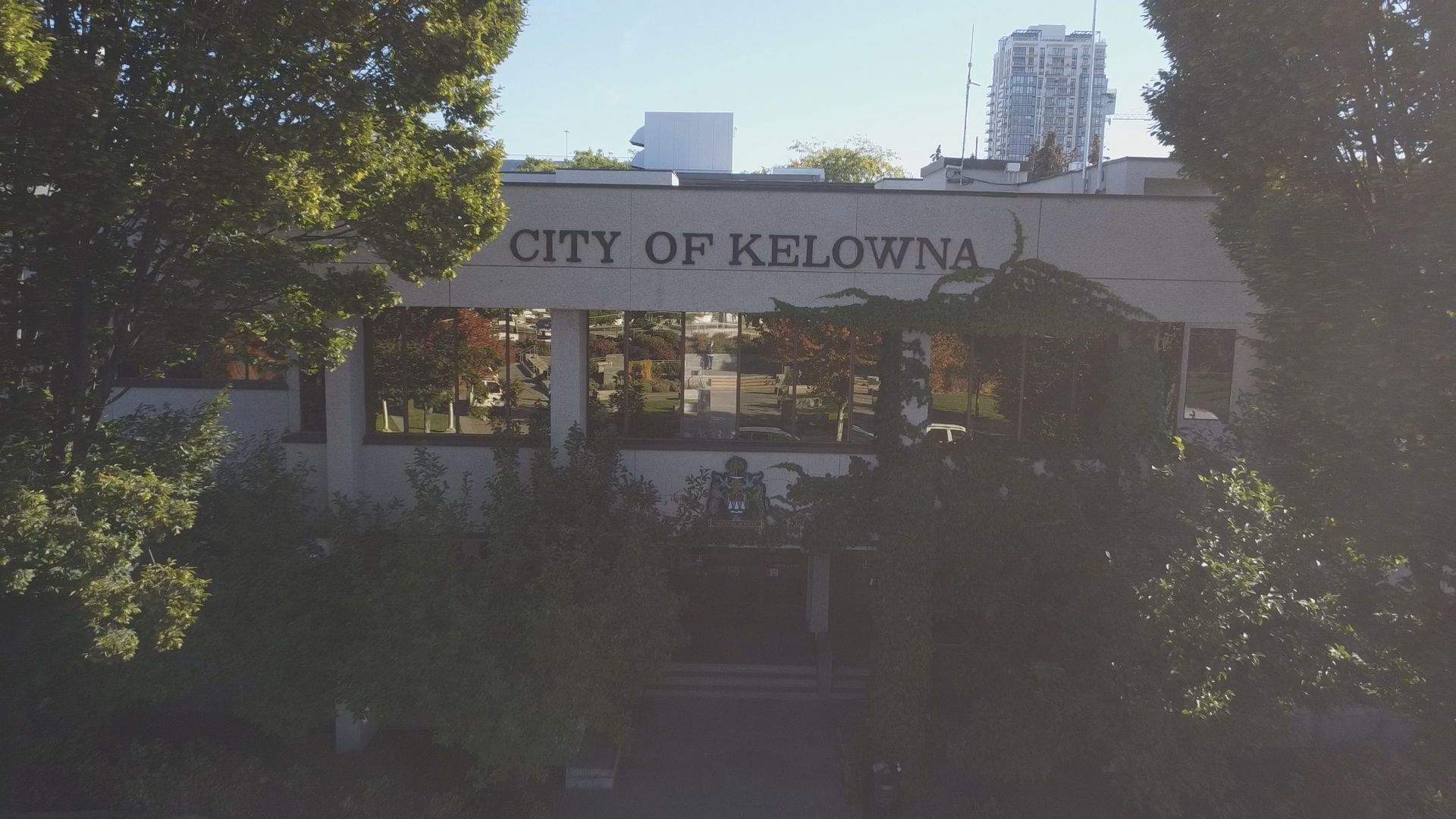
Kelowna residents found out about a major city worker wage hike the way nobody should find out how their tax dollars are spent: through local newspaper coverage after the fact.
When unionized staff represented by CUPE Local 338 secured an 11.7 per cent wage increase over three years—breaking down to 3.75 per cent annually for 2026, 2027, and 2028, retroactive to January 1, 2026—the deal didn't arrive with a public press release or a plain-language budget breakdown. Instead, bargaining started back in February, a tentative settlement was reached on October 7, the outgoing council approved it in a closed meeting on October 14, voters went to the polls on October 17, and union members ratified it on October 19. Only weeks later, when reporters dug into it, did the public get the full picture.
Honestly, that timing is a terrible look for a city that keeps asking taxpayers to swallow higher costs while preaching openness. Whether the silence came from a mutual "no media during bargaining" understanding or election-season caution, keeping a multi-year labour deal out of public view until after voting day erodes trust fast.
Why the Quiet Kelowna Wage Hike Sparked Backlash
At the heart of the uproar is a simple question: why did Kelowna taxpayers learn about an 11.7 per cent wage bump from journalists instead of their own city hall?
Gage Haubrich, a director with the Canadian Taxpayers Federation, put it bluntly when speaking to Global News: residents shouldn't have to rely on reporters to discover how much public commitments cost, and basic public notice should be the bare minimum standard for municipal government. Every dollar in public-sector wages, benefits, and paid time off comes out of municipal budgets funded by property taxes, utility fees, and local revenues.
City officials have offered two main explanations for the low profile. First, Stuart Leatherdale, the city's lead negotiator and general manager of people and protective services, noted that Kelowna and CUPE Local 338 had an early understanding not to conduct negotiations publicly or through the media, a posture that stayed in place through bargaining and ratification. Second, city statements indicated that issuing public announcements ahead of the October 17 municipal election wasn't something the city could do. Human resources director Heidi Obermeier also pointed out that while Kelowna has announced ratified agreements in past rounds—including in 2023—doing so hasn't been consistent.
That inconsistency is part of the problem. Other Okanagan and British Columbia municipalities—including Penticton, Vernon, Kamloops, West Kelowna, and Peachland—have publicly announced recent collective agreements with their staff. When neighboring cities put deals in the open and Kelowna stays quiet right around an election, voters naturally connect dots that officials might not intend. Even if negotiators had legitimate reasons to keep blow-by-blow bargaining out of the headlines, once a tentative deal is signed or ratified, radio silence looks like spin management.
Inside the Numbers and Competing Arguments
To judge this deal fairly, you have to look at both sides of the ledger instead of stopping at a single headline percentage.
On the cost and taxpayer side, an 11.7 per cent wage hike over three years isn't pocket change. Local reporting also notes that once this agreement runs through the end of 2028, cumulative salary increases for covered city employees will reach 25.62 per cent over six years, alongside extras like added vacation and sick days, expanded health benefits, and allowances. Critics like the Canadian Taxpayers Federation argue that public employees enjoy stronger job security and benefit packages than many private-sector residents footing the bill, making transparency around total compensation even more urgent.
On the labour market and inflation side, city officials argue the numbers are grounded in regional benchmarks rather than excess. According to the city's statement, Canadian Consumer Price Index (CPI) inflation has averaged 2.69 per cent since 2016, B.C. CPI has averaged 2.82 per cent, and Kelowna's negotiated wage adjustments over that same span have averaged 2.84 per cent. Obermeier also noted that Kelowna benchmarks against larger B.C. communities—such as Burnaby, Surrey, New Westminster, Port Coquitlam, and Nanaimo—to recruit and retain staff in a competitive labor market. Living-wage figures in Kelowna have likewise hovered around $26.45 per hour, showing how steep local living costs remain for working households.
Having watched municipal labor talks up close for years, I've seen how both sides cherry-pick timeframes. Six-year cumulative raises look huge if you're pinching pennies during a property tax hike, while 3.75 per cent annual bumps look modest if you're trying to stop mechanics, utility crews, and recreation staff from jumping to higher-paying municipalities. What makes people angry isn't just the math—it's feeling kept in the dark while the math gets locked in.
Why Closed-Door Bargaining Clashes With Civic Trust
Municipal collective bargaining is a classic tug-of-war between two valid democratic principles: effective negotiation and public accountability.
Nobody serious expects a city council to negotiate every cent of a wage grid live on camera. Airing raw opening positions or tactical trade-offs in real time can harden union stances, drag out talks, and push disputes toward strikes or lockouts that disrupt garbage collection, parks, or infrastructure. In that narrow sense, keeping active bargaining out of the press has a practical rationale.
Where Kelowna's approach falls short is the transition from bargaining to approval and ratification. Once a tentative agreement is reached and approved by council—even if union members still have to cast their ratification ballots—taxpayers have a right to know what is being proposed on their dime before the curtain drops completely. Holding a closed-door council approval days before an election, followed by union ratification two days after voting, creates an optics problem you can't wave away with a polite statement.
Public trust doesn't vanish overnight from one quiet press cycle, yet every "we didn't announce it" moment chips away at credibility. Voters in Kelowna's October 2026 election re-elected Mayor Tom Dyas and seated a mix of returning and newly elected councillors. That fresh council now inherits the fallout of a deal negotiated under its predecessor, which means new leaders can either reset how wage agreements are communicated or inherit the exact same skepticism next time around.
What Residents and Watchdogs Should Do Next
If you live in Kelowna or follow local government accountability, waiting for a press release that never comes isn't a strategy. Here are practical steps you can take right now:
- Read the actual collective agreement and budget documents. Don't rely solely on shorthand headlines or forum rumors. Check City of Kelowna council agendas, financial plans, and collective agreement filings to see exact wage schedules, benefit changes, and multi-year budget impacts.
- Ask direct questions at council and budget meetings. When budget deliberations or labour updates come before the 2026–2030 council, ask specific questions about total multi-year dollar costs, how raises are funded (taxation vs. reserves or efficiencies), and what service levels are tied to staffing.
- Push for a written public-disclosure policy on collective agreements. Urge council to adopt a clear, consistent rule requiring a public summary of key financial terms whenever a tentative or ratified union deal is reached—regardless of whether an election is approaching.
- Compare Kelowna against peer B.C. cities. Look at how neighboring Okanagan communities and comparable B.C. municipalities report wage settlements and property tax drivers so your feedback to council is grounded in real comparisons rather than guesswork.