Pyongyang isn't waiting around for Washington to make the first move. North Korean leader Kim Jong Un just put his country's second nuclear-capable naval destroyer into active service, timing the rollout to directly counter a fresh round of trilateral military exercises held by the United States, South Korea, and Japan.
If you're wondering why this matters right now, it's because North Korea's military strategy is shifting rapidly from land-based missile silos to the open ocean. Let's look at what's actually happening on the ground and in the water.
Inside North Korea's New Naval Ambitions
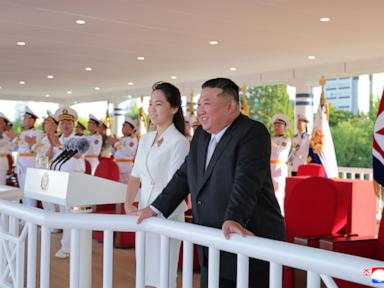
The newly commissioned warship, named the Kang Kon, entered service at a ceremony in the eastern port city of Wonsan. Standing alongside his teenage daughter, Kim Jong Un didn't mince words. He told state media that the arrival of back-to-back advanced warships—following the June commissioning of its sister ship, the Choe Hyon—deepens the worries of his adversaries.
Both vessels sit in the 5,000-tonne class and carry nuclear-capable missile systems. For decades, Western analysts viewed North Korea's navy as an aging, coastal-defense force with little blue-water capability. That calculation is changing. Pyongyang is upgrading its naval platforms, and military experts point to technological assistance and tighter diplomatic ties with Russia as key catalysts behind this sudden shipbuilding surge.
The Trigger: Freedom Edge Exercises
Timing is everything in geopolitics. The Kang Kon was rolled out just as Washington, Seoul, and Tokyo kicked off their five-day "Freedom Edge" joint exercises in waters near South Korea's southern Jeju Island.
Seoul insists these drills are purely defensive. They're designed to build a unified response to rising nuclear threats from the North. But Pyongyang sees things differently. North Korean officials view any joint training involving U.S. strategic assets as a rehearsal for invasion.
The standoff intensified after Washington and Seoul wrapped up their annual Ulchi Freedom Shield drills early. President Donald Trump had ordered the Pentagon to scale back those exercises, pointing to his historical rapport with Kim. Pyongyang shrugged off the olive branch. Kim Yo Jong, the leader's powerful sister, made it clear that trimming exercise schedules doesn't erase what Pyongyang calls a hostile, aggressive posture.
Escalation and Missile Launches
North Korea rarely responds to allied drills with silence. Shortly after the Freedom Edge exercises began, South Korea's military detected multiple short-range ballistic missile launches off the eastern coast. It's a classic playbook move: showcase new hardware, condemn foreign drills, and fire off a volley of missiles to keep regional adversaries on edge.
Kim wants leverage. He knows the diplomatic breakdown of 2019 left North Korea isolated for a time, but today's geopolitical alignment looks entirely different. Backed by deeper partnerships with Moscow and Beijing, Pyongyang feels emboldened to demand international recognition as a nuclear state before returning to any serious negotiation table.
What Happens Next in the Pacific
The regional security dynamic is locked in a tight spiral of action and reaction. As long as Washington maintains its commitment to the complete denuclearization of the peninsula while holding high-profile drills with regional partners, Kim will keep expanding his naval and nuclear capabilities.
Expect more advanced maritime hardware tests in the coming months. Analysts are already speculating that a nuclear-powered submarine could be the next major project on Pyongyang's blueprint. The waters off the Korean Peninsula are only getting more crowded, and the margin for miscalculation keeps shrinking.
North Korea Adds 2nd Naval Destroyer As US, South Korea & Japan Conduct Major Military Drills
This video provides a detailed look at North Korea's naval expansion and the strategic fallout surrounding the joint military drills conducted by the U.S., South Korea, and Japan.
http://googleusercontent.com/youtube_content/1