You won't find much left of Kuridala today except for rusted iron sheets, crumbling brick foundations, and the heavy silence of the Australian outback. Yet a century ago, this remote settlement in Queensland was a roaring boomtown housing thousands of workers.
People ask how entire towns can completely vanish from the map. The answer usually involves a single industry, a sudden economic crash, or a natural disaster that completely destroys local infrastructure. Kuridala experienced all three at once.
The Rise of a Copper Giant
Located roughly 70 kilometers south of Cloncurry, the site didn't start out with the name Kuridala. It went through several identities, including Gulatten and Friezland, before officially becoming Kuridala in October 1916. Some historical records point to a desire to avoid confusion with other local settlements, while others hint at shifting wartime sentiments against German-sounding names.
Whatever the locals called it, the town existed for one reason: copper.
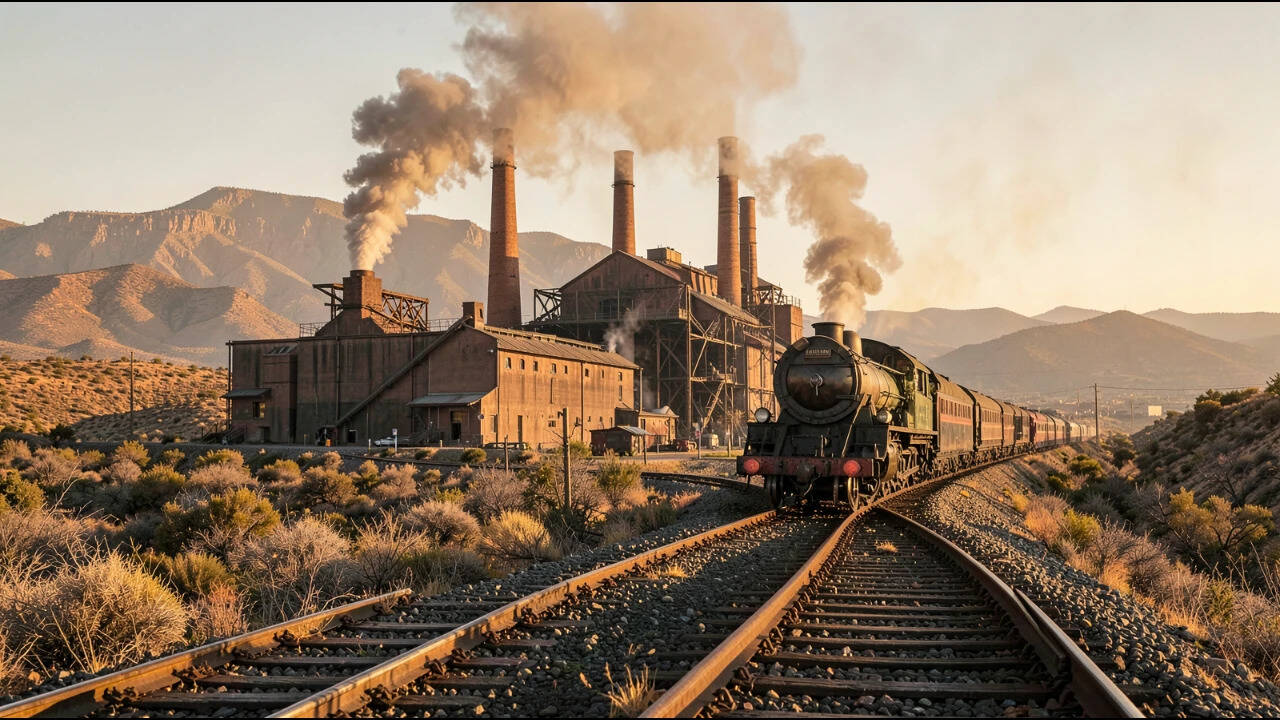
The opening of the Hampden Smelter in March 1911 transformed the region. Paired with railway expansions connecting Cloncurry to the mines, the smelter allowed local operators to process massive quantities of ore right on-site. By 1913, the population hovered around 1,500 people. You had hotels, a thriving printery, local churches, an ice works, and a bustling school.
World War I didn't create Kuridala, but it threw fuel on the fire. British wartime price controls kept the copper market artificially high, bringing four straight years of intense prosperity to the Cloncurry mineral district. By 1918, daily school attendance reached nearly 280 children, and the town hit its absolute peak.
The 1918 Cyclone and the Breaking Point
Every mining boom relies on fragile economic conditions. When those conditions snap, the town usually snaps with them.
In December 1918, a severe cyclone slammed into the region, causing major structural damage to the Hampden Smelter and its powerhouse. Operations ground to a halt. Smelting didn't resume until September 1919, leaving the company bleeding money while trying to repair the wreckage.
At the same time, global economics dealt a fatal blow. British wartime price guarantees expired, and world copper prices crashed hard in 1920.
Compounding the disaster, the Commonwealth Bank withdrew financial support against copper awaiting export. Facing mounting debts and a broken plant, the operating company pulled the plug.
The Dismantling of a Community
When a company town dies, its buildings often travel. Kuridala didn't just empty out; it was physically disassembled and shipped away.
As the population plummeted—dropping from roughly 2,000 residents down to under 800 by the mid-1920s—civic infrastructure went on the move. The local hospital, the picture theater, and the courthouse were packed up and relocated to Mount Isa, where a new mining boom was taking off. Even the ice works followed suit.
The operating company finally dissolved in 1928 after failing to find buyers for its remaining assets. Mount Elliott eventually purchased what was left, but the era of Kuridala was over.
Today, the surviving remnants of the Hampden Smelter stand as quiet reminders of early twentieth-century industrial ambition in outback Queensland. It's a stark lesson in what happens when a community stakes its entire existence on a single volatile commodity and Mother Nature decides to intervene.