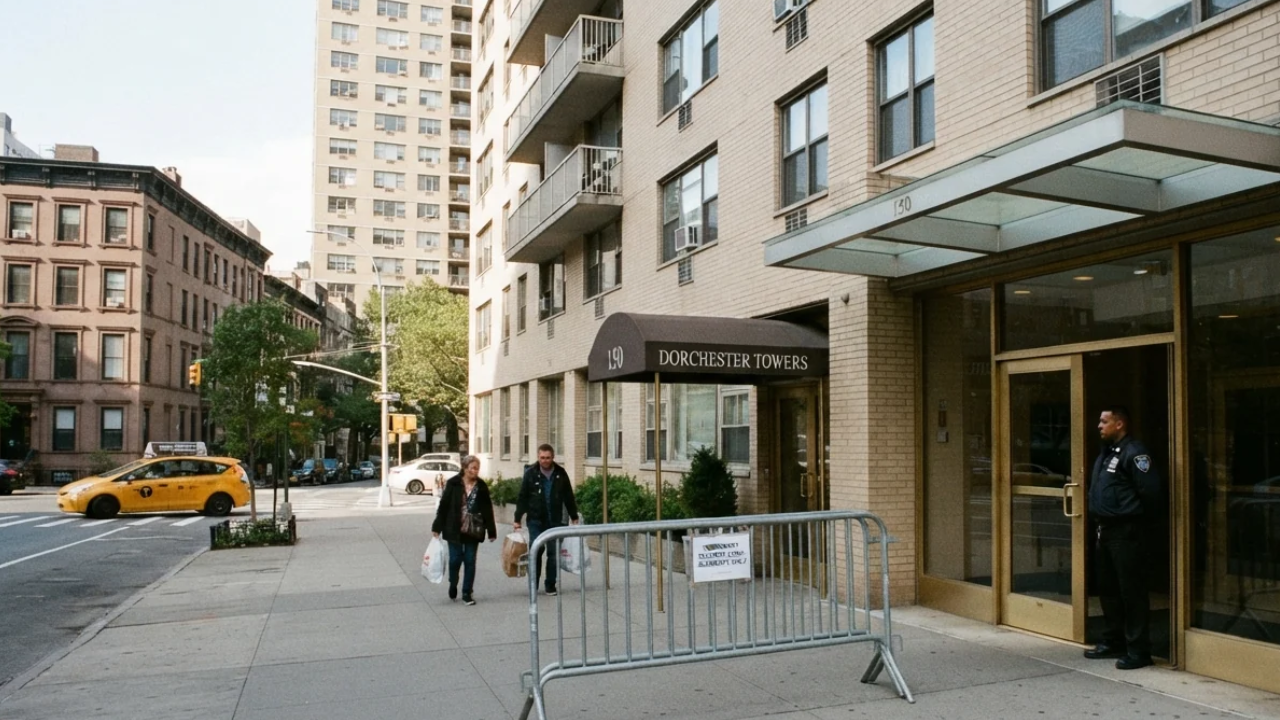
A New York appeals court just wiped out a $243,966.96 judgment against a condo owner over her tenants' alleged disturbances, yet she isn't off the hook yet.
That tension is the real story behind Board of Mgrs. of the Dorchester Towers Condominium v. Hwang (2026 NY Slip Op 06944). On November 24, 2026, the Appellate Division, First Department unanimously vacated the six-figure award that a lower court in New York County had entered against unit owner Alison Hwang after her tenants allegedly caused repeated disturbances at Dorchester Towers. For New York condo owners, landlords, and building boards, the ruling settles one question while blowing open several expensive ones.
The headline sounds like a clean victory for the landlord. Honestly, it's closer to a reprieve with strings attached.
Why a New York Court Overturned the $243,966 Judgment
Summary judgment is a blunt instrument, and the First Department decided the trial court swung it too early. When a condo board asks a judge to hand over nearly a quarter-million dollars before a full trial, the evidence has to lock into place as a matter of law. Here, the appellate panel—Justices Scarpulla, Shulman, Rosado, Michael, and Hagler—concluded it didn't.
First, the court held that the Board of Managers failed to prove as a matter of law that Hwang violated condominium by-law provisions barring an owner from "allowing or permitting" a nuisance in the apartment. A tenant acting badly is one thing. Proving the unit owner allowed or permitted that conduct—especially when the owner took steps to push back—is another.
Second, the judges zeroed in on the price tag. In October 2018, after disturbances continued following Hwang's lease-termination notice, the condo board hired MG Security Services for round-the-clock building security and later sought to make Hwang pay for it, alongside legal fees and repair costs. Justice James G. Clynes had previously granted the board summary judgment on its seventh cause of action for monetary damages and entered the $243,966.96 judgment in October 2025. On appeal, the First Department found triable issues of fact over whether the extra security was truly necessary, whether cheaper legal alternatives like seeking preliminary injunctive relief could have avoided or reduced those security costs, and whether shifting the full security bill onto Hwang would even be fair and reasonable if a breach is eventually shown.
At the same time, the panel affirmed the dismissal of Hwang's counterclaims seeking declaratory relief, finding them vague, conclusory, or unsupported by the record. So the money judgment is gone for now, the dispute goes back to the trial court for further proceedings, and Hwang's liability remains an open fight.
How a Lease Extension Turned Into a Multi-Year Court Fight
If you lease out a condo in New York City, the timeline of Hwang reads like a cautionary tale about how fast a manageable tenant complaint can snowball into six-figure litigation.
Hwang began leasing her unit at Dorchester Towers to tenants in 2016. Serious trouble flared in August 2018, shortly after the building approved a lease extension. Complaints piled up over loud disturbances, clashes with residents and building staff, and incidents that brought in police.
Hwang didn't ignore the complaints. Court records show she met with condo board representatives, had her lawyer send a cease-nuisance letter to the tenants, and on September 12, 2018, served a termination notice ending the tenancy on October 31. When the tenants didn't leave by that deadline, she filed a Civil Court holdover proceeding to evict them.
That's where real-world friction trips up even a responsive landlord. Serving a notice doesn't magically make disruptive tenants pack their bags on Halloween. While the holdover proceeding was pending, the condo board hired MG Security Services in October 2018 and filed its own Supreme Court lawsuit on December 18, 2018, against Hwang and the tenants. Among other relief, the board sought a temporary restraining order covering window signs, bird feeding on the property, staying away from the lobby and management office, stopping staff harassment, and complying with building rules.
In practice, courts often draw a sharp line between an owner who sits on her hands for months and an owner who actually moves toward termination and eviction. Still, sending a termination notice is only step one. A board can argue—and here the First Department left room for the trial court to examine—whether faster or different legal steps could have curbed the building's security bill.
What This Ruling Means for Condo Landlords and Boards
Big news headlines love a dramatic reversal, yet property owners often misread what "vacated and remanded" actually does. It doesn't erase the underlying claim. It resets the battlefield.
If you're a condo landlord, the trap is assuming that serving a termination notice automatically shields you from building assessments or legal claims. Boards routinely point to nuisance clauses in condo declarations and by-laws to argue that a unit owner stands in the shoes of her occupant. Even when an appeals court says summary judgment was improper, a trial court can still weigh whether you acted quickly enough or thoroughly enough after complaints started.
If you sit on a condo board or manage a building, this decision is a wake-up call about spending first and billing later. Hiring 24-hour security guards feels decisive when staff and neighbors are stressed out and calling police. From a litigation standpoint, though, handing a massive security invoice to a single unit owner invites pushback over necessity, proportionality, and whether targeted court relief might have solved the problem without running up a huge guard tab. And on legal fees, the appellate court made clear that any attorney's fees the board seeks down the road must be reasonable and recoverable under the governing by-laws.
Where People Get Nuisance Liability Wrong
A few misconceptions pop up constantly whenever tenant behavior collides with condo governance:
- Myth one: The tenant caused the chaos, so the board can't touch the owner. Condo by-laws are contracts binding unit owners to the building, not just direct contracts with tenants. When a tenant creates a nuisance, the board often sues the owner because the owner controls the unit's lease and holds the property interest.
- Myth two: Overturning a judgment means the case is dead. Vacating a summary judgment award means the issue wasn't proven conclusively on paper before trial. Sending the claim back to the lower court means the facts still have to be sorted out.
- Myth three: Any security expense tied to a bad tenant is automatically recoverable. Courts scrutinize whether extra security was reasonably necessary or whether other remedies could have prevented or limited the cost. Attorney's fees face a similar test—they have to fit the by-laws and be reasonable.
Practical Next Steps If You Own or Manage a Condo Unit
You don't need to wait for an appeals court to remind you how expensive building disputes get. Whether you lease out a single condo or help run a high-rise association, take these concrete steps right now:
- Audit your lease and condo by-laws before a problem starts. Make sure your residential lease incorporates condo rules and nuisance prohibitions clearly, gives you explicit default and termination levers for rule violations, and spells out how legal or building-related charges are handled.
- Document every complaint, notice, and action in real time. Keep a clean paper trail—dates of board meetings, emails, lawyer demand letters, termination notices, holdover filings, and police or incident references. If a court ever asks whether you took reasonable steps to stop a nuisance, vague memories won't cut it.
- Move fast—and check your injunctive options early. When tenant disturbances escalate past ordinary noise, don't rely solely on a slow-moving timeline. Talk to landlord-tenant counsel immediately about holdover strategy and whether court relief is warranted rather than letting months drift by.
- Separate emergency building protection from automatic cost-shifting. If you're on a board weighing extra security or aggressive litigation, document why less costly measures weren't enough and review the exact by-law language on recoverable expenses and legal fees before assuming a single owner will foot the whole bill.