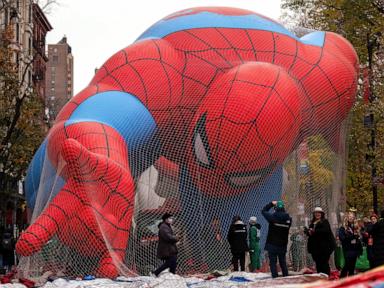
Traditions are supposed to be bulletproof. You wake up, you turn on the television, and you watch oversized cartoon characters float down the streets of Manhattan while you wait for the turkey to roast. Millions of people bake this routine directly into their holiday DNA. But reality finally caught up to the spectacle.
For the first time in its century-long history, the Macy’s Thanksgiving Day Parade was forced to shift dates entirely because a severe coastal storm barreled into New York City.
Forget minor wind delays or lowering the balloons to ten feet. Organizers and city officials made the historic call to push the entire celebration to Saturday. It’s a massive break from a 100-year legacy that survived economic depressions, world wars, and local crises. If you've ever stood freezing on Central Park West, you know how punishing those Manhattan street canyons can get when a nor'easter rolls through.
The Breaking Point of a Century-Old Institution
We've grown complacent about weather safety. For decades, fans watched the giant inflatables struggle against gusty winds, crossing their fingers that Snoopy or SpongeBob wouldn't clip a traffic light. Strict rules enacted after the terrifying 1997 incident—where high winds forced the Cat in the Hat into a lamppost and seriously injured a spectator—mandated that balloons must stay grounded if sustained winds exceed 23 mph or gusts top 34 mph.
Yet, partial measures weren't enough this time. A powerful coastal storm system threatened not just the integrity of the inflatables, but the basic safety of the millions of spectators lining the 2.5-mile route and the thousands of marching band members, dancers, and handlers. Organizers faced an impossible choice. Keep the date and risk a catastrophic safety failure, or break a sacred holiday tradition to protect the public.
They chose safety. But the logistical shockwave of shifting a massive national broadcast and a multi-million-dollar production to a Saturday morning is staggering.
What Actually Happens When You Reschedule a National Holiday Anchor
Moving a parade of this scale isn't like rescheduling a local Little League game. You are dealing with complex broadcast contracts, network programming shifts, street closures across Manhattan, and thousands of out-of-town performers who booked flights and hotels around a Thursday timeline.
Think about the sheer manpower involved. High school marching bands from across the country spend years fundraising for their trip to New York. They practice in freezing weather back home, memorize complex field formations, and organize charter buses. When the schedule flips overnight, the ripple effects are chaotic. Hotels face early check-outs or sudden extensions, parents scramble to change return flights, and television networks have to scramble to fill hours of live programming blocks that were locked in months ahead of time.
It forces us to confront a hard truth. Modern event planning has to become far more agile. Climate volatility is increasing, and old weather contingency plans built decades ago are starting to fall apart under the weight of more frequent, severe coastal systems.
Moving Past the Holiday Blueprint
We treat holidays like museum exhibits that should never change. Every Thanksgiving script is written years in advance in our collective minds. But nature doesn't care about your holiday schedule.
This historic postponement proves that public safety has finally eclipsed blind adherence to a date on the calendar. It sets a new precedent for how major American cities must handle severe weather risks. If a 100-year-old institution can hit the pause button to keep people safe, other massive public events will inevitably follow suit when Mother Nature turns hostile.
The turkey will still be eaten, and the families will still gather. But the way we look at holiday traditions just changed forever.