If you look at a global map of climate solutions, you usually see solar panels, wind turbines, and massive electric car factories. You rarely see muddy water, tangled roots, and swarms of crabs. That is a massive mistake. Mangroves and other coastal blue forests quietly lock away carbon up to four times faster than land-based tropical rainforests while standing as the literal wall between rising tides and coastal communities.
Most people think climate defense requires high-tech engineering. Nature built a better system millions of years ago.
The Real Science Behind Blue Carbon
Carbon capture usually brings to mind vast expanses of green trees in the Amazon. But terrestrial trees have a dirty secret: when they die or burn, much of that stored carbon returns to the atmosphere. Blue forests operate on a completely different level.
Mangroves, seagrasses, and salt marshes absorb carbon dioxide through photosynthesis, just like land plants. The magic happens underground. The soil in a mangrove forest is waterlogged and oxygen-free. Without oxygen, bacteria can't break down organic matter quickly. Dead leaves, roots, and branches don't decay; they get buried. Over centuries, this creates thick layers of peat that trap carbon away for millennia.
Research published by marine ecologists shows that while tropical rainforests store carbon in their wood and leaves, mangroves pack most of theirs deep into the mud. When you cut down a rainforest, you release carbon. When you destroy a mangrove swamp, you unleash a literal carbon bomb that has been safely locked away since the Middle Ages.
The Shield Against Rising Seas
Storm surges don't care about concrete seawalls. In fact, rigid walls often make flooding worse by reflecting wave energy back into the water, eroding the shoreline even faster.
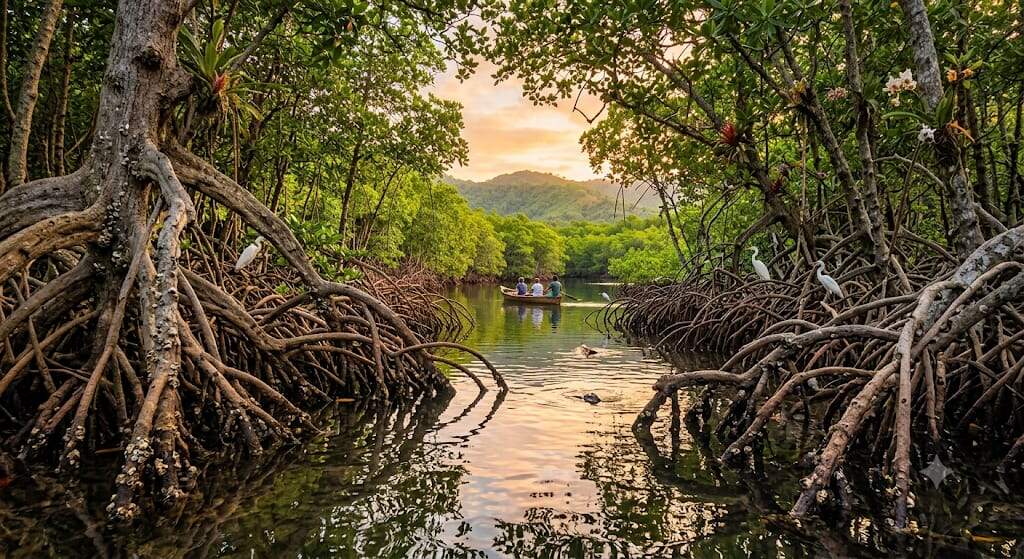
Mangroves do the opposite. Their dense, tangled web of stilt roots acts like a natural speed bump for the ocean. When a storm surge pushes onshore, the roots break up wave energy. Studies from conservation groups indicate that just a one-hundred-meter strip of mangroves can reduce wave height by up to sixty-six percent.
Communities that strip away their coastal mangroves for shrimp farms or beachfront resorts learn this lesson the hard way. The next hurricane hits, and homes wash away. Keeping mangroves intact isn't just about environmentalism; it is basic self-preservation for millions of people living near the coast.
Why Wildlife Thrives in the Mud
Walk into a mangrove swamp and you will hear a cacophony of life. These forests are the nurseries of the ocean.
Young fish, sharks, shrimp, and crabs spend the vulnerable early stages of their lives hiding among the roots where bigger predators can't reach them. Once they grow up, they swim out to coral reefs and open oceans. Commercial fisheries depend entirely on these coastal forests. If you destroy the mangroves, the fish disappear. It really is that simple.
Birds like herons, pelicans, and ospreys use the upper canopy for nesting. Even endangered Bengal tigers roam the mangrove creeks of the Sundarbans. Biodiversity isn't just a nice bonus here—it is the engine that keeps the entire coastal ecosystem stable.
How to Protect What Is Left
We are losing mangroves faster than almost any other ecosystem on Earth, mostly for coastal development and aquaculture. Planting a few saplings on a PR trip won't fix decades of destruction. Real restoration requires heavy lifting.
If you want to make a difference, support local conservation groups working directly with indigenous coastal communities. Governments need to stop subsidizing shrimp farming in mangrove zones and start paying local populations to guard the forests instead of cutting them down. Stop buying uncertified farmed shrimp that destroys wetland habitats. Pay attention to local coastal zoning laws where you live. Protect the mud, and the planet takes care of the rest.