If you think English common law from the fourteenth century has zero impact on modern democratic protests, you haven't been paying attention to the streets of New Delhi lately. When activists, student leaders, and political figures find themselves locked up or forced to promise good behavior before they've even committed a crime, they're tangling with a legal ghost that dates back to King Edward III.
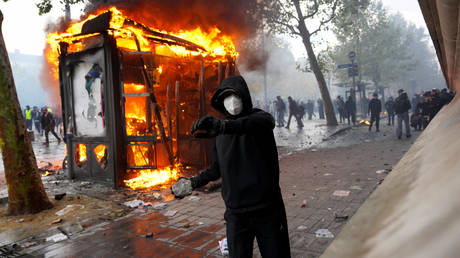
Recent high-profile detentions involving Cockroach Janata Party (CJP) figures like Ashutosh Ranka and Saurav Das, alongside All India Students' Association (AISA) president Neha Bora, brought this obscure instrument back into the headlines. Police and special executive magistrates used preventive legal mechanisms—specifically peace bonds and surety demands—to clamp down on demonstrations. It sounds like an administrative nuisance, but it cuts straight to the core of personal liberty and the right to dissent. Meanwhile, you can explore similar events here: Why France Is Back On Edge As 70000 Police Brace For New Protests.
Here is how a medieval statute morphed into a modern policing tool, and why everyone from constitutional lawyers to student activists is up in arms about it.
The 1361 Roots of Preventive Policing
Back in 1361, the English Parliament passed the Justices of the Peace Act. The core idea was simple and remarkably crude by modern standards: local authorities needed the power to arrest "rioters, champertors, backators, and misdoers" before they actually did anything illegal. The English crown wanted a mechanism to lock up troublemakers on pure suspicion. To see the complete picture, check out the detailed article by TIME.
British colonial administrators loved this concept. They transplanted it directly into the Indian legal system through early criminal procedure codes to keep a tight lid on anti-colonial agitation. Fast forward through post-independence legal updates, and that exact philosophy survived into the Code of Criminal Procedure (CrPC) and now lives on inside the Bharatiya Nagarik Suraksha Sanhita (BNSS), 2023.
Under the current legal framework, executive magistrates possess sweeping preventive powers. If an official receives police intelligence suggesting someone might breach public tranquility, they can issue a notice demanding a bond to keep the peace. You don't need to be convicted of a crime. You don't even need to be charged with one. You just need to be perceived as a potential risk.
How Peace Bonds Actually Work in Practice
The mechanics of a peace bond are straightforward on paper, but messy and invasive in reality. When law enforcement flags an individual during a wave of political protests or public demonstrations, a special executive magistrate (SEM) can initiate preventive proceedings.
Activists are typically told to sign a personal bond and furnish heavy sureties—often amounting to tens of thousands of rupees—promising to maintain "good behavior" for a set period, usually a year. If they refuse, or if the police claim they violated the terms by showing up at another protest, the consequences escalate rapidly.
Take what happened to Ashutosh Ranka and Saurav Das. After being detained upon arriving in Delhi and signing initial bonds, they were later arrested over alleged trespassing at Jantar Mantar. The authorities treated this subsequent political action as a breach of their prior peace bonds. That technical violation handed the magistrate grounds to extend their judicial custody, keeping them locked up while courts debated whether peaceful activism constitutes a threat to public order.
Meanwhile, student leader Neha Bora took a different route. Facing a show-cause notice demanding a personal bond, she refused to sign and challenged the proceedings in the Delhi High Court, arguing that these tools are weaponized to criminalize legitimate political dissent. Though the High Court dismissed her challenge, her defiance highlighted a growing friction point: using administrative surety instruments to neutralize political opposition.
The Fundamental Conflict Between Public Order and Liberty
The legal defense for peace bonds always comes down to state security and preventive justice. Courts have historically upheld that maintaining public tranquility is a legitimate state interest, and stopping a riot before it starts is better than cleaning up the wreckage afterward.
Yet, critics and senior advocates point out a glaring systemic loophole. Preventive detention and bond enforcement are meant for habitual offenders and violent actors, not political protesters exercising basic democratic rights. When the state treats a public demonstration or a symbolic march as an inherent "breach of peace," the constitutional right to freedom of speech and assembly takes a serious hit.
Worse still, the execution of these laws often relies on executive officers who wear dual hats within the policing apparatus. When police intelligence feeds directly into an executive magistrate's office housed within the same administrative chain, the independence of the review process gets blurred. Detainees end up waiting hours in court for brief, ten-minute hearings where their liberty hangs on vague intelligence inputs about what they might do.
What This Means Moving Forward
The ongoing battles over peace bonds aren't going away. As long as the state relies on colonial-era preventive mechanisms to manage dissent, courts will remain the battleground for defining where public order ends and authoritarian overreach begins.
If you're tracking civil liberties in India, watch how higher courts scrutinize the arbitrary rejection of local sureties and the broad definitions of what constitutes a "habitual" threat to peace. Until lawmakers prune these archaic branches from the legal tree, King Edward III will continue casting a long shadow over modern Indian democracy.