Poland just signed a roughly $300 million five-year agreement to put Palantir AI at the heart of its military command. That headline sounds straightforward enough. It isn't.
Signing a contract with Palantir Technologies Poland for what the Polish military calls Saturn—powered by Palantir's Maven Smart System—is a massive operational bet. Yet most quick news summaries treat this like a standard software purchase. You don't buy command-and-control software the way you buy office licenses. You rewire how generals see the battlefield, merge messy sensor feeds, and argue bitterly at home about data sovereignty. Expanding on this theme, you can also read: What Most People Miss About Jensen Huang Leading Nvidia After His Return.
Warsaw officially inked the deal on Friday, November 27, 2026, at the Polish Army Museum in Warsaw's Citadel, with Defense Minister Władysław Kosiniak-Kamysz leading the push. Talks started back in December 2023, followed by a December 2024 cybersecurity cooperation pact and an October 2025 letter of intent. If you've watched how fast Poland has been rearming on NATO's eastern flank, this move makes complete strategic sense—even if it makes plenty of critics nervous.
Why Poland Chose Palantir AI Over Waiting
Buying tanks and fighter jets is the easy part. Making sense of thousands of data streams at once is where militaries actually choke. Experts at Wired have provided expertise on this situation.
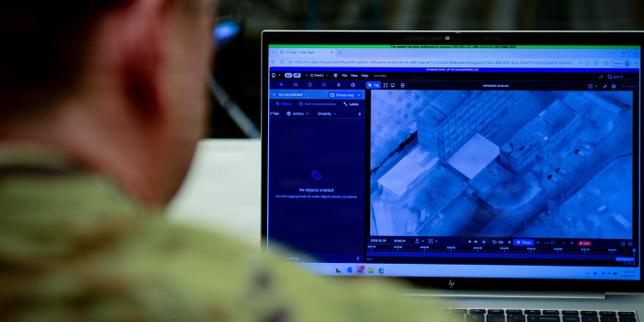
Kosiniak-Kamysz compared the impact of this software to buying F-35 fighter jets. That comparison gets to the real point. A jet gives you speed and firepower, while a decision-support system gives commanders a clearer picture across drones, satellites, radar, and reconnaissance feeds before orders go out. Major General Mariusz Chmielewski, head of Poland's Cyberspace Defense Forces, pointed directly to the problem of fragmented data sources inside the armed forces. Anyone who has worked on large defense or enterprise data projects knows that problem all too well. When every unit builds its own siloed dashboard, nobody has the whole picture when minutes count.
General Wiesław Kukuła, chief of Poland's general staff, framed the rollout around pulling the Polish armed forces closer to NATO interoperability. Warsaw also points out that NATO and Ukrainian forces already use Palantir tools, which lowers friction when allies need to share intelligence or coordinate operations. Against the backdrop of Russia's war in Ukraine approaching its fifth year—and heightened border tension in Eastern Europe—waiting years to build a homegrown alternative from scratch looked like a luxury Poland couldn't afford.
How Warsaw Tried to Lock Down Data Control
Here's the catch whenever a European government signs with a major American defense contractor: sovereignty anxiety hits fast.
Critics don't just worry about software bugs. They worry about who holds the keys, where the data sits, and whether a foreign company or foreign legal jurisdiction could ever become a weak link. Polish officials tried to head that off by drawing hard lines around control. According to statements from the defense ministry and Kosiniak-Kamysz, Polish forces keep exclusive ownership of their servers, encryption keys, and operational data. Palantir does not get remote access to Polish military data, classified data stays inside Poland's military infrastructure, and unclassified information is handled in a secure cloud environment under internal military security oversight.
Still, legal assurances and technical architecture aren't the same thing in every voter's mind. In defense tech, having a vendor build and maintain complex software while promising zero backdoor access requires constant auditing, strict access logs, and real institutional discipline. On paper, Warsaw built sensible guardrails. In practice, keeping those guardrails airtight over a five-year deployment will take daily work.
The Backlash Behind Closed Doors and in Warsaw
This deal didn't land quietly. Far from it.
Protesters gathered in Warsaw earlier in November 2026, and activist group Nasze Dane pushed for scrutiny over security and privacy risks. Human rights ombudsman Sylwia Gregorczyk-Abram wrote to Kosiniak-Kamysz in October 2026 regarding the group's concerns, while campaigners and lawmakers rallied near the Sejm calling for a public audit before moving ahead.
Honestly, that pushback shouldn't surprise anyone. Palantir has always been polarizing. Its founders and leadership—including CEO Alex Karp and board figure Peter Thiel—stir strong reactions on both sides of the Atlantic, and defense AI always raises hard questions about oversight, accountability, and reliance on U.S. tech giants. Even when a minister says the contract went through years of military exercises, demonstrations, and institutional checks, critics will ask whether civilian oversight kept pace with operational urgency.
Common Mistakes People Make Reading Defense AI Deals
When a story like this breaks, a few predictable misreadings pop up right away.
- Assuming AI makes the kill decision: Decision-support software is designed to sort, fuse, and surface information for human commanders—not replace chain-of-command authority. Treating every military AI contract like autonomous killer robots blurs how these systems actually work.
- Treating a $300 million five-year deal as a magic wand: Five years and roughly $300 million is significant money, yet software integration across branches of a military takes years of training, data hygiene, and doctrine changes. A tool doesn't fix bad processes on its own.
- Ignoring the political clock: Defense leaders weigh threats over a decade, while domestic critics judge transparency and civil liberties right now. Both sides are arguing over real risks, just from different starting points.
If you're tracking European defense tech, policy, or geopolitics, don't stop at the press release. Read the official statements from the Polish Ministry of National Defence alongside independent reporting from outlets like Reuters to separate contract headlines from operational reality. Watch how Poland handles logging, parliamentary oversight, and data segregation during the first year of Saturn's rollout—because that's where you'll see whether the guardrails hold up under pressure.