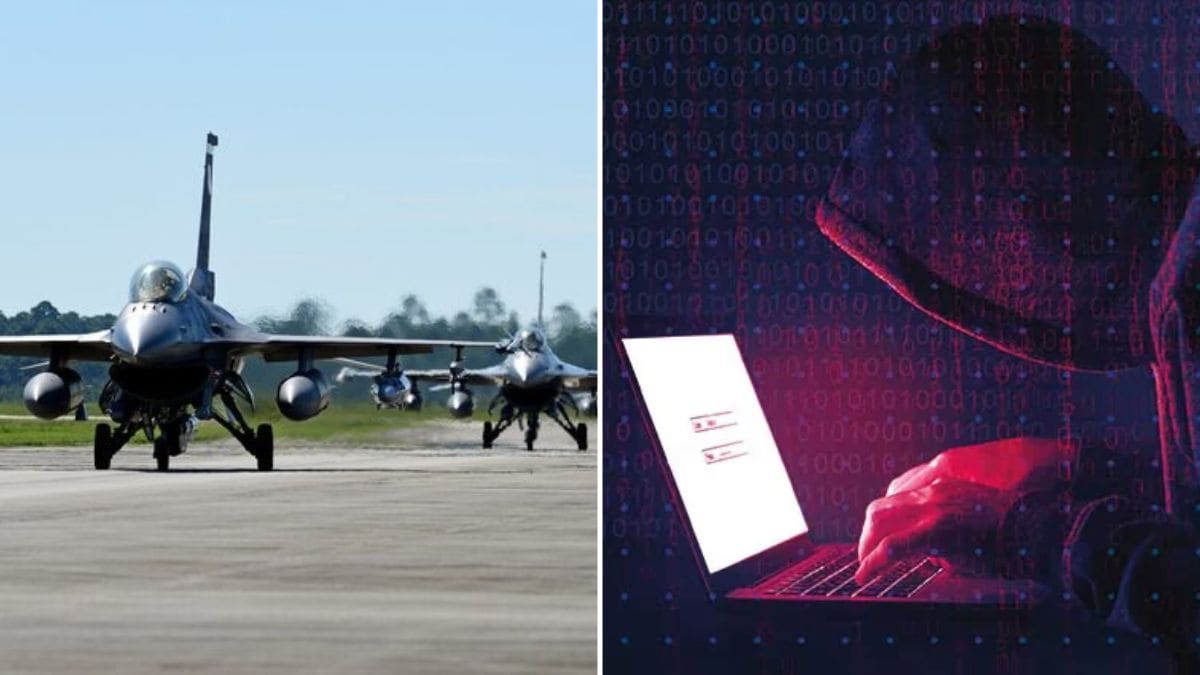
A single software flaw in a cloud control plane can turn a massive military network into a locked-down bottleneck overnight. That is the real story behind reports that hackers breached Air Force Cloud One, the U.S. Air Force's flagship cloud computing platform.
If you only read quick headlines, you might assume a cloud intrusion means stolen secret files and immediate chaos on the flight line. Honestly, it rarely works that cleanly. Based on reporting from outlets like BleepingComputer and SecurityAffairs, investigators discovered the unauthorized access during upgrade work within roughly the past month, brought in U.S. Cyber Command to assess the damage, paused application migrations, and blocked updates on running systems.
As of late November 2026, key questions remain unanswered. Investigators have not publicly identified who carried out the intrusion, confirmed whether any data was stolen, or linked it directly to other recent federal incidents. What we do know is that Cloud One sits at the center of Air Force IT modernization, tying together commercial cloud providers including Amazon Web Services, Microsoft, Oracle, and Alphabet. When the control plane of a system that big gets touched, the operational fallout starts right away.
Why Air Force Cloud One Matters So Much
Launched in 2017, Cloud One was built to give the Air Force a centralized cloud environment instead of forcing every team to reinvent infrastructure from scratch. Cloud One's public site, checked on November 27, 2026, lists 189 production systems across security levels IL2 through IL6, another 68 systems in Zone C, and more than 180 completed migrations.
That scale is why insiders call this a big deal. Cloud One supports everyday and operational workloads alike, from personnel administration, payroll, and logistics to aircraft maintenance, command-and-control feeds, and munitions tracking across more than 200 Air Force locations worldwide. One critical system associated with the environment tracks air defense radar and related feeds across North America, while another tracks combat munitions globally.
Think about what a control plane actually does. It is the management layer that orchestrates cloud resources, permissions, and services. One source familiar with the investigation compared reaching the control plane to grabbing a universal remote for the environment, noting that unauthorized access could theoretically let intruders inspect aircraft readiness or spare-parts movements, though there is no confirmation hackers did either.
Contractors and commercial cloud partners are tightly woven into this stack. SAIC served as prime contractor until 2025, when Leidos took over, and Leidos disclosed a $454.9 million modernization contract in March 2026. Amazon Web Services received a $581.3 million sole-source award in January 2026 running through December 2028, and Oracle received an $88 million order in February 2026. Neither SAIC nor Cyber Command commented publicly in recent reporting, Leidos referred questions to the Air Force, and the Air Force stated it does not comment on the security posture, vulnerabilities, or operational status of specific networks and systems.
The Hidden Danger of Frozen Updates and Paused Migrations
Here is a common mistake people make after a major breach. They focus almost exclusively on data theft and ignore the security debt created by locking down the environment.
When defenders pause migrations and block application updates during an investigation, they stop risky changes in the short term. Good move for containment. Bad move if it drags on while new software flaws are being disclosed across the wider tech industry. If teams cannot push patches to running applications, defenders end up playing defense with one hand tied behind their back.
Revoking administrator privileges adds another layer of friction. Sources reported that some users had admin rights revoked as part of the response. Anyone who has run enterprise or government cloud operations knows what happens next. Legitimate engineers hit permission walls, routine maintenance slows down, and incident responders have to untangle real troubleshooting from containment controls.
- Slower modernization: Moving legacy administrative and operational applications onto Cloud One stalls while teams verify integrity.
- Patching delays: Blocking updates on active workloads leaves administrators waiting on clearance to apply fixes for newly disclosed vulnerabilities.
- Permission bottlenecks: Revoked admin accounts protect against lateral movement, yet they also slow down day-to-day fixes and audits.
A Pattern of Federal Pressure, Not an Isolated Fluke
The Cloud One incident lands in the middle of a rough stretch for federal and defense cybersecurity. Recent weeks have seen reports of unauthorized access or break-ins affecting multiple parts of the U.S. government, including Pentagon manpower records, intelligence analysis tools tied to the CIA and ODNI, Treasury's FinCEN, and other federal agencies.
I don't think you can look at these events in isolation and call it coincidence. Nor should you jump to sloppy conclusions and claim they are all one single campaign. Right now, there is no public confirmation tying the Cloud One intrusion to those other breaches, or to specific campaigns like CrowdStrike's reporting on Vapor Panda or widely exposed management consoles.
What is clear is the broader shift in how attacks hit large cloud estates. Security researchers and defense observers have grown increasingly concerned about AI-assisted reconnaissance and exploitation, which can scan sprawling cloud surfaces faster than manual teams can review configurations. Hybrid and multi-cloud architectures give organizations speed and redundancy, sure, but every identity boundary, API, and control plane is a high-value target if a single software flaw slips through.
What Security and IT Leaders Should Take Away
You don't need a fighter jet fleet to learn from a control-plane scare. Most organizations run their own version of Cloud One on a smaller scale: multiple cloud accounts, contractor access, identity sprawl, and urgent modernization deadlines.
- Treat the control plane as crown-jewel territory: Lock down management interfaces, enforce strict least privilege, and monitor administrative actions continuously rather than relying on perimeter assumptions.
- Plan for emergency patch workarounds: If updates to a platform or app group get frozen during an incident, know how you will isolate exposed services or apply compensating controls fast.
- Audit contractor and third-party access: Third-party modernization teams and cloud vendors are essential, so verify who holds elevated privileges and how quickly you can revoke or rotate them under pressure.
- Separate containment from communication: Have clear internal rules for when to freeze changes, how to tell engineering teams what is blocked, and what you can say publicly without guessing at unverified facts.