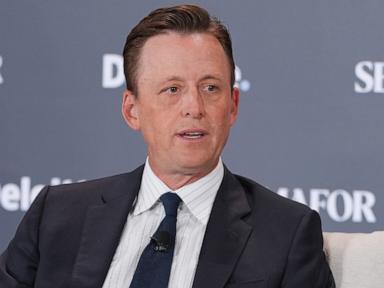
Sean Cairncross is out, and Pentagon Chief Information Officer Kirsten Davies is stepping into the acting role as national cyber director after a brutal week of widespread tech outages rattled the country. Swapping the person at the top feels satisfying when planes sit on tarmacs and banking apps stall. Yet swapping a leader does not automatically patch brittle software or fix rushed updates.
Here is the core reality right away. The White House moved to replace Cairncross following a cascade of high-profile disruptions across aviation, banking, enterprise software, and national security networks, while administration officials maintained there was no evidence of a coordinated cyberattack or foreign adversary behind the failures. Replacing the chief signals political accountability and pushes technical expertise onto the stage. It does not, by itself, stop routine maintenance or security patches from knocking critical systems offline.
Why Replacing the National Cyber Director Happened Now
The timing wasn't subtle. Over roughly a week, Americans watched a series of major technical failures pile up. On November 13, a communications failure at the Federal Aviation Administration halted most U.S. departures for around five hours and disrupted more than 18,000 flights. Microsoft services including Outlook and Teams suffered prolonged outages. Customers at major banks—including JPMorgan Chase, Bank of America, and Wells Fargo—reported service issues, and the National Security Agency experienced an internal network disruption.
When a wave of outages hits that close together, people naturally wonder if a hostile nation is testing U.S. defenses. Senior officials pushed back on that fear. Secretary of State Marco Rubio and U.S. intelligence officials stated there was no indication of a coordinated cyberattack, state-sponsored campaign, or malign actor tying the incidents together, pointing instead to separate technical changes, maintenance, and rushed security patches.
Still, reassurance from a podium didn't quiet the political fallout. Reporting from outlets including Reuters, Axios, CBS News, and The Guardian indicated that Cairncross was pushed out or fired, with White House Chief of Staff Stephen Miller driving the move and President Donald Trump backing it amid criticism that Cairncross lacked deep cybersecurity credentials. Cairncross, an attorney and former Republican National Committee executive who had led the Office of the National Cyber Director since August 2025, described his tenure in a farewell statement as the honor of a lifetime and pointed to the administration's March cyber strategy and AI ambitions.
Swapping out a political appointee for an experienced tech executive changes the tone in Washington. It doesn't rewrite bad deployment habits inside massive enterprise networks.
Notice the debate over credentials and confirmation math. Davies brings extensive technology and cybersecurity leadership—having served as Pentagon CIO and held executive tech roles across companies such as Hewlett-Packard and Siemens—and she already holds Senate confirmation for her Pentagon role. Any permanent nominee for national cyber director will face Senate confirmation with Democrats taking control of the chamber in January. That makes an acting appointment with deep operational roots a pragmatic bridge, even if questions around whether Cairncross was fired or departed on other terms remain contested behind closed doors.
Outages vs. Cyberattacks and What Most People Miss
People tend to treat every big tech failure as a hack. That's a mistake.
In real-world operations, self-inflicted wounds happen constantly. You can have world-class firewalls and still bring down a critical workflow because a configuration change went wide without staged testing, or a security patch collided with legacy software. Reporting on the recent wave noted that banks and the NSA pointed to rushed security patches or separate maintenance and technical changes rather than an adversary breaking in.
I've seen plenty of organizations treat "cybersecurity" and "IT reliability" as two separate silos until something breaks at 2 a.m. Security teams push urgent patches to close vulnerabilities fast. Operations teams try to keep uptime high and avoid breaking production systems. When those two sides don't coordinate rollback plans, canary deployments, and dependency mapping, a well-intentioned patch can look just like an outage to the person stuck at an airport gate or locked out of online banking.
There is also a genuine tension in how the public hears about these events. Officials say there is no link across the incidents and no foreign attacker involved. Critics and skeptical observers argue that when multiple high-profile systems falter in the same stretch, transparency matters enormously—because vague assurances can fuel conspiracy theories even when the underlying cause is mundane engineering friction. Both sides have a point. You shouldn't invent a foreign hack where none exists, and you shouldn't brush off repeated operational hiccups as "things like that happen" without showing how you'll prevent repeats.
Where Federal Cyber Leadership Goes From Here
Created in 2021, the Office of the National Cyber Director coordinates strategy and policy across the federal government rather than personally managing every agency's servers. That distinction matters. Even with a seasoned technologist like Davies stepping in as acting director alongside officials such as Director of National Intelligence Jay Clayton, White House technology advisor Michael Kratsios, and Defense Secretary Pete Hegseth, the office relies on interagency alignment and private-sector cooperation.
Consider what the administration's seven-page cyber strategy released in March emphasized: confronting adversaries before breaches happen, hardening critical infrastructure, maintaining U.S. leadership in artificial intelligence, and modernizing federal technology. Modernizing legacy systems sounds easy on paper. Honestly, it's slow, unglamorous work. Aging aviation communications, tangled banking architectures, and massive cloud dependencies don't get untangled overnight—especially when a permanent director isn't yet locked in ahead of a shifting Senate calendar.
Some analysts and observers also note a broader vulnerability: concentration risk. When a handful of major cloud providers, software suites, and telecom links underpin aviation, finance, and government, a single flawed update or misconfiguration can ripple across millions of people at once. Other experts argue the bigger risk is still state-sponsored espionage and critical infrastructure targeting by foreign adversaries, meaning leaders can't let routine patch failures distract from nation-state threats.
Practical Next Steps for Organizations and Individuals
You can't control White House personnel moves or when a major airline or bank hits a snag. You can tighten how you handle your own systems and daily routines so a bad update doesn't blindside you.
- Test patches and updates in rings before full rollout. Never push broad security patches or configuration changes to every machine or service at once. Use a small test group first, monitor telemetry, and keep a tested rollback path ready.
- Map your single points of failure. List the cloud providers, identity tools, payment rails, and telecom lines your business or household relies on every day. Ask what happens if one of them goes dark for four hours.
- Keep analog and cash backups for urgent needs. If travel, medical appointments, or time-sensitive bills matter today, carry some cash, download offline copies of key confirmations or passes, and avoid waiting until the final hour to complete critical transfers.
- Separate incident triage from blame. When an outage hits your team, verify facts first—check logs, recent changes, and vendor status pages—before jumping to conclusions about attacks or pointing fingers. Fix the blast radius, document what broke, and adjust your change-management checklist.
The Guardian coverage of Cairncross ouster and tech outages and CBS News reporting on Sean Cairncross leaving the cyber post offer additional reporting details on the White House transition and background.