Most people think of the Homestead Act of 1862 as a golden ticket. It wasn’t. It was a brutal grind that broke more people than it built up. If you want to understand what true grit actually looks like, you need to stop looking at textbooks and start looking at the life of Robert Ball Anderson.
While the sanitized versions of history paint a picture of easy expansion, Anderson’s story is a stark reminder that the American frontier was often a place of profound struggle, especially for a man who escaped the absolute hell of slavery only to find himself fighting nature itself on the Nebraska plains.
From Plantation Chains to the Union Army
Born into slavery in 1843 on a Kentucky plantation, Anderson’s early life was defined by the kind of trauma most of us can barely comprehend. His mother was sold away when he was just six, a common and devastating tactic used by slaveholders to destroy families. He grew up bearing the physical scars of that system, yet he held onto a desperate, burning desire for autonomy.
When the Civil War reached its crescendo, he didn't wait for permission. He walked twenty miles to enlist, eventually joining the 125th United States Colored Infantry. This was his first real step toward independence. He traded the chains of the plantation for the uniform of the Union, serving across the frontier in places like New Mexico and Colorado. He wasn't just fighting for the Union; he was fighting for the right to belong to himself.
The Nebraska Reality Check
After the war, Anderson, like many others, looked toward the Homestead Act. The promise was simple: 160 acres if you could survive on it for five years. He staked his claim in Butler County, Nebraska, in 1870.
But Nebraska in the 1870s wasn't the welcoming land of opportunity brochures. It was a nightmare of weather and pests. Severe, prolonged droughts were common, and then came the grasshoppers. These weren't just a nuisance; they were a biblical plague that stripped the earth bare, eating everything in their path. Anderson’s first attempt at farming failed, and he lost his claim.
Most people would have walked away. Many did. They packed their wagons and retreated to the East, disillusioned and broken. Anderson stayed in the game.
Saving Every Penny
Anderson’s brilliance wasn't in his luck; it was in his stubborn refusal to quit. He knew he didn't have the luxury of failure. He spent years working as a railroad cook and a farmhand in Kansas. This is where most biographies gloss over the grit, but here is the reality: he was grinding. He worked for every single dollar, saving up a stake of $1,600—a massive amount of money at the time—by 1884.
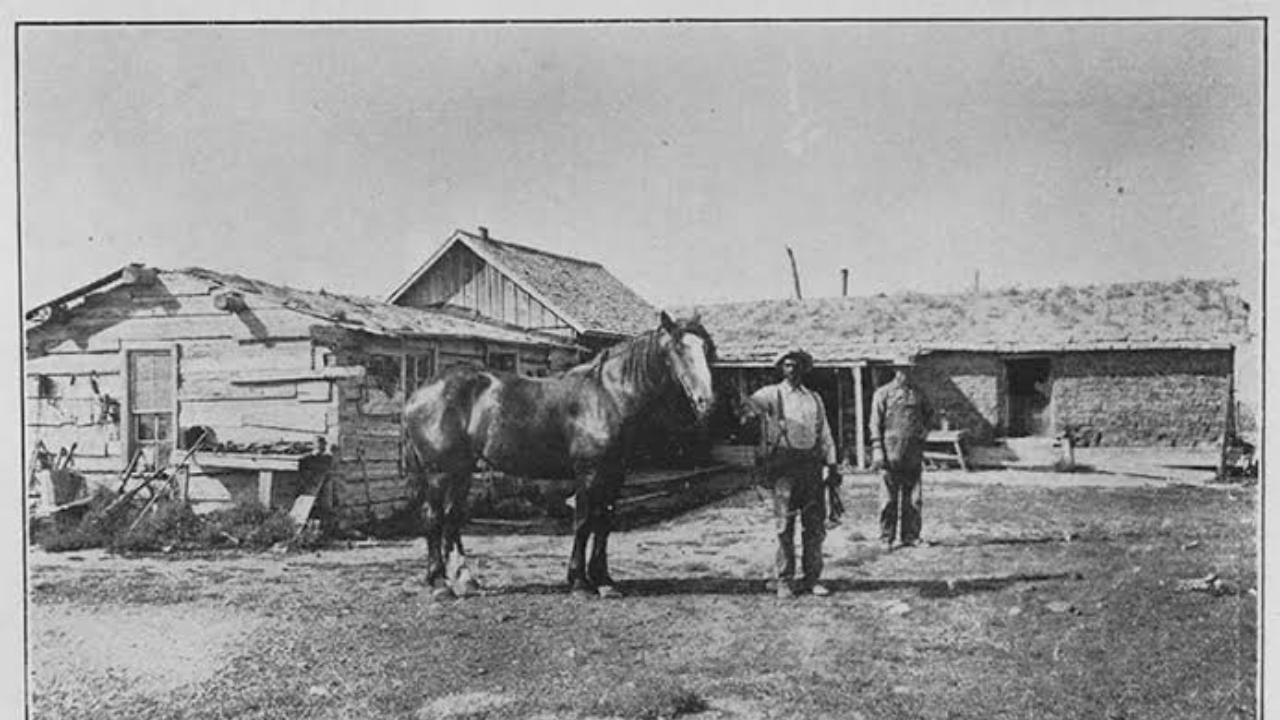
He moved to the Nebraska Panhandle, specifically Box Butte County, and started over. He built a sod house—which is exactly what it sounds like: a home made of bricks of earth and grass—because that was all he could afford to build with.
Then, disaster struck again. A man he trusted with his life savings skipped town, leaving Anderson penniless once more. He didn't crumble. He took on personal loans and spent a decade paying off the debt through sheer manual labor. He turned his farm into a productive, 2,000-acre operation, becoming one of the most successful landowners in the entire region.
What His Story Teaches Us About Persistence
If you are looking for a lesson in life or business, it isn't "don't fail." It’s "fail better." Anderson failed in Butler County. He failed when his savings were stolen. He failed repeatedly because of the climate and bad luck. Yet, he is remembered today as a success story because he refused to let these events dictate the outcome of his life.
There are a few key takeaways from how he handled his path:
- Diversification matters: He didn't just rely on one crop or one method. He acquired land through homestead claims, timber culture claims, and direct purchases. He built a safety net.
- Financial literacy is everything: Even after losing his savings, he understood that he needed to keep operating. He used loans to keep his land productive, understanding the difference between bad debt and leverage.
- Documentation is power: Later in life, he married Daisy Graham, a schoolteacher, and they worked together to record his story. He ensured that his perspective on his own life would be the one that survived.
The Real Cost of the Frontier
We often forget that for a Black man in the late 19th century, land ownership was not just an economic goal; it was a radical political statement. By acquiring 2,000 acres, Anderson wasn't just farming; he was carving out a space where he could not be displaced.
He didn't have a safety net. If he slipped, he couldn't call a lawyer or reach out to a wealthy benefactor. He had to account for his own survival every single day. His success, achieved after the age of forty-five, proves that it is never too late to pivot or start over.
If you find yourself facing a setback, look at what Anderson actually did. He didn't look for a shortcut. He didn't wait for the government to fix his problems. He moved. He worked. He saved. He rebuilt. Stop waiting for the ideal conditions, because they rarely exist. You have to build them yourself, one day at a time, just like he did.
Do the work. Keep the records. Stay the course. That is the only real formula for lasting success.