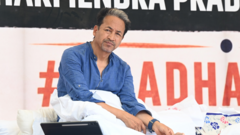
When a world-renowned engineer and Ramon Magsaysay awardee spends nearly a month consuming nothing but salt and water in scorching summer temperatures, it isn't just another street demonstration. It's a flashing red siren for an entire nation's political system.
Sonam Wangchuk—the innovator whose eco-friendly inventions in Ladakh inspired the legendary blockbuster 3 Idiots—has lost 11 kilograms after 26 days of fasting. He's weak, hospitalized, and surrounded by doctors at Medanta Hospital in Gurugram. Yet from his ICU bed, his message remains unyielding: "I am still alive".
https://www.youtube.com/watch?v=zfkntDnI71M
This fast isn't a solitary act of desperation. It has become the focal point of a massive youth-led rebellion against institutional corruption and official indifference in India.
The Medical Paper Leak That Triggered National Chaos
To understand why a 59-year-old climate pioneer is risking organ damage on a hospital bed, you have to look at what happened in India's education sector.
The spark wasn't a sudden political movement; it was a systemic collapse. Millions of young Indians spend years cramming for high-stakes standardized tests like the National Eligibility cum Entrance Test (NEET-UG). For over 2.3 million medical aspirants, this single exam represents their only shot at a professional future.
When the exam paper leaked online, leading to widespread cancellations and delayed re-tests, the psychological damage on candidates was catastrophic. Despair swept across testing centers. Reports linked the acute distress and lost years of preparation to at least 20 student suicides nationwide.
That tragic tipping point turned quiet frustration into open revolt.
Enter the Cockroach Janta Party
Out of that grief emerged one of the most unconventional political movements in recent Indian history: the Cockroach Janta Party (CJP).
Founded by 30-year-old Boston University graduate Abhijeet Dipke, the CJP began as a satirical digital movement. The name itself was a sharp jab at high-ranking officials who had dismissively equated struggling, unemployed youth to "cockroaches". Dipke turned that insult into a badge of honor, amassing 22 million social media followers within days.
By late June, satire transformed into hardline street activism at New Delhi's Jantar Mantar. The CJP's core demands are uncompromising:
- Immediate Resignation: Union Education Minister Dharmendra Pradhan must step down, accepting political responsibility for systemic exam failures.
- Financial Restitution: Substantial monetary compensation for families of students who died by suicide during the exam crisis.
- Structural Overhaul: Direct legal guarantees to prevent test paper leaks and safeguard the integrity of national competitive exams.
Wangchuk wasn't the initiator of the CJP, but he saw their struggle and joined their fast on June 28. His presence elevated a youth protest into a national headline.
Police Action, Escalation, and Hospitalization
For three weeks, Wangchuk sat under Delhi's oppressive sun, enduring brutal heat with only salt water. As his vitals dropped, authorities intervened. On July 19, police forcibly moved him from Jantar Mantar to a hospital following court orders.
The crackdown didn't stop there. When thousands of students attempted a peaceful march toward the Indian Parliament, law enforcement deployed batons and tear gas. The clash left over 60 protesters and dozens of police officers injured, while 70 activists were detained.
Instead of crushing the protest, police force amplified it. Opposition leaders staged demonstrations, Bollywood personalities voiced support, and senior government officials—including Health Minister JP Nadda—personally visited Wangchuk's bedside, pleading with him to eat.
Wangchuk's answer? A firm refusal. He made it clear he won't end his fast until the state gives formal assurances that peaceful student protesters won't face police retaliation.
Why This Fight Matters Far Beyond Delhi
Wangchuk isn't new to high-stakes fasting. In 2024, he led major fasts demanding Sixth Schedule constitutional protections for Ladakh's fragile Himalayan ecosystem and indigenous tribal lands. He knows how to leverage personal sacrifice to force public dialogue.
What makes this current hunger strike so significant is its broad resonance. It connects the local grievances of Himalayan communities with the everyday anxieties of millions of urban, middle-class families whose children navigate India's hyper-competitive education system.
When millions of students realize that years of hard work can be wiped out overnight by a leaked PDF, faith in meritocracy shatters. Wangchuk's fast isn't just about one exam; it's a stand against an administrative machine that treats young citizens as collateral damage.
Actionable Steps to Support Exam Integrity and Youth Reforms
If you want to track this movement and push for educational accountability, here is how you can engage directly:
- Follow Verified Civil Society Updates: Track real-time, ground-level updates directly from civil rights organizations and independent student bodies active at Jantar Mantar rather than relying solely on official press releases.
- Advocate for Legal Exam Safeguards: Support policy petitions demanding strict statutory penalties for exam paper leaks and institutional negligence in standardized testing.
- Amplify Youth-Led Transparency Demands: Share verified reporting on testing reforms to keep public pressure on policy makers until concrete oversight mechanisms are enacted.
This video provides vital, real-time medical updates on Sonam Wangchuk's condition while detailing the health monitoring taking place during his hunger strike.