When a government starts inspecting shirt buttons and eyeglass frames to stop cheating, you know things have officially broken down. South Korea is deploying metal detectors, extra proctors, and hyper-aggressive checks for this year's College Scholastic Ability Test, known locally as the Suneung. Nearly 550,000 students face an environment resembling a high-security checkpoint rather than a quiet academic hall.
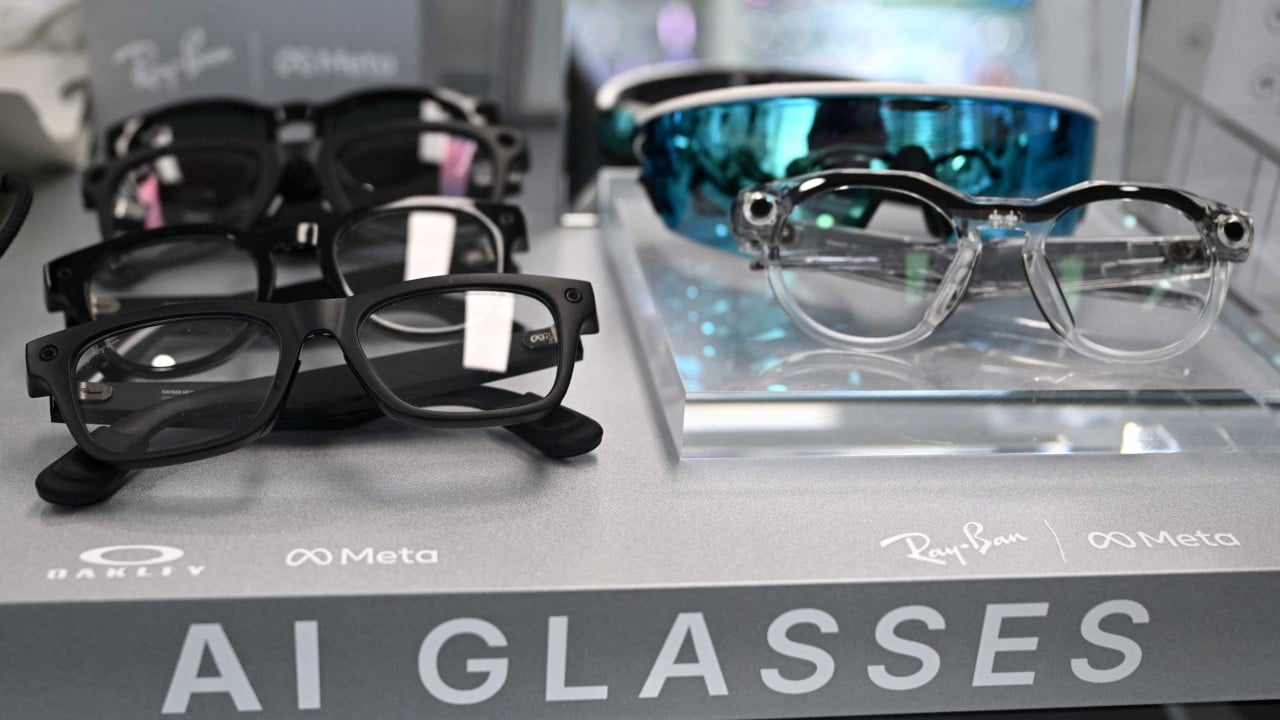
This sudden panic didn't come from nowhere. It follows a confession by Han Won-seok, a 34-year-old who admitted to topping a national tax accountant exam by streaming questions through a hidden micro-camera directly to generative AI tools. When smart glasses and button-sized lenses can silently bypass traditional surveillance, authorities panicked. But trying to police every pair of glasses and collar won't solve the core issue. It just punishes students with an atmosphere of intense psychological terror.
The Reality of AI-Era Cheating
Traditional proctoring relies on watching for sneaky glances or hidden paper notes. That model is entirely dead. Modern cheating uses micro-hardware that blends seamlessly into everyday clothing. We are talking about cameras embedded in buttons and wireless ear-pieces tiny enough to vanish inside an ear canal.
When generative AI can spit out correct answers to complex professional or academic questions in milliseconds, the incentive to cheat using tech scales massively. Proctors checking eyeglass hinges with flashlights cannot realistically spot a microscopic lens or block discreet wireless signals without shutting down entire networks—a move that creates logistical chaos for everyone else.
Vice-Education Minister Choi Eun-ok defended the invasive protocols, arguing that a failure to keep the Suneung strictly fair would cause societal disruptions worse than a disaster. That mindset explains the overcorrection. High-stakes testing in South Korea dictates elite university admissions, corporate career paths, and social status. When the stakes are life-defining, people will always look for loopholes.
Why the Crackdown Backfires
Pushing security to absurd extremes creates severe unintended consequences. Teachers assigned to supervise face immense burnout and anxiety. A single counting error or missed gadget on their watch can ruin their careers. Instead of focusing on student well-being, test centers turn into tense, hostile environments.
Meanwhile, students carry crippling stress into exams that already drive some of the highest youth anxiety rates in the world. When you treat every teenager like a corporate spy trying to subvert the state, you destroy the trust required for an effective educational culture. Some students have even filed constitutional complaints, arguing that last-minute rule changes and invasive physical inspections cross ethical lines.
More importantly, physical checks are a temporary band-aid on a broken system. Micro-cameras will only get smaller. AI models will only get faster. Trying to out-police technology with manual inspections is a losing game.
Rethinking How We Test
If technology can easily pass standardized tests, the tests themselves are obsolete. South Korea needs a fundamental shift in how it evaluates young people. Rote memorization and multiple-choice bubbles make it easy for AI to feed answers to a hidden earpiece.
Exams should pivot toward open-ended problem solving, verbal defenses, project-based portfolios, and real-time reasoning tasks that require human nuance. If an AI can ace your test in five seconds, your test isn't measuring human intelligence. It is measuring information retrieval, which machines do better anyway.
Governments cannot stop progress by inspecting buttons. Protecting academic integrity requires building assessment models that make cheating obsolete rather than building fortress-like exam rooms that treat students like criminals.
Stop pretending manual inspections can defeat modern tech. Redesign the evaluation methods from the ground up before the entire testing apparatus collapses under its own weight.