Everybody loves the idea of green transportation until you look at who pays for the transition. Across Southeast Asia, electric vehicles are taking over streets from Jakarta to Bangkok at an astonishing pace. Government subsidies, tax breaks, and a massive influx of foreign capital have turned the region into one of the fastest-growing clean energy automotive markets on earth.
Yet, behind the slick showrooms and government press releases, a quiet crisis is unfolding. Local automotive supply chains—the small and medium-sized enterprises that spent decades building exhaust systems, fuel injectors, and transmission components for Japanese legacy giants—are being left out in the cold.
If you think this is just a standard corporate growing pain, you are missing the entire picture. This transition threatens to hollow out the manufacturing backbone of nations that thought they were securing an industrial future.
The Structural Disconnect in the Supply Chain
Traditional internal combustion engine (ICE) vehicles rely on roughly 2,000 to 3,000 moving parts, many of which can be manufactured by localized, tier-two and tier-three suppliers. These mom-and-pop machine shops and mid-sized domestic factories formed the bedrock of industrial employment in Thailand, Indonesia, and Malaysia.
Electric vehicles completely rewrite this math. A battery electric vehicle cuts down mechanical complexity dramatically. There are no pistons, no complicated transmissions, no fuel lines, and no exhaust pipes. Instead, the high-value components are concentrated in things local suppliers cannot easily replicate: lithium-ion battery cells, proprietary semiconductor chips, inverter modules, and specialized thermal management systems.
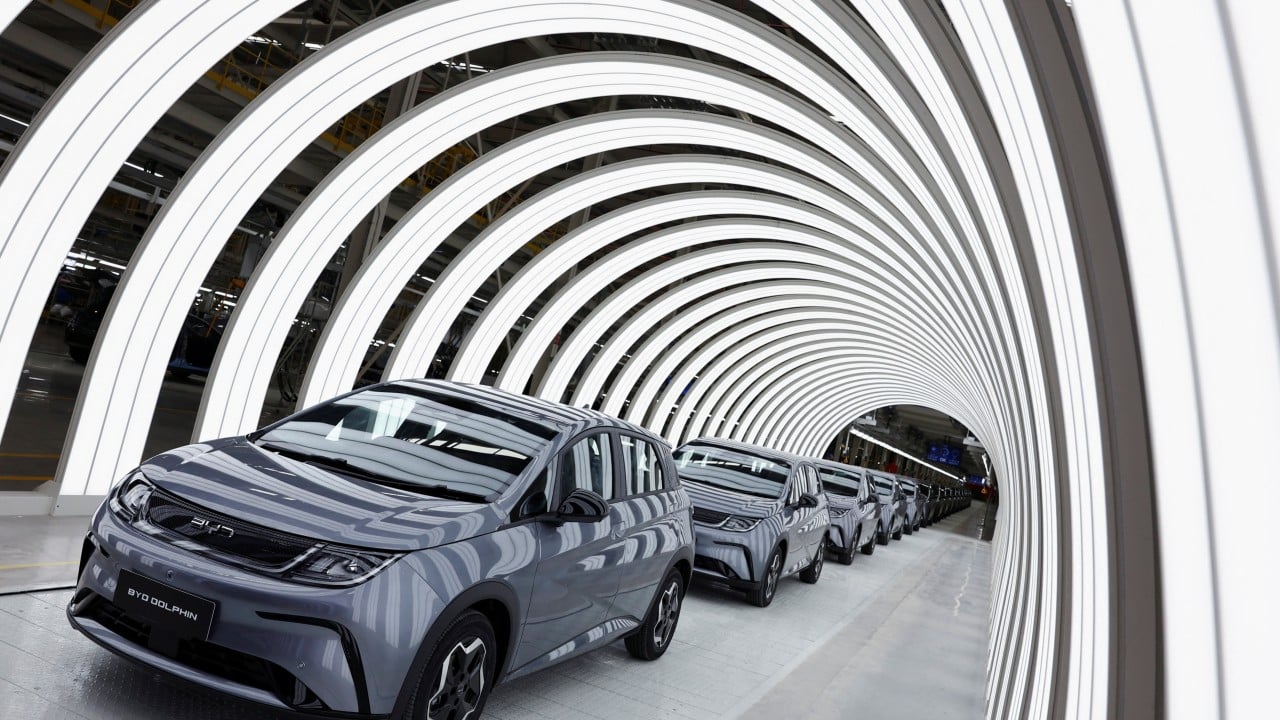
When foreign manufacturers—predominantly Chinese giants like BYD and SAIC—set up local assembly lines, they don't typically source from local legacy suppliers. They bring their own tightly integrated supply chains with them. These overseas suppliers have spent decades refining low-cost, high-volume production loops back home. Local firms in Southeast Asia simply cannot compete on price, tech readiness, or scale overnight.
The High Cost of Retrofitting Factories
You might wonder why these local parts makers don't just pivot to making EV components. Honestly, it is not that simple.
Re-tooling a factory for electric vehicle parts requires millions of dollars in capital expenditure. A precision machine shop that builds engine blocks cannot easily transition to stamping aluminum battery enclosures or machining high-tolerance parts for electric drivetrains without heavy investment in new CNC machinery, cleanroom environments, and automated testing equipment.
Access to credit remains a massive hurdle. Commercial banks in the region are increasingly cautious about lending to businesses tied to sunset industries. At the same time, they hesitate to fund unproven pivots into EV components because local firms lack established supply contracts with major EV brands.
This creates a brutal catch-22. You need capital to upgrade your factory, but you need an EV contract to prove you can do the work, and you need the upgraded factory to get the contract.
The Skills Gap is Widening Fast
Technology is only half the battle. The workforce itself faces an existential squeeze. Traditional automotive mechanics and machinists have spent careers mastering mechanical engineering, fluid dynamics, and thermodynamics.
Electric vehicles are basically computers on wheels running on high-voltage architecture. Working on them requires deep knowledge of electronics, software diagnostics, and strict high-voltage safety protocols.
Right now, training programs across Southeast Asia are struggling to keep up. While tech startups and large foreign assembly plants run internal academies for their own workers, independent local suppliers are left scrambling. Most small business owners cannot afford to send their staff away for specialized training programs without shutting down daily operations.
The human cost of this mismatch is severe. If local suppliers cannot bridge the technical divide, their workers risk becoming obsolete in their own backyards.
What Needs to Change Before It is Too Late
Governments in Southeast Asia rolled out red carpets to attract EV investments, offering tax holidays and import tariff exemptions to foreign automakers. That strategy worked brilliantly for sales numbers, but it failed to mandate local content requirements that actually protect domestic industries.
To salvage the domestic supply chain, regional policymakers must stop treating foreign direct investment as an automatic win. Industrial policy needs to shift toward active intervention.
First, governments must tie tax incentives for foreign EV manufacturers to strict localized sourcing targets. If a company wants to sell electric cars in the domestic market, it should be required to source a meaningful percentage of its components from local tier-two and tier-three suppliers.
Second, public funds need to pivot away from merely subsidizing consumer car purchases and start financing industrial upskilling and equipment grants for local factories. Subsidizing the purchase of a luxury electric vehicle makes zero economic sense if the local manufacturing sector collapses underneath it.
The electric vehicle boom in Southeast Asia is unstoppable. Whether it crushes the region's traditional manufacturing ecosystem or drags it forward into the next century depends entirely on how quickly policymakers wake up to the reality on the factory floor. Right now, the window to protect local suppliers is closing fast.