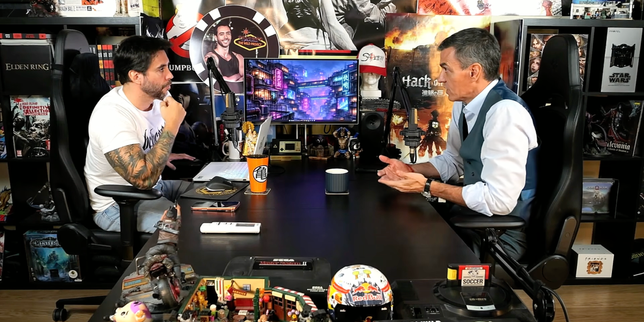
Spanish politicians are heading straight to YouTube studios and long-form podcasts instead of begging for three-minute slots on morning news shows. Ahead of the November 29, 2026 general election, the battle for attention in Spain has shifted from controlled press briefings to marathon unedited sit-downs where hosts set the pace.
Honestly, it makes total sense once you look at who actually watches legacy television. Younger voters—the exact group squeezed hardest by Spain's housing crunch and stagnant wages—rarely sit down for primetime evening broadcasts. Sitting across from a major creator lets candidates reach millions of people who might otherwise tune politics out completely.
Yet this shift isn't some tidy PR upgrade. Walking into a creator's room without a teleprompter or friendly anchor carries real risk, as Spain's November 2026 campaign has already proven.
Why Spanish politicians are chasing YouTubers in the first place
If you've watched campaign strategy evolve over the past decade, you know the old playbook by heart. Candidates appeared on flagship TV news, traded rehearsed soundbites, and went home. That model worked when television held a near-monopoly on mass attention.
It doesn't anymore. Look at the numbers behind creators like Jordi Wild and his podcast The Wild Project, profiled by outlets like RTVE and El País. Wild's channel sits around seven million subscribers and pulls roughly 100 million monthly YouTube views, with an audience heavily tilted toward men aged 18 to 40. Political analysts like Fran Ruiz and Juanma Barrios of El Patio Político point out that these viewers aren't necessarily apolitical—they just don't engage with traditional political media every day.
A similar dynamic plays out globally, most visibly with long-form podcasting in the United States. In Spain, candidates want access to communities they can't reach on their own, especially when housing is top of mind for roughly 56% of respondents in October 2026 CIS polling. When a leader talks for two hours instead of ninety seconds, people hear tone, humor, and hesitation—not just party talking points.
Still, let's be real about a common misconception. Going on a popular YouTube show doesn't automatically flip votes. An interview with La Pija y la Quinqui back in 2023 showed how a casual podcast could win Gen Z curiosity, yet viewership alone doesn't prove ballot-box conversion. What it does guarantee is distribution—and viral clips that live on TikTok, X, and Shorts long after the main video ends.
What happened in the November 2026 campaign
The November 29 snap election—called after parliamentary gridlock over housing decrees and unfolding amid deep frustration over housing costs, corruption allegations, and the deadly October 28 rail collision in Urda—turned YouTube into a central campaign stage.
In mid-November 2026, Jordi Wild hosted long-form, unedited interviews at his home in Manresa with Prime Minister Pedro Sánchez (PSOE), People's Party leader Alberto Núñez Feijóo (PP), and Frente Amplio candidate Ada Colau. Each conversation ran well past ninety minutes, giving viewers room to watch candidates wrestle with tough topics without studio cutaways.
Those long formats produced sharp, unfiltered moments. Sánchez defended rail investment and his party record while sparring with Wild over commuter train reliability and delays. Feijóo addressed his past photograph with drug trafficker Marcial Dorado, explained a skin treatment misread in old photos, admitted his weak English while insisting he knows how to govern, and signed a poster of Spanish singer El Fary. Colau pushed a tougher line against speculation and spoke candidly about governing dynamics on the left.
Meanwhile, Vox leader Santiago Abascal pulled out at the last minute, creating an immediate storyline about whether skipping scrutiny protects a candidate or looks like evasion. Add in streamer Ibai Llanos floating a four-candidate debate on YouTube outside traditional TV networks, and you can see how much power has moved toward independent creators.
The hidden traps and legal rules nobody mentions
Here's where a lot of campaign advisors get sloppy. They treat a creator's studio like a friendly fan event and forget that hosts have their own credibility to protect. YouTubers build loyal audiences by sounding authentic—not by letting politicians read a brochure for two hours.
If a candidate dodges a direct question or sounds scripted, a host can push back on camera without worrying about traditional broadcast etiquette. And unlike a three-minute TV clip, a two-hour conversation leaves nowhere to hide when a candidate contradicts themselves an hour later.
There's also a serious legal layer that gets glossed over in hype pieces. Under Spain's Organic Law of the General Electoral System (LOREG) and rulings by the Central Electoral Board (JEC), analyzed in outlets like Demócrata, campaign rules apply online too. Paid or coordinated campaign content presented as casual personal opinion can be flagged as covert electoral advertising, tied to strict spending limits and campaign calendars, and trigger removal or sanctions. Even for creators who aren't paid, neutrality and transparency rules around electoral periods matter.
There's a tension worth noting here. Some commentators worry that long, conversational podcasts normalize figures or soften sharp policy clashes through chitchat. Others argue that giving voters two hours of unedited back-and-forth reveals more character than a polished TV debate. Both sides have a point, and the data on long-term electoral impact is still evolving.
What this means for voters, creators, and strategists
If you're following Spanish politics or studying modern media, this shift changes how you should evaluate what you see online. Don't judge a candidate by a thirty-second viral clip stripped of context. Watch how they handle an unscripted follow-up question twenty minutes into a conversation, and check their actual policy record afterward.
For creators and communication teams, the lesson is equally clear. Transparency isn't optional—disclose partnerships cleanly, respect electoral timing rules, and focus on real substance rather than cheap outrage. Next time a politician sits down on a major YouTube channel, ask yourself one simple question: did I actually learn how they govern, or did I just watch them perform?