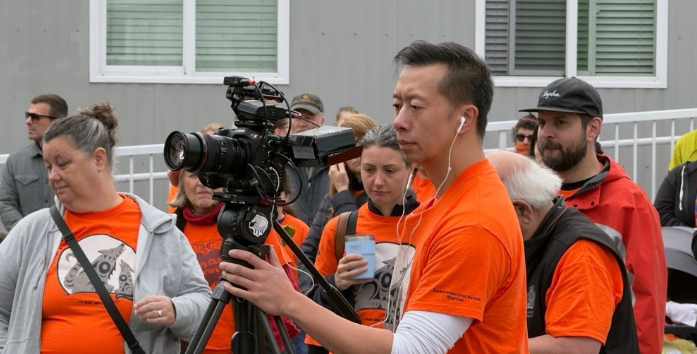
When a pickup truck tore through a peaceful gathering at Tsawwassen Mills on Truth and Reconciliation Day, freelance videographer Kevin Li didn't hear screeching tires. He just felt a sudden, brutal impact from the left side.
In a split second, life shifted from capturing community milestones to facing absolute mortality.
That morning, Li was setting up his gear to film the unveiling of a carved House Post. Two respected elders, wilapiya Barb Joe and Virginia Splockton, were tragically killed in the chaos, and a third person later passed away from their injuries. Li survived, but the physical trauma was only the beginning of a punishing ordeal.
When you lie on cold asphalt convinced you're breathing your last breath, everything changes. Li remembers reviewing his life in seconds. Did he make a will? Yes. Did he spend enough time with his daughter? Yes. Did he do enough with his life? Yes. Then came total darkness. He thought he died.
Instead, he woke up to a blur of pain, panic, and a hospital room ceiling.
Months later, the physical healing is grueling, but the bureaucratic warfare is worse. Dealing with provincial insurance systems after a catastrophic incident exposes cracks in the safety net that most people don't know exist. Li discovered that because police investigators indicated the driver may have experienced an unforeseen medical event prior to the crash, standard compensation hurdles piled up immediately.
Insurance providers balked at replacing tens of thousands of dollars worth of crushed professional camera gear and lenses. The rationale? Medical episodes aren't traditionally covered the same way as standard negligence under certain no-fault frameworks. You're left recovering from major trauma while fighting administrators just to replace the tools of your trade. It is a second layer of victimization that feels completely senseless.
Why is nobody held accountable when public infrastructure lacks basic protection?
Public gathering spaces need physical deterrents. Heavy concrete blocks or reinforced boulders shouldn't be optional luxuries for malls hosting outdoor cultural events. When a vehicle can easily veer off a roadway and plow directly into a crowd, the design of the space itself has failed. Yet corporate statements from property managers often lean heavily on vague corporate sympathy while dodging direct questions about safety upgrades or accountability.
Li was training for HYROX fitness events and taking scuba lessons before the collision. Overnight, his routine shrank to navigating life around medical restrictions and wondering how he would ever lift his daughter again without agonizing pain. Friends and the Tsawwassen First Nation stepped up with meals and support, and a community GoFundMe exceeded its goal within a day. That grassroots solidarity kept him afloat when the official systems dragged their feet.
Most people walk through public spaces assuming someone else has already thought about every worst-case scenario. They haven't. Accidents happen, but preventable tragedies leave lingering scars on entire communities.
If there is any takeaway from this dark chapter, it is the absolute fragility of ordinary routines. Take nothing for granted. Real recovery isn't just about bones knitting back together; it's about fighting for fair treatment in a system that often treats victims like administrative numbers.