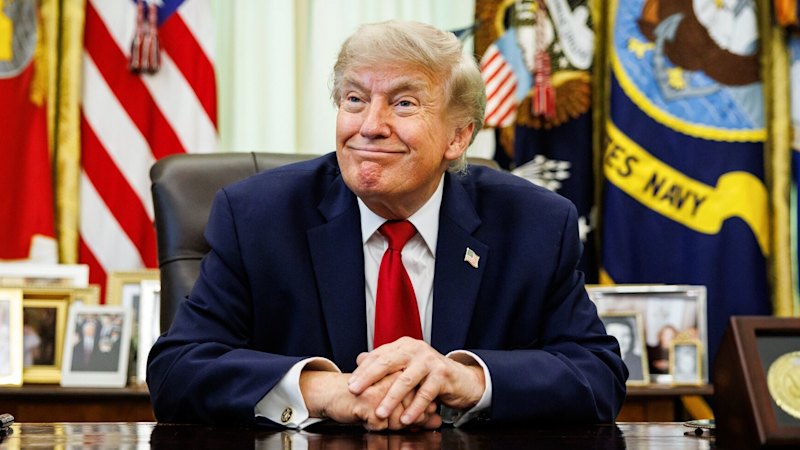
The United States Supreme Court just drew a hard line in the sand. In a massive 6-3 decision in Trump v. Barbara, the high court completely dismantled the administration's aggressive attempt to end birthright citizenship via executive decree. Signed on day one of his second term, Executive Order 14160 aimed to deny automatic citizenship to children born on American soil if their parents were undocumented or on temporary visas. Today, that order is dead.
For decades, conservative hardliners argued that the president could redefine the Fourteenth Amendment with a stroke of a pen. They were wrong. The court made it clear that a president cannot simply rewrite constitutional text because of an immigration policy agenda. This ruling protects a century-old legal consensus. It also shows the limits of raw executive power, even with a conservative judicial majority.
If you want to understand why this decision came down the way it did, you have to look past the political noise. This wasn’t a purely ideological split. It was a rejection of a legally sloppy attempt to bypass Congress and the Constitution itself.
The Core Defeat of Executive Order 14160
Donald Trump’s legal team built their strategy on a highly specific interpretation of the Fourteenth Amendment's Citizenship Clause. The clause states that all persons born or naturalized in the United States, "and subject to the jurisdiction thereof," are citizens. The administration argued that "subject to the jurisdiction" meant owing full, permanent allegiance to the country. In their view, tourists, temporary workers, and undocumented immigrants don't fit that bill.
The administration’s executive order split children into two newly invented legal categories. First, it targeted babies born to mothers who were unlawfully present. Second, it targeted babies born to mothers on temporary, legal visas, like international students or guest workers. If the father wasn't a citizen or permanent resident, the child would be denied a Social Security number and a passport.
The plan never actually took effect. Lower courts across the country immediately issued injunctions to stop it. When the case finally reached the Supreme Court in April 2026, the administration faced a deeply skeptical panel. Chief Justice John Roberts famously grilled the administration's lawyers over their "quirky" legal logic.
Today’s ruling officially ends the debate. The majority opinion, written by Roberts, states plainly that children born in the United States to parents who are here unlawfully or temporarily are indeed citizens at birth. The court reaffirmed that geography, not parental status, dictates American citizenship.
Inside the Fragmented Supreme Court Vote
While the headline says 6-3, the actual mechanics of the ruling show a slightly more complicated breakdown among the justices. Five justices formed a rock-solid majority on the constitutional question. Chief Justice Roberts was joined by the court's three liberals—Sonia Sotomayor, Elena Kagan, and Ketanji Brown Jackson—along with conservative Justice Amy Coney Barrett.
This specific coalition is significant. Barrett’s alignment with the institutionalist and liberal wings demonstrates that originalist legal theory doesn’t automatically favor right-wing policy goals. Roberts wrote that citizenship is "the right to have rights" and that the framers of the Fourteenth Amendment extended that promise to everyone born on American soil.
Justice Brett Kavanaugh provided the sixth vote to strike down the executive order, but he did so on narrower statutory grounds. Kavanaugh argued that the executive order directly violated existing federal immigration laws passed by Congress. By focusing on statutory limits, Kavanaugh avoided rewriting constitutional doctrine while still delivering a fatal blow to the administration's policy.
On the other side, Justices Clarence Thomas, Samuel Alito, and Neil Gorsuch filed fierce dissents. Thomas penned a massive 91-page dissent, arguing that the majority's historical analysis was completely wrong. He claimed the Fourteenth Amendment was purely intended to secure rights for freed Black Americans after the Civil War, not to grant citizenship to the children of foreign visitors or undocumented aliens. Alito called the majority decision a "serious mistake" and warned it would encourage "birth tourism."
Why History Favored Birthright Citizenship
The administration’s legal defense failed because it tried to ignore more than a century of legal precedent. The gold standard for birthright citizenship remains the 1898 case United States v. Wong Kim Ark.
Wong Kim Ark was born in San Francisco to Chinese parents who were legally living in the United States. When he returned from a temporary trip to China, immigration officials denied him re-entry, claiming he wasn’t a citizen because his parents owed allegiance to the Chinese Emperor. The Supreme Court rejected that argument. It ruled that the Fourteenth Amendment established a system based on English common law, where birth within the territory equals citizenship.
The only historic exceptions to birthright citizenship are incredibly narrow:
- Children of foreign diplomats who possess diplomatic immunity.
- Children born on foreign public vessels in U.S. waters.
- Children born to alien enemies during a hostile military occupation of U.S. territory.
Undocumented immigrants and tourists do not have diplomatic immunity. They are subject to U.S. laws, can be arrested by U.S. police, and must pay U.S. taxes. Therefore, they are fully under the jurisdiction of the United States. Justice Ketanji Brown Jackson pointed out this historical reality in her concurring opinion, directly dismantling Thomas’s narrow reading of post-Civil War history. She noted that the Reconstruction Congress knew exactly how to draft narrow laws, yet they chose broad language for the Citizenship Clause.
The Real Motivations Behind the Executive Order
This legal battle wasn't just an academic debate over constitutional text. It carried massive practical stakes for the future of American elections and demographics.
Denying citizenship to hundreds of thousands of children born each year would have fundamentally altered the future electorate. Over a decade, it would create a massive, permanent underclass of residents who live, work, and study in the United States but can never vote, hold office, or fully integrate into civic life. It was a structural attempt to reshape the long-term demographic and political makeup of the country.
The immediate operational fallout would have been a bureaucratic nightmare. Hospitals, state vital statistics offices, and federal agencies would have been forced to audit the immigration status of every expecting mother before issuing a standard birth certificate. The U.S. passport system would have been turned into an enforcement arm of Immigration and Customs Enforcement (ICE).
What Happens Now
Trump didn’t take the loss quietly. Almost immediately after the decision dropped, he took to Truth Social to slam the ruling and pivot to a new strategy. He claimed that because the court didn't explicitly forbid Congress from acting, lawmakers should pass a statute to end birthright citizenship immediately.
This is mostly political theater. Passing a law through Congress requires a legislative majority that the current Republican party simply doesn't have, especially with the 2026 midterm elections looming. Even if such a law somehow passed, it would face the exact same constitutional roadblock. A statute cannot overrule a constitutional amendment that the Supreme Court has just explicitly upheld.
The real next steps will play out in specific policy shifts. Expect the administration to double down on immigration enforcement strategies that do not require redefining the Constitution. They will likely focus heavily on denaturalization programs, targeting naturalized citizens who committed fraud or specific crimes, an initiative outlined in a June 2025 Department of Justice memo.
For families, legal advocates, and states, the path forward is clear. You need to ensure local administrative pipelines remain unchanged. Ensure that state agencies continue issuing standard birth certificates without inquiring about parental legal status. Keep a close eye on federal agencies to verify they aren't attempting backdoor restrictions on passport or Social Security applications for children of immigrants. The high court made its decision. Now, the work shifts to making sure federal bureaucracies actually follow it.