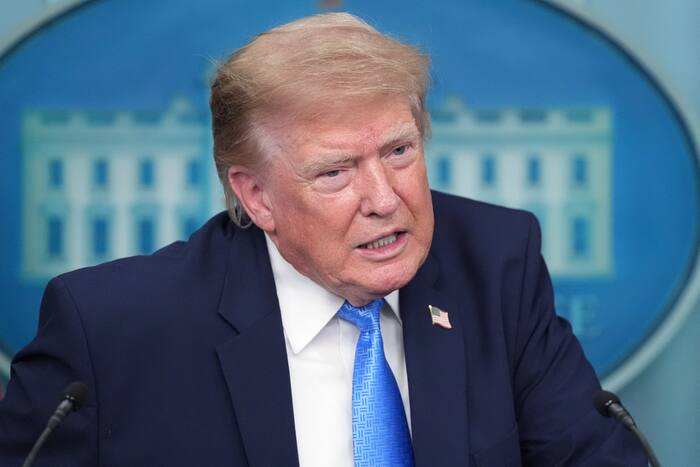
Watching Donald Trump look out over Shenzhen during the November 2026 APEC summit hits differently when you realize who is standing in the frame. For years, a lot of Chinese onlookers saw Trump mainly through two lenses: the hard-charging tariff negotiator or the larger-than-life TV personality. Seeing him step into Shenzhen—a city that went from a quiet fishing town in 1978 to a dense forest of glass towers and tech headquarters—turns a routine diplomatic stop into a visual clash of narratives.
Trump isn't just touring a pretty skyline. He's standing inside China's flagship showcase of speed, hardware, and state-backed ambition, right alongside Xi Jinping and Vladimir Putin for high-stakes APEC diplomacy and an unprecedented three-way meeting. Honestly, when a U.S. president takes in Shenzhen's skyline while talks swirl around rare earths, AI competition, and global flashpoints, Chinese spectators aren't just watching a man look at buildings. They're watching how Washington reacts to the mirror China built for itself.
Why Shenzhen Makes Trump Look Different to Chinese Spectators
Shenzhen carries heavy emotional and political weight inside China. When Xi Jinping spoke at the APEC welcome banquet on November 18, 2026, he pointed right back to 1978, contrasting a tiny fishing village with today's packed avenues and skyscrapers. For people in China, Shenzhen isn't random real estate. It's proof that reform, manufacturing grit, and relentless engineering can rewrite a map in one human lifetime.
Put Trump in that setting and the dynamic shifts. In Beijing, a foreign leader walks through centuries of imperial stone and state ceremony. In Shenzhen, you're surrounded by electric vehicles, hardware labs, and corporate towers that symbolize modern Chinese capability. When Trump praised the fanfare, pageantry, and welcome upon arriving—calling Xi an "incredible leader" and praising the country at the gathering, as reported by The Guardian—that created a sharp contrast for people used to years of sharp rhetorical sparring.
Wait a second. Does a warm moment on camera erase years of friction? No way. Anyone following U.S.-China ties knows goodwill in a banquet hall doesn't magically dissolve export controls or tariff disputes. Still, for everyday onlookers scrolling social feeds or watching news clips, seeing Trump take in the city up close feels less like a cartoon villain from a trade war headline and more like a real-world power broker sizing up a rival's home turf.
The Contrast Between Spectacle and Hard Bargaining
Pageantry plays well on screen. Crowds, motorcades, lit-up towers, and a personal tarmac greeting from Xi give spectators plenty to talk about. Even Trump himself pointed to the scale of the reception and the crowds in remarks covered during the summit.
Yet behind the bright lights sits tough bargaining. Analysts tracking the summit—including researchers at the Atlantic Council—have noted that big-power summits in Shenzhen carry plenty of symbolism alongside thorny sticking points like nuclear arms discussions, trade commitments, and regional security. Chinese onlookers tend to read that tension with a mix of pride and skepticism. Many are proud their city looks world-class, while plenty still doubt that a handshake buys lasting concessions from Washington.
What People Usually Misread About Trump in China
A common mistake outside China is assuming public reaction to a U.S. president is a single, uniform mood. It isn't. Reaction splits fast depending on who you ask.
Some people in China view Trump through a purely transactional lens. To them, he's a dealmaker who respects strength, loves big displays, and treats diplomacy like business. Seeing him look out over Shenzhen fits that mental model: a guy who knows a booming city when he sees one, even if he still fights hard for American leverage.
Others are far more guarded. Having lived through years of tech restrictions, supply-chain headaches, and geopolitical noise, many onlookers treat friendly summit moments as temporary theater. They've seen warm photo ops followed by fresh friction before. That practical caution is real, and ignoring it makes coverage sound naive.
There's also a big misconception about what Chinese spectators actually focus on when a U.S. leader visits. Foreign media often looks for dramatic quotes or hidden signals in body language. On the ground, people often care just as much about the city itself—traffic closures, security around venues like Xiangmihu in Futian, and how Shenzhen's skyline looks on global broadcasts. To lots of locals, Shenzhen's glow is the real star of the week.
Why the Shenzhen Setting Matters Beyond Photo Ops
Choosing Shenzhen for APEC 2026—China's first time hosting the forum in 12 years—wasn't accidental. Shenzhen sits at the heart of southern China's tech and manufacturing ecosystem, home to major players like Huawei and an endless supply chain of electronics and hardware talent. As Channel NewsAsia highlighted in its summit coverage, APEC gives leaders rapid, high-stakes face time around trade and regional economics, even when consensus is hard to win.
When Trump takes in that view, three things collide at once:
- Industrial scale: Shenzhen shows off dense urban growth and tech muscle that can't be faked in a studio.
- Rivalry in plain sight: Both sides know competition over AI, chips, and supply chains sits right under the polite diplomatic phrasing.
- Global theater: Adding Vladimir Putin into the mix for trilateral talks turns Shenzhen into a focal point for the entire Pacific rim and beyond.
From a practical standpoint, if you're tracking U.S.-China relations, business risk, or global markets, don't get fooled by either extreme. Don't treat a smiling greeting as a permanent breakthrough. And don't dismiss the optics as "just fluff." In international politics, optics shape expectations, and expectations shape how governments and companies move next.
Practical Next Steps If You're Following This Story
If you want to read past surface-level headlines on Trump, Xi, and Shenzhen, a few simple habits will keep you grounded:
- Separate tone from policy: Compare polite summit remarks against concrete moves on tariffs, export rules, and trade purchasing numbers weeks after the cameras leave.
- Watch the tech and supply-chain angle: Pay close attention to semiconductors, AI infrastructure, and rare earths—those pressure points tell you far more about real leverage than banquet toasts.
- Follow multiple regional sources: Read coverage from different vantage points—such as regional Asian outlets, European and U.S. policy analysts, and major international wires—so you spot where framing differs.
At the end of the day, a view of Shenzhen doesn't settle a superpower rivalry. It just puts two massive stories side by side—one city's rapid rise, and one president taking it all in.
APEC summit live coverage in Shenzhen
This video is relevant because it shows the live APEC summit backdrop in Shenzhen where Trump, Xi, and Putin are meeting amid heavy diplomatic focus on the city.