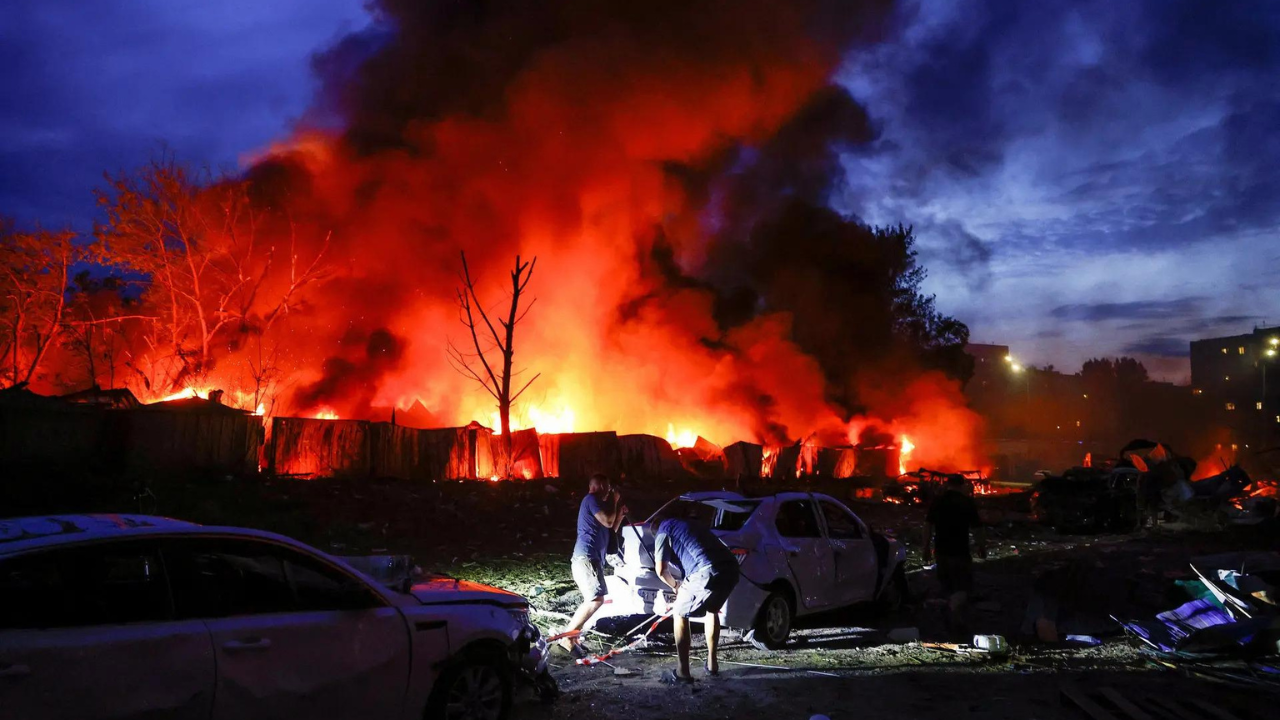
Donald Trump just dropped a rhetorical bomb on Truth Social, and it's got everyone tracking two completely different conflicts. On Sunday, Trump highlighted Chicago shootings since the Iran war started, drawing a sharp, controversial contrast between American military casualties abroad and street violence at home. He claimed that over 273 Americans have been shot in Chicago since the conflict with Iran began. Meanwhile, official Pentagon and CENTCOM data shows that 13 U.S. service members have lost their lives in the Iran conflict so far.
It's a classic Trump move. It's designed to shock, grab the news cycle by the throat, and force a conversation about domestic policy using the backdrop of foreign war.
But behind the heated social media posts lies a much deeper, messier reality about crime statistics, federal power, and an ongoing political blood feuds between the White House and Illinois leadership. If you want to understand what's actually happening on the ground in Chicago versus what's being broadcast from Washington, you have to look past the talking points.
The Raw Math of Chicago Crime vs Foreign Conflicts
When Trump highlights Chicago shootings since the Iran war started, he relies on a stark juxtaposition to make his point. Critics call it weaponizing local tragedy. Supporters call it highlighting a double standard in federal attention.
Let's look at the numbers. Chicago Police Department data shows that the city is dealing with a challenging summer. By the end of June, the city recorded 210 homicides for the first half of the year. That's an uptick of about 6% compared to the first six months of last year. Total shooting incidents climbed to 686, resulting in 858 shooting victims through the end of June. March alone saw 137 shooting deaths, while February saw 97.
When you compare hundreds of domestic shooting victims to the 13 U.S. military casualties reported by CENTCOM in Iran, the numerical gap is massive. Trump uses this gap to argue that the current administration is focusing heavily on securing borders and fighting wars thousands of miles away while leaving American citizens unprotected in major metropolitan areas.
However, local officials argue this comparison is fundamentally flawed. A localized urban crime wave driven by systemic poverty, illegal firearm trafficking, and gang friction operates on a completely different plane than an interstate military deployment involving advanced weaponry and international geopolitics.
The Battle Over the National Guard and Federal Intervention
This isn't just about a single social media post. It's the latest chapter in a long-running constitutional standoff over who controls the streets of Chicago. Trump has repeatedly demanded that Illinois Governor JB Pritzker and Chicago Mayor Brandon Johnson call him to request federal military assistance.
Trump claims he could make Chicago a safe city in one month, pointing to aggressive federal deployments in Washington D.C., Memphis, and New Orleans as proof of success. He has frequently threatened to federalize the National Guard or send in federal law enforcement agents regardless of whether local leaders want them there.
Governor Pritzker isn't having it. The governor has repeatedly rejected these proposals, even filing lawsuits to block federal deployments. Pritzker fired back at Trump's latest critique, ridiculing the administration's handling of everything from the maintenance of the Washington Monument’s Reflecting Pool to the broader naval strategy surrounding the blockade of the Strait of Hormuz. Pritzker told reporters that Illinois residents shouldn't listen to promises from a president who he claims has no real plan for local safety.
Local leaders view federal intervention as an occupation that overrides local authority and fails to address the root causes of violence. They prefer investing in community programs, youth outreach, and specialized violence interrupters who mediate street conflicts before they turn deadly.
What the Data Actually Tells Us About Chicago Safety
To get a clear picture, we need to look at what the broader data says about Chicago's crime trajectory. While homicides and shootings are slightly up this year compared to the same period last year, context matters. Last year saw a historic reduction in violence, hitting the lowest homicide total Chicago had seen in sixty years. Even with the current 6% increase, this year's numbers still represent the second-fewest homicides the city has seen through the first six months of any year since 2015.
Other areas of public safety show significant improvement. According to recent police department statistics:
- Robberies are down 27%
- Armed robberies have dropped 32%
- Carjackings have fallen by 25%
- Burglaries are down 12%
- Violent crime on Chicago Transit Authority train and bus lines has decreased by 28%
These drops suggest that while targeted gun violence remains a severe problem in specific neighborhoods, the city is not in a state of total, unchecked collapse.
Furthermore, independent research raises questions about whether sending in the military actually works. A study from the non-partisan Niskanen Center analyzed recent National Guard deployments in Washington D.C. They found that the military presence had a minimal long-term effect on reducing violent crime rates. Crime suppression usually requires deep local detective work and community trust, things that outside military forces aren't typically trained to handle.
How to Separate Political Rhetoric from Real Public Safety
If you're trying to make sense of the constant back-and-forth between federal and state leaders, you need a framework to filter out the political theater.
First, watch the baseline data, not the weekend spikes. Holiday weekends like Juneteenth or the Fourth of July often see tragic surges in gun violence that dominate national headlines. While these events are devastating, they don't always reflect the overall yearly trend of the city. Look for quarterly or bi-annual crime reports to see if violence is truly escalating or stabilizing.
Second, check the jurisdictional boundaries. Under the U.S. Constitution, domestic policing belongs to state and local governments. A president cannot simply deploy the military to patrol city streets unless there's a complete breakdown of local governance or an explicit request from a governor, outside of very specific invocations of the Insurrection Act. Understanding these legal limits helps you spot when a political statement is purely theatrical.
Third, look at federal funding versus federal boots. True federal assistance often looks like the recent anti-violence initiative led by the U.S. Attorney's office in Chicago, which quietly charged 179 individuals tied to major criminal networks. This targeted, investigative approach rarely makes for dramatic social media posts, but law enforcement experts generally consider it far more effective than putting uniformed troops on a street corner.
Track the official quarterly data releases from the Chicago Police Department rather than relying on curated numbers shared during political disputes. Focus your attention on local legislative efforts regarding firearm laws and federal funding for tactical law enforcement task forces, which have a direct impact on street-level operations.
Political friction over foreign policy and domestic crime continues to shape national debate because it contrasts how the government balances resources between global conflicts and local communities.