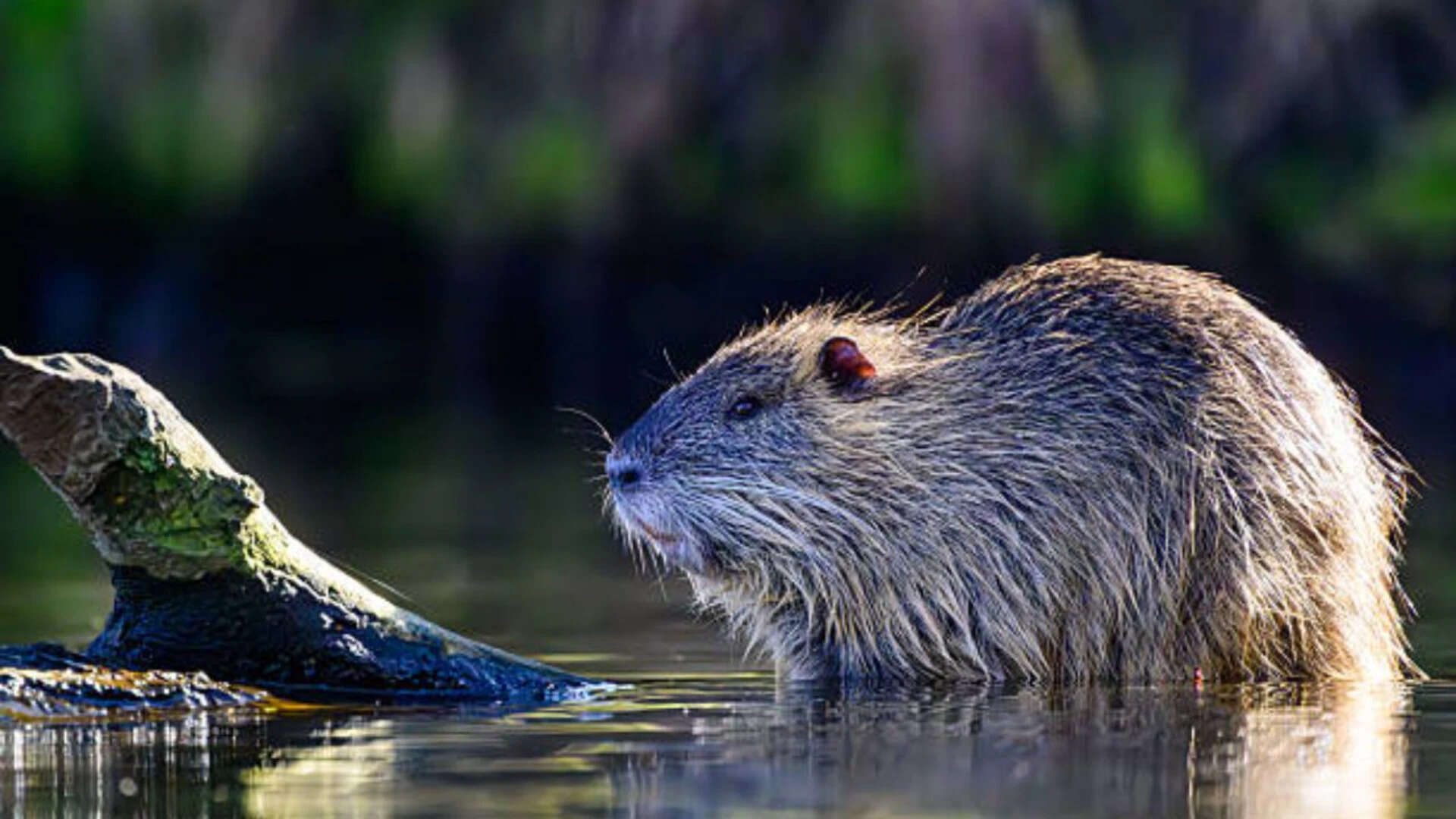
You can thank the global fur trade of the late 19th and early 20th centuries for introducing one of South America's most destructive residents to North American soil. Nutria, large semi-aquatic rodents weighing up to twenty pounds with bright orange-yellow incisors and webbed hind feet, were imported to yield soft underfur for coats and caps.
That business model cratered decades ago. When the market tanked, ranchers let thousands of animals go or watched them break containment during floods and hurricanes.
They didn't just survive. They took over. Today, these prolific breeders chew through fragile riverbanks, compromise multi-million dollar agricultural yields, and strip coastal marshes bare from the Gulf Coast to the Pacific Northwest.
The Anatomy of an Ecological Takeover
Nutria are built to conquer aquatic habitats. A single female can produce up to two hundred descendants in a single year thanks to early sexual maturity at four to six months and multiple litters annually. Without native apex predators hunting them in numbers that matter, their populations expand exponentially.
Unlike native muskrats or beavers that build distinct lodges, nutria dig extensive underground burrows into levees, earthen dams, and irrigation canals. This tunneling weakens vital water control infrastructure, causing catastrophic bank collapses and draining flooded fields meant for rice or crawfish production.
The real horror show happens at the root level. Nutria are absolute eating machines. They don't just eat the surface vegetation; they dig down to consume the root systems of marsh grass and reeds that literally hold American wetlands together.
Once those plants die, the soil turns to mud and washes away into open water. This accelerates coastal erosion in places like Louisiana and Maryland at an alarming pace, compounding the crisis of rising sea levels.
Where the Damage Hits Hardest
The infestation isn't isolated to a single swamp. Populations are firmly established across at least forty states, though the Gulf Coast bears the heaviest scars, losing tens of thousands of acres of irreplaceable coastal marsh.
Agricultural losses climb into the millions annually. Farmers growing rice and sugarcane watch helplessly as these rodents flatten entire crop yields overnight. Young bald cypress trees are chewed down to stumps before they ever have a chance to mature.
On top of the environmental devastation, nutria carry human and livestock pathogens. They host tuberculosis, septicemia, tapeworms, and a specific nematode responsible for a miserable skin rash known as "nutria itch".
Why Eradication Proves So Difficult
Wildlife agencies have tried everything to stem the tide. Back in the early 2000s, Louisiana officials launched campaigns urging local restaurants to feature nutria meat on menus and promoted fashion lines with slogans like "Look fabulous while helping to save the wetlands". Those creative PR stunts failed to curb the population.
State and federal programs eventually shifted toward aggressive, targeted eradication. Maryland successfully wiped out nutria from the Blackwater National Wildlife Refuge using a combination of intensive trapping, hair snares, and specialized detector dogs over many years.
California thought it had won the war by declaring nutria eradicated in the late 1970s. Then, a pregnant female turned up in Merced County in 2017. State authorities now spend roughly five million dollars annually deploying motion-detection cameras, scat-sniffing canines, and traps across the Central Valley to hunt down every last specimen before they trigger another population explosion.
If you spot a nutria near a local waterway, farm pond, or irrigation ditch, don't attempt to handle or feed it. Report the sighting immediately to your state's department of fish and wildlife to keep these destructive invaders from gaining any more ground.