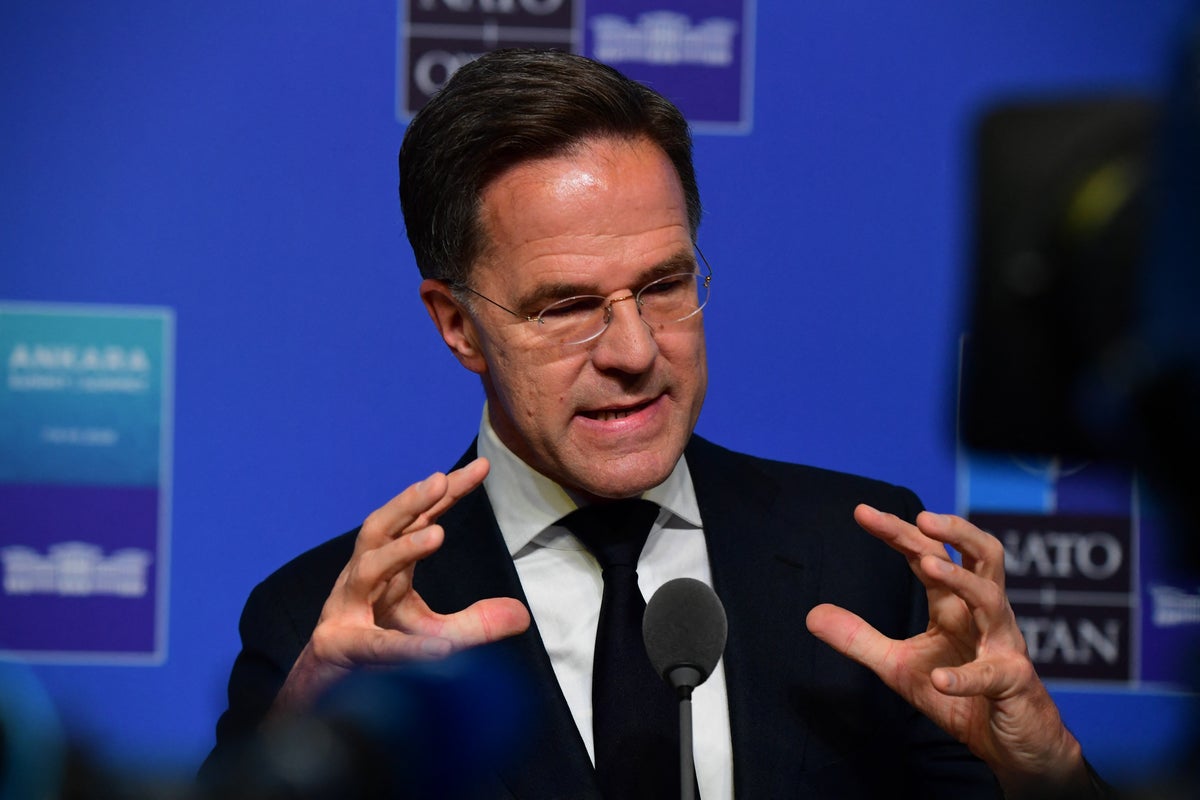
NATO just wrapped up its summit in Ankara, and the official press releases are doing exactly what you think they would do. They are painting a picture of flawless solidarity. Mark Rutte stood at the podium and declared that the alliance delivers, praising a newly balanced defense model.
Don't buy the corporate spin.
Behind the polite handshakes and the carefully staged family photos at the Beştepe Presidential Complex, a dark cloud hung over every single meeting. The mainstream media keeps calling it a sudden crisis of unity, pointing at Donald Trump's aggressive demands for higher European defense spending. But that is completely missing the point. The friction tearing at the alliance isn't a temporary rough patch. It is a fundamental shift in how global power works, and the old guard is terrified.
The Defense Spending Lie
For years, American presidents have grumbled about European allies not paying their fair share. Trump didn't invent this grievance, but he turned it into an ultimatum. He arrived in Ankara demanding that Europe take immediate, primary responsibility for its own backyard.
Publicly, European leaders nod and promise to boost budgets. Privately, they are panicking. The US is already executing a planned drawdown of forces from Germany. That isn't a threat anymore. It is happening.
The standard commentary says this spending dispute threatens the core of collective defense. That is wrong. The real issue isn't the money itself. It is the sudden realization that the American security umbrella is no longer unconditional. Europe has spent decades underfunding its military because it assumed Washington would always bail it out. That era is dead.
The Southern Flank Versus the Eastern Border
Hosting the summit in Turkey highlighted another massive fracture that nobody wants to talk about openly. NATO has spent the last few years obsessed with its eastern flank, pouring resources and focus into countering Russia.
Turkey has a completely different agenda.
President Recep Tayyip Erdogan used this summit to drag the alliance's attention toward the south. Turkey views the instability in the Middle East and ongoing frictions around the Iran war as immediate threats. Ankara pushed hard to expand the Istanbul Cooperation Initiative, trying to loop in Gulf partners like Bahrain, Kuwait, Qatar, and the UAE into NATO's defense framework.
This creates a brutal strategic tug-of-war. Eastern European nations think every dollar spent on the southern flank is a dollar stolen from their defense against Moscow. Turkey thinks the alliance is blind to the chaos on its own doorstep. You can't have true unity when the members don't even agree on who the real enemy is.
A Messy Multipolar Future
The alliance is trying to market its current state as NATO 3.0. They want you to think it means a sleeker, more distributed version of Western power.
It actually means fragmentation.
Look at the chaos behind the scenes just to get people to the table. In the Czech delegation, a bitter domestic political feud meant both the President and the Prime Minister claimed the right to lead the group. Outside the venue, anti-NATO protests flared across Istanbul and Izmir, driven by labor unions furious about soaring military budgets at a time of economic strain. More than 200 activists and journalists were locked up in pre-summit crackdowns.
This isn't what a confident, unified alliance looks like. It looks like a group of nations forced together by geography but pulled apart by domestic politics and conflicting national interests.
Your Next Steps for Following Global Security
Stop reading the glossy joint communiqués. If you want to understand where the alliance is actually heading over the next twelve months, look at the concrete actions instead of the speeches.
- Track the actual troop numbers leaving Germany. The speed of the American drawdown will tell you exactly how serious Washington is about shifting its focus away from Europe.
- Watch the bilateral defense procurement deals. European countries aren't just buying weapons anymore; they are desperately trying to build up local defense-industrial capabilities to survive on their own.
- Monitor the security agreements between Ankara and the Gulf states. If Turkey successfully integrates these partners, it will permanently tilt the strategic balance of the alliance toward the south.
The black cloud over Ankara wasn't a passing storm. It is the new normal.