You wouldn't expect a chocolate fortune to buy a sanctuary for a million birds, but that is basically what happened on a remote island in the Indian Ocean over fifty years ago.
Aride Island wasn't always the thriving seabird metropolis you see today. For decades, humans treated this northernmost granitic outpost of the Seychelles as a resource extraction machine. They chopped down native forests, planted endless rows of commercial coconut palms, and harvested seabird eggs by the hundreds of thousands to ship off to neighboring islands like Praslin. Between 1948 and 1967, egg collection records show staggering numbers of sooty tern eggs leaving the shores every single season. In 1954 alone, workers hauled out roughly 225,000 eggs.
Then came 1973, and a man named Christopher Cadbury changed the trajectory of the entire ecosystem.
The Forty Thousand Pound Bet on Nature
Cadbury, bearing a name tied directly to the famous British chocolate family, looked at a piece of land stripped for short-term profit and saw something worth saving. He provided forty thousand pounds—a massive sum at the time, equivalent to nearly a million pounds today—to fund the purchase of Aride through conservation groups.
Most people don't realize how close the island came to becoming just another commercial coconut plantation or tourist resort. But acquiring the land was only the first hurdle. The real work started when conservationists had to undo decades of human interference.
Restoring Aride required systematic removal of non-native coconut palms and aggressive replanting of indigenous vegetation. Hillside habitats had been repeatedly cleared to suit specific nesting patterns, meaning caretakers had to patiently wait and assist as native trees and shrubs crept back.
Fortunately, the island possessed one massive stroke of luck. Rats never made it to Aride. Because rodents are notorious predators of eggs and ground-nesting chicks, their absence gave the returning wildlife a fighting chance that other islands never had.
What Aride Looks Like Now
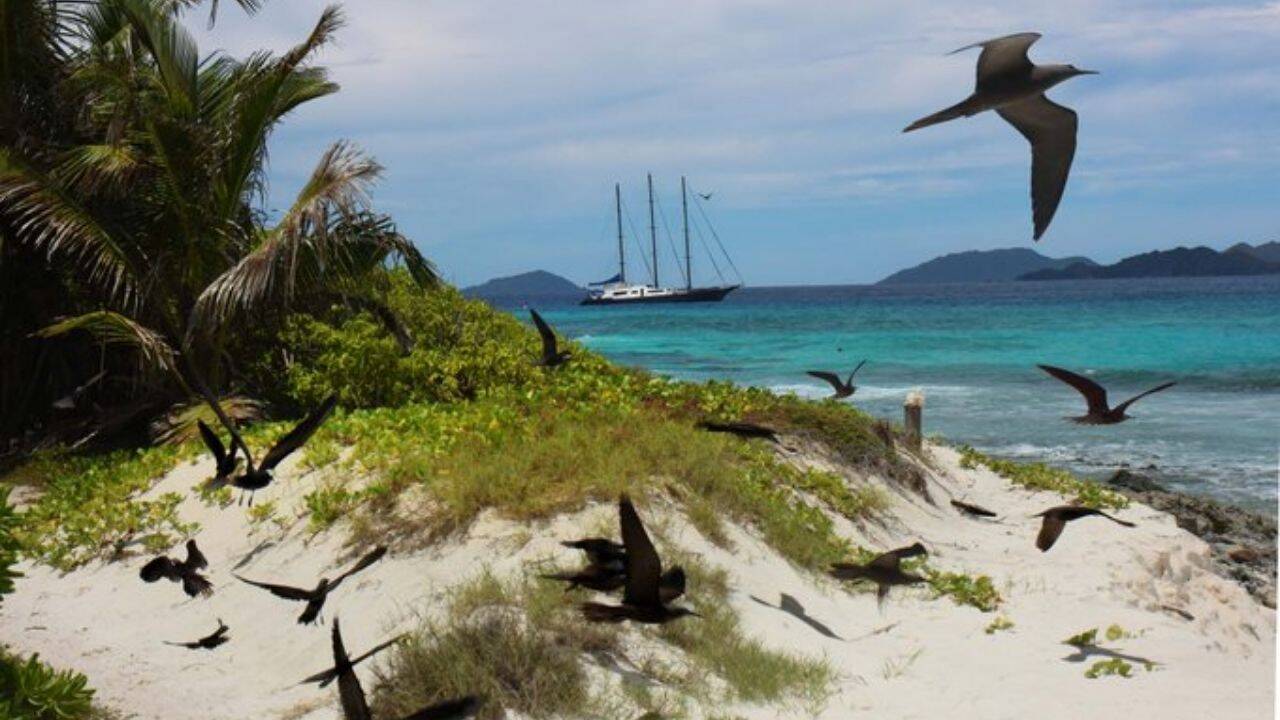
Walk onto Aride today, and you are stepping into a loud, chaotic, and breathtaking avian kingdom. Roughly one million breeding seabirds across ten different species descend on the 74-hectare island every single year.
It is not just about raw numbers, though. The island serves as a vital stronghold for critically endangered endemics found nowhere else on earth. Take the Seychelles magpie-robin, for instance. By 1960, habitat destruction and introduced predators had driven this bird down to a terrifying total of just twelve individuals confined to a single island. Intensive conservation programs, which included introducing populations onto protected sanctuaries like Aride, dragged the species back from the brink of absolute extinction.
You will also spot Seychelles fodies, blue pigeons, and sunbirds darting through restored canopies alongside a rich variety of native reptiles and vascular plants. The surrounding marine waters enjoy protected status too, creating a seamless buffer zone from the shoreline down into the coral reefs.
Lessons From a Quiet Conservation Win
We hear endless doom and gloom about environmental collapse, making stories like Aride worth examining closely. Protecting land doesn't always require massive multi-nation treaties or endless corporate committees. Sometimes, it takes a single wealthy individual writing a check at the right moment, followed by decades of grueling, unglamorous field work carried out by dedicated local wardens.
If you ever get the chance to visit the Seychelles, remember that the most rewarding places aren't always the luxury resorts with infinity pools. Sometimes, the true magic lies on a strict nature reserve where humans are visitors and the birds run the show.
Plan your next travel itinerary around destinations that prioritize ecological restoration over mass tourism, and support local conservation groups actively putting boots on the ground.