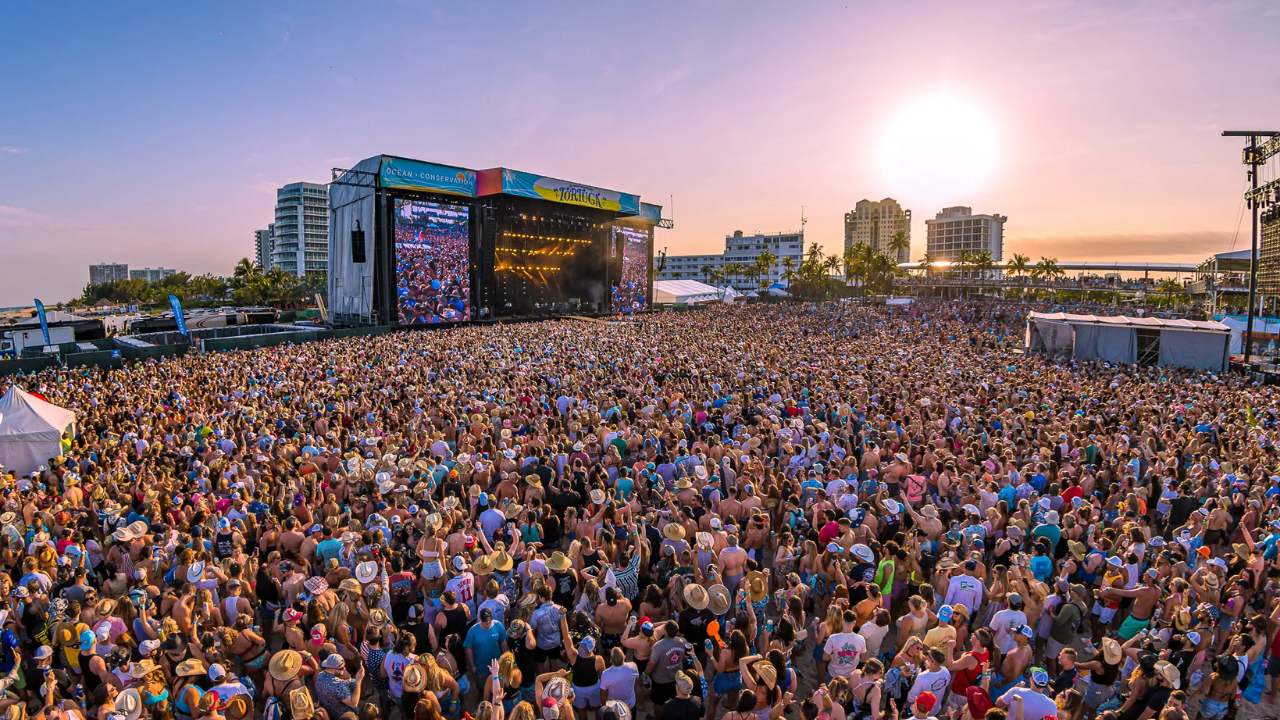
Massive music events usually leave behind a trail of plastic cups, crushed cans, and exhausted security guards. But for over a decade, Florida’s Tortuga Music Festival has operated on a different playbook. Walk down Fort Lauderdale Beach today, and you are looking at the fruits of an ongoing coastal defense project driven entirely by concertgoers, volunteers, and marine conservationists.
Since 2013, this annual festival has paired heavy guitar riffs and country anthems with hands-on environmental work. The tally stands at over 33,000 sea oats planted along the shoreline. It sounds like a modest PR stunt on paper, but the reality on the ground tells a completely different story about how public events can stop coastal erosion.
Why Sea Oats Are the Ultimate Coastline Armor
If you think sea oats are just tall weeds swaying nicely in the ocean breeze, you are missing their entire engineering purpose. These native perennial grasses possess massive, intricate underground root and rhizome networks.
When storms batter South Florida, loose sand washes away into the Atlantic with terrifying speed. Sea oats anchor that sand down like biological rebar. Their tall stalks also act as natural windbreaks, catching blowing sand and forcing it to drop back onto the dune rather than blowing inland.
Without this vegetation, beach dunes flatten out and vanish. When a hurricane or tropical depression rolls past Fort Lauderdale, bare sand offers zero resistance against storm surges. Dunes supported by a dense web of established sea oat roots lose significantly less sediment. They absorb the wave energy instead of letting it chew up coastal infrastructure.
How a Music Festival Turned Fans into Conservationists
Most people head to a three-day music festival to drink beer, lose their voice, and watch headliners from a hundred feet away. Tortuga tweaks that formula by planting a major activation right in the middle of the grounds: the Conservation Village.
Organized alongside the Rock The Ocean Foundation, this area brings marine scientists, university researchers, and non-profit groups face-to-face with everyday music fans. You aren't just reading a pamphlet about ocean health. You can talk directly to researchers from institutions like Nova Southeastern University or local sea turtle programs, complete interactive challenges, and sign up for guided planting sessions on the actual festival grounds.
Fans grab shovels, head down to designated stretches of Fort Lauderdale Beach with coastal resource managers, and plant live sea oats into the sand. Then they head back to catch the next artist. It bridges the gap between passive concert attendance and active community stewardship.
Protecting South Florida Sea Turtles
Erosion control is only half the battle on a heavily populated barrier island. Fort Lauderdale Beach serves as a critical nesting ground for multiple species of sea turtles, including loggerheads, greens, and leatherbacks.
When coastal dunes erode or get flattened by human foot traffic, sea turtles lose their preferred dark, quiet spots to lay eggs. Artificial light from nearby high-rises spills onto flat beaches, disorienting hatchlings crawling toward the ocean.
Tall, healthy dune lines choked with thick sea oat vegetation create a physical and visual buffer between the bustling city and the nesting zone. By helping rebuild these towering dunes over the last 13 years, the tens of thousands of planted sea oats have restored crucial dark sanctuary space for nesting females and their fragile young.
A Realistic Blueprint for Event Sustainability
Festivals love to throw around buzzwords like "eco-friendly" while generating massive carbon footprints. Most green initiatives at large gatherings start and stop at placing blue recycling bins next to trash cans—bins that usually get contaminated anyway.
The Tortuga model works because it focuses on a permanent, hyper-local physical need. Fort Lauderdale Beach requires constant sand management. By integrating a multi-year ecological project directly into the festival's DNA, the organizers created a feedback loop where massive crowds actively repair the venue they love using year after year.
Local coastal management teams track the survival rates of these plantings after every major storm season. The data consistently shows that the areas reinforced by volunteer-planted sea oats hold their ground far better than unmanaged segments.
Next time you look at festival lineups or travel down to the Florida coast, check what happens after the speakers get packed up and the crowds go home. Real conservation takes decades of dirty hands and heavy lifting. Thirty-three thousand sea oats prove that music fans can build a lasting barrier against the rising tides.